

REVIEW · FRENCH QUARTER TOURS
Private French Quarter and Treme Walking Tour
Two neighborhoods, one clear New Orleans story.
This private walking tour connects the French Quarter’s street plan and architecture to Treme’s music roots, so you leave with a map in your head, not just photos. I like that you get real time for questions, and that the guide ties what you see today to what came before.
I also like the way the format fits different ages. In the French Quarter, guides such as Ashley and Cassandra Snyder keep the story moving from architecture to culture, and even help teenagers stay engaged. In Treme, Derek-style storytelling keeps the focus on music and how jazz became part of the city’s identity.
One thing to consider: it is still a 2.5-hour walk, and coffee or tea is not included. Also, the tour end point is flexible within the French Quarter area, not a fixed “meet us at X” finish.
Key highlights to know before you go

- Private group up to 8 means you control the pace and the questions
- French Quarter architecture and geography put the city’s layout into context
- Treme music focus links local streets to the birthplace story of jazz
- Guides tailor the experience for kids, adults, and mixed-age groups
- Start at 400 Royal St with a free, guided walking route and no ticketed attractions
French Quarter plus Treme: the smartest way to get your bearings

New Orleans can feel like a maze, even when you have a map. This tour helps you get oriented fast because it links two neighborhoods that people often visit separately. The French Quarter shows you how the city was shaped by colonial influence and by its position near the water. Then Treme explains how the community and music side grew into something unmistakably New Orleans.
What makes this pairing click is the flow of ideas. In the French Quarter, you’re not just looking at pretty buildings. You’re learning what made this area matter, and why the street grid and design choices show up the way they do. Then you walk into Treme, and the conversation shifts to music, community, and the story of jazz taking root.
If you’re on a first visit, this is a fast shortcut. You get the “where am I?” answer in the French Quarter, then the “why does New Orleans sound like New Orleans?” answer in Treme. If you already know some history, a good guide can still layer in details like ironwork, architecture, and how old rule changes affected the city’s development.
More French Quarter walks and tastings near the same streets



400 Royal St to the French Quarter: architecture and city layout that make sense
You start at 400 Royal St in New Orleans. From there, the tour shifts into French Quarter mode, where the guide talks through the neighborhood’s varied architecture and the significance of its location. This is the part that helps you stop treating the Quarter like one big postcard and start seeing it as a place with a logic.
Here’s what you can expect at this stop:
- You’ll learn how the French Quarter’s location shaped the neighborhood’s early importance.
- You’ll hear how French and Spanish settlement and rule affected what you see.
- You’ll cover major turning points that changed the city’s path, including the Louisiana Purchase.
- You’ll pay attention to architecture details, including ironwork, that you can easily miss on your own.
One small but helpful benefit: you’re guided through the Quarter in an order that makes the geography click. That matters because the Quarter is dense. Without a sequence, it’s easy to feel like you’re just darting from sight to sight. With a guide, you get a running explanation of how one street connects to another, and why certain features show up in particular places.
This stop also tends to include a walk toward the river area. That’s practical. It gives you a sense of elevation and distance, and it helps you picture how people once used waterways and trade routes long before modern roads. If you like understanding what you see, this part is your foundation.
A drawback to keep in mind: the French Quarter is active. Even on a private tour, you’ll still be moving through streets with normal street-life around you. If you’re the type who likes quiet corners, you may want a brief moment after the tour to step away and cool down.
Treme: jazz origins told on the ground, not in a textbook
After the French Quarter, the tour heads into Treme, where the tone shifts. This section focuses on music and on how New Orleans became the birthplace of jazz. It’s shorter than the French Quarter stop, but it’s designed to land the ideas.
What makes Treme valuable on foot is that the story is tied to place. Instead of hearing jazz history as a distant timeline, you get the sense of how community life and neighborhood identity connect to the music. The guide’s job here is to connect the dots between streets, people, and the sound.
In conversations I read from guides and how they teach, the strongest moments are often the ones where music history turns into culture history. You’re not only hearing about jazz as a genre. You’re learning how local life shaped it, and how the neighborhood became part of the city’s creative engine.
Because this is a private format, you can ask the follow-up questions that match your interests. Want more on the social side of jazz, or do you care more about the architecture and neighborhoods? A good guide can steer you without derailing the walk.
One consideration: with only about 30 minutes here, it’s best if you treat Treme as a primer. If you want a deeper neighborhood experience, plan something extra after the tour, so you can revisit whatever parts grab you most.
Private guide power: questions, pacing, and real personality

This is a private tour, offered for just your group. With a maximum of 8 people, it stays conversational. That sounds like a small detail, but it changes everything. You’re not waiting for a microphone moment or hoping the guide remembers your question.
I especially like how this setup works for mixed groups. One tour described a family with children and a wide age range, and the guide kept the story engaging without losing the thread. Another account highlighted teenagers, and the guide switched between history, architecture, and cultural commentary in a way that held attention.
Guides attached to this experience include Ashley, Derek, and Cassandra Snyder. The common thread in their approach is that they listen to what you want, then adjust the story. That is the difference between a walk that feels scripted and a walk that feels like it was built for you.
Expect lots of Q&A, particularly in the French Quarter. People often come in with questions like:
- Why do the buildings look this way?
- How did rule changes affect what the city became?
- What should we eat nearby that makes sense for the neighborhood?
And yes, you may get specific food direction. One guide suggested Napoleon House for lunch, and that’s a useful example of how a guide can point you to something that fits the time and place you’re already walking through.
Also, guides tend to include modern context. One account noted Cassandra shared a personal perspective on what it was like to live through Hurricane Katrina and how New Orleans evolved afterward. That kind of honesty is not just emotional. It helps you understand why the city’s story keeps moving.
How much you pay and what you actually get for $600

Price here is $600 per group for up to 8 people, for about 2 hours 30 minutes. On paper, that can sound steep if you’re traveling solo or as a couple. But in practice, private tours become reasonable when you split the cost.
If you fill the group at 8 people, you’re looking at about $75 per person for a 2.5 hour, guided, two-neighborhood orientation with a local guide. That’s not cheap, but it’s often fair for what you’re buying: time with someone who can explain what you see, answer questions on the spot, and adapt to your interests.
This tour also has a “no extra ticket traps” feel. The walk is free admission for the structured parts of the experience, and what you’re paying for is guidance, pacing, and interpretation. Coffee and/or tea are not included, so if you need a caffeine break, you’ll plan it separately.
Who gets the best value? People who:
- Want a first-day orientation without spending hours googling.
- Are traveling with teenagers who need a story, not just dates.
- Prefer a local voice over a generic group script.
- Care about both architecture and music, and want those tied together.
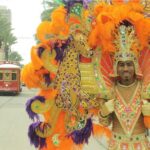
More music and neighbourhood history in Treme and Marigny




Logistics that matter: where you start, where you end, and what to watch for
You meet at 400 Royal St. The finish is in the French Quarter area, but there is no predetermined end point. Translation: don’t plan a tight appointment immediately after. Give yourself breathing room.
This also means the tour may end wherever the guide feels it makes the most sense for you to transition to food, shopping, or further exploring within the Quarter. If you’re meeting someone else, I suggest you agree on a time, then pick a nearby landmark as a backup meeting point.
A few more practical notes from the experience details:
- It’s offered in English.
- You get a mobile ticket.
- Confirmation happens within 48 hours of booking, depending on availability.
- It runs best in good weather.
If you’re near public transportation, that helps. It also makes it easier to reach the meeting point, then get away afterward without relying on taxis for every leg.
What to do after: stretch the story in the places the guide points out
A good walking tour should leave you with next steps. Here you’ll likely want to do two things right away.
First, return to whatever architecture details got your attention. Ironwork, street layout, and the way colonial influences show up are easier to spot after someone explains what you’re looking at. You’ll start noticing patterns in doorways, balconies, and facade styles instead of treating them as random decoration.
Second, use Treme as your “music starting point.” If jazz origins are what caught your imagination, plan a later stop for live music or a second neighborhood walk. The tour gives you the story thread, but it doesn’t try to be everything.
If the guide suggested a lunch stop like Napoleon House, that’s a good clue. It usually means the option fits the vibe and location you’re already experiencing.
Should you book this French Quarter and Treme private walking tour?

I think you should book it if you want a guided orientation that connects the French Quarter’s architecture and geography to the neighborhood roots of jazz. The private group size is a big deal here, especially if you’re traveling with teenagers, older relatives, or anyone who asks lots of questions.
If you’re the type who hates moving through busy streets for a couple hours, or you want coffee included, this might feel less convenient. Also, if you’re not interested in both neighborhoods, you might find the pairing less useful.
But if your goal is simple, get grounded in New Orleans fast, learn why these two areas matter, and walk away with a stronger sense of culture and place, this is a strong choice. It’s the kind of tour that helps you explore the city with more confidence after you finish.
FAQ
How long is the Private French Quarter and Treme Walking Tour?
The tour lasts about 2 hours 30 minutes.
What is the group size limit?
This is a private experience, and the group can be up to 8 people.
Where does the tour start?
The meeting point is 400 Royal St, New Orleans, LA 70130.
Is there a fixed end point?
No. The tour ends in the French Quarter, but there is no predetermined end point.
What language is the tour offered in?
The tour is offered in English.
What is included in the price?
The included item is the guided tour.
Is coffee or tea included?
No. Coffee and/or tea are not included.
What is the cancellation policy?
You can cancel for a full refund if you cancel at least 24 hours before the experience’s start time. Free cancellation is available, and the tour may also be rescheduled or refunded if canceled due to poor weather.
More Tour Reviews in New Orleans






More Treme & Marigny Tours
More French Quarter Tours


More ways into New Orleans


French Quarter Tours, compared.
 ★ 5.0New Orleans Food Walking Tour of the French Quarter with Small-Group OptionFrom $756,118 reviews
 ★ 4.5New Orleans French Quarter, Voodoo and Culture Walking TourFrom $272,961 reviews
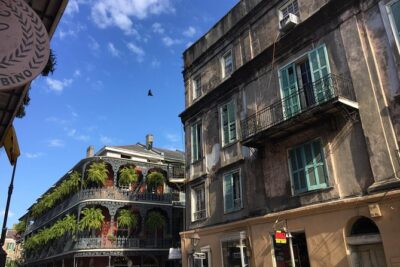 ★ 5.0French Quarter Historical Sights and Stories Walking TourFrom $352,724 reviews
 ★ 4.5Ghost and Vampire Walking Tour Of The French QuarterFrom $212,406 reviews
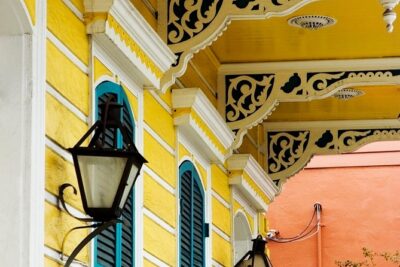 ★ 4.5New Orleans City Tour: French Quarter, Garden District & CemeteryFrom $402,209 reviews
 ★ 4.7French Quarter Walking and Storytelling TourFrom $351,251 reviews
 ★ 5.0New Orleans French Quarter Food Tour: Cajun, Creole and CultureFrom $811,246 reviews
 ★ 5.0New Orleans French Quarter and More Carriage RideFrom $651,141 reviews
Browse the lists this tour appears in