
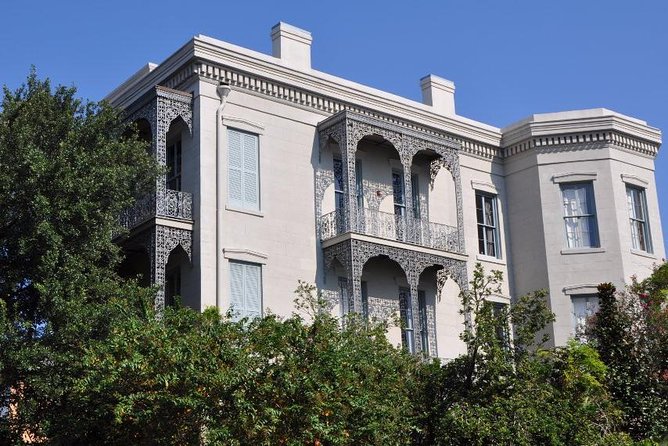
REVIEW · FRENCH QUARTER TOURS
New Orleans French Quarter and More Carriage Ride
New Orleans has a way of putting you in the picture fast. This small-group carriage ride gives you a relaxing route through the French Quarter and Marigny, with stories tied to real landmarks like St. Louis Cathedral and the French Market. I like how the guide turns street corners into context, and I love that you get practical night and food recommendations too, not just facts.
Two things really raise the value here. First, the ride is genuinely easy to manage, since it is covered and designed for comfort while you see a lot in about an hour. Second, the narration often comes with the kind of local detail you remember, whether it is Sarah’s calm explanations or Marty’s sharp focus on fires and floods that shaped the Quarter.
One consideration: the experience is short, and some seating can feel tight if the carriage is full. If you are hard of hearing, plan to sit closer to the front so you can catch every bit of the narration.
Key highlights worth booking
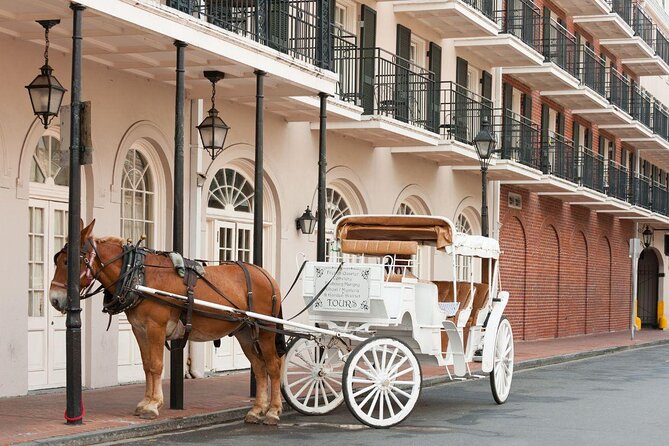
- Max 8 people means you are not lost in a crowd, and the guide can keep things moving without feeling rushed
- Covered carriage ride keeps you more comfortable in sun or light weather while you roll past major landmarks
- Landmark lineup includes St. Louis Cathedral, French Market views, Spanish Cabildo, Pontalba Buildings, Place d’Armes, and Napoleon House
- Stories with local angles include events like the Great Fire of 1788 and the Battle of New Orleans, plus side legends you may not hear elsewhere
- Food and fun tips help you map your next stops after the ride ends back at Decatur Street
Why the French Quarter by carriage feels like a smart first move
The French Quarter can be loud, crowded, and hot. Even if you love wandering, a carriage ride gives you something walking does not, a slow, guided circuit that helps you make sense of the area quickly. You see the big sights, but you also learn why they are where they are, and what happened to shape what you are seeing now.
This is not only about sightseeing. It is also about pacing. An hour sounds short until you factor in the energy it takes to walk in the Quarter, stop for photos, and re-find your bearings. Here, you get a practical orientation, so your later self-guided time is more targeted. After the ride, you are not just thinking, I saw buildings. You are thinking, I know what this place is and what to look for next.
I also like that the ride connects French Quarter history with nearby Marigny. That matters because Marigny is often where people want to go after they feel the Quarter overload. Getting a first look from the carriage helps you decide whether to return for music, murals, or a quieter stroll.
More French Quarter walks and tastings near the same streets



Decatur Street meetup, covered comfort, and the rhythm of a one-hour tour
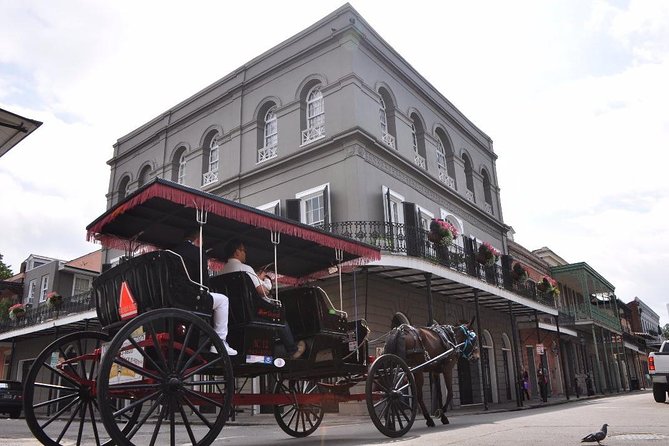
You meet at 700 Decatur St and end back at the same spot. That is useful. It means you do not waste your evening figuring out transport or backtracking, and you can pivot right into dinner, jazz clubs, or a second walk while you still feel oriented.
Once you settle in, the carriage has a covered top, which is a real comfort win in New Orleans heat. You ride slow, with the guide speaking as you pass key points. The small-group size is a big part of this experience feeling calmer than most city tours. With a limited group, you are less likely to feel like you are getting pushed through.
I will be honest about one practical detail. If the carriage is full, seats can feel uncomfortable after some time, and the narration can be harder to hear if you sit farther back. A simple fix helps, sit closer to the front if sound clarity matters to you. Also, when the carriage pauses to let cars go by, the street can feel slightly slanted, so keep your balance and stay seated until the ride settles.
French Quarter first stop: St. Louis Cathedral, French Market, Spanish Cabildo
The ride’s main storyline starts in the French Quarter, also called the Vieux Carre. This area is tight and layered, so the guide’s job is to help you connect architecture to time. You begin by taking in major landmarks, but the smarter part is how the commentary ties them to events and daily life.
St. Louis Cathedral is one of the anchors. The guide points out that it is the oldest continuously active cathedral in the United States. That fact changes how you look at it. Instead of treating it like another photo stop, you start noticing permanence, survival, and how religious life still shapes the neighborhood today.
Then you roll toward the French Market area with its famous Mississippi views. For me, this is one of the most useful segments of the tour because it gives you a reference point for where the Quarter opens up. Even if you skip the market shops, you now know what direction the river sits and what skyline angles to look for later.
The Spanish Cabildo and nearby historic buildings bring a different layer. You learn about Spanish colonial presence and the way the city’s cultural makeup is written into the streets. This is also where the tour’s storytelling can shift from big historical events to specific legends and characters tied to the buildings you see.
Pontalba Buildings and Place d’Armes: the Quarter’s architecture lesson, not just photos
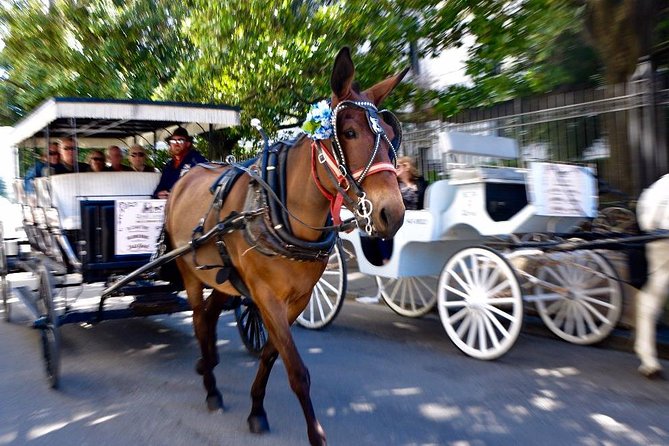
The guide’s narration moves through architectural details that are easy to miss if you are only scanning for the next Instagram angle. The Pontalba Buildings and the Place d’Armes area are perfect examples. As you pass, you get context for the layout and the styling that makes the Quarter feel so distinct.
One thing I appreciate is the way the guide links the look of the buildings to real history, including disasters and rebuilding. You may hear how fires and floods changed the material choices around here, including why so much of the Quarter is brick and iron. That kind of cause-and-effect makes your walk afterward feel smarter. You start to see the city as an adaptive system, not just a pretty set of facades.
Place d’Armes also gives you a moment to slow down mentally. It is a square, but it functions like a hinge between eras and cultures. The guide uses landmarks around it, helping you understand that the Quarter is not one uniform style. It is Spanish, Creole, French, and American influences stacked over time.
Napoleon House and the death mask story you will not forget
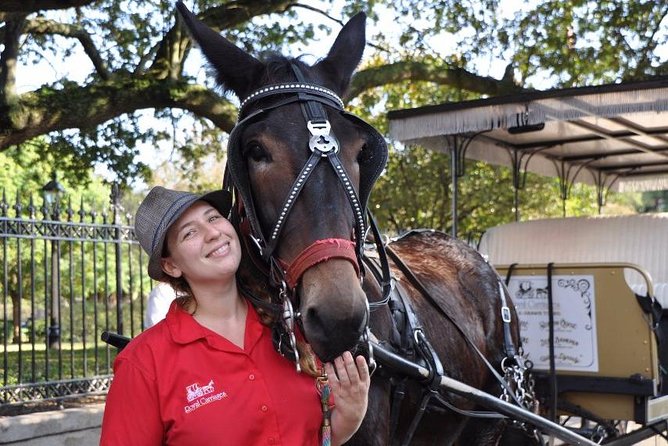
Napoleon House is the kind of stop that makes this tour worth doing, even if you think you already know the French Quarter. The commentary focuses on why the building matters and what is inside.
You learn that this historic Spanish colonial building used a mold crafted by Dr. Francesco Antommarchi, who was one of Napoleon Bonaparte’s physicians around the time of Napoleon’s death. The museum is home to Napoleon’s death mask. That is vivid history, but it is delivered in a way that helps you connect the legend to a physical place.
The guide also points out another architectural fact that sticks, it is often referred to as the oldest apartment building in the United States. That line makes you look for clues of urban living instead of only grand public spaces. It is a reminder that the French Quarter always served daily life, not just visitors and postcards.
While you are rolling past, you may also pick up the kinds of details that make the Quarter feel personal. Some guides share ghost stories tied to the neighborhood. If you like a little spooky flavor with your history, this tour is likely to scratch that itch.
A few more ways to spend the day around New Orleans



Marigny by carriage: what you get when you go beyond the main drag
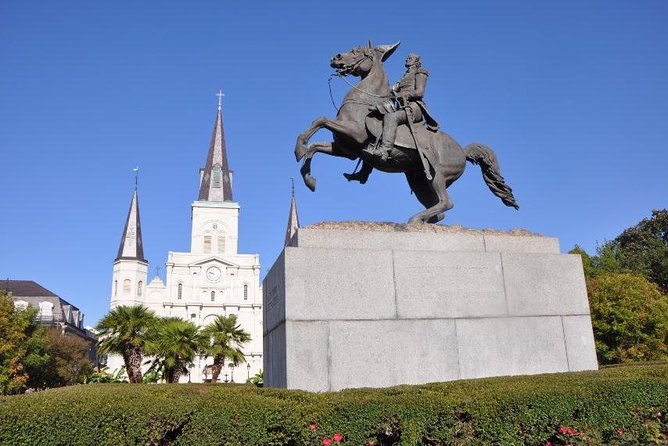
After the French Quarter core, the tour shifts toward Marigny, which feels like the side chapter of New Orleans. This is where you start to see the city as more than a single busy loop around Bourbon Street.
The carriage format helps here because Marigny has its own mood. You are not sprinting from block to block. You are getting a gentle overview, which is exactly what you want if you plan to return later for a longer walk.
As you move through this transition area, you also get a more complete picture of the city’s cultural mix. The guide may reference Creole Esplanade, Old Slave Quarters, French Coffee Houses, Spanish Patios, and ironwork balconies. These are the kinds of details that help you understand what you are passing, not just where you are passing it.
This is also where your guide’s local tips start to feel practical. Because you are seeing more than one neighborhood, you can ask yourself simple questions during the ride: Where should I go for a calmer evening? Where are the best stops for food? What is worth a second visit on foot?
What to do with the last 30 minutes after the carriage ride
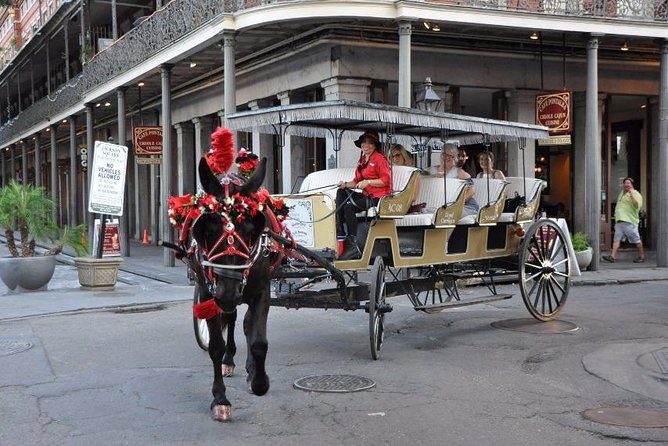
Because the tour ends back at the meeting point, you are free to turn it into a flexible plan. This is a big deal in New Orleans. You can go right to dinner, catch live music, or take one smart walk to a nearby landmark while you still remember the guide’s directions.
Here is how I would use this. Think of the carriage ride as your “map plus context” hour. During the ride, listen for two things: where your guide suggests you go next, and which streets or sights they emphasize as must-sees. Then pick one or two options, not five. The French Quarter can steal your energy if you try to cover everything at once.
Also, consider what you learned about history as you choose. If the guide explained why certain areas rebuilt with particular materials after major events, you may want to look closely at those building surfaces when you wander later. If you heard stories about the river and the market, you might prioritize river-facing views before your day gets too late.
And if you are traveling with kids, this kind of pace can be a win. One review noted a young child loved the animal part and the storytelling, which is a good sign that this is not only for history buffs.
Is it worth $65? Value compared to self-guided walking
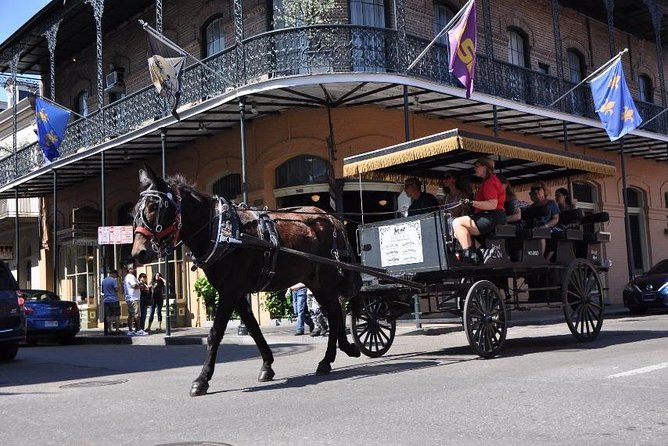
At $65 per person for about an hour, the value comes from three places: time saved, comfort, and a guided narrative you probably would not piece together on your own.
Self-guided walking is cheaper, sure. But New Orleans history is dense. You need context to avoid just seeing pretty buildings with no anchor. This tour gives you that anchor fast, then points you toward what to do next. For first-time visitors, that can be the difference between feeling lost and feeling in control.
The small group size matters for value too. With a maximum of eight, the ride feels more like a neighborhood lesson than a mass production circuit. You are also more likely to hear the guide clearly, and you have an easier time soaking in architecture and stories instead of tuning everything out to cope with crowds.
Finally, it is a good value if your legs need a break. Some people book this because walking long distances in the Quarter can feel like work. The carriage gives you the sights with less fatigue, and you can still step out afterward for short, targeted exploration.
Who should book this French Quarter and Marigny carriage tour
This tour fits best if you want a first-time orientation, a relaxed pace, and stories tied to major landmarks. It also works well if you like your New Orleans with a mix of history and local personality, including legends that add color between the facts.
It is a strong match for:
- First-time visitors who want a map plus context without hours of walking
- Couples who want a calm, romantic way to see the Quarter
- Families who want an easy activity that still feels educational
- Anyone who wants help choosing where to eat and drink after the ride
If you are the type who loves every detail and wants to stop and read plaques, you might feel the one-hour format is a bit tight. A few people noted that the commentary can feel limited at times, sometimes influenced by how full the carriage gets. In that case, treat this as the starting point, then follow up with your own walking time.
Should you book this tour?
Yes, I think you should book it if you want an easy, high-impact introduction to the French Quarter plus Marigny. The combination of a comfortable covered ride, a landmark-heavy route, and practical guide recommendations makes it a good use of one hour in a city that can overwhelm your schedule.
Book it especially if you:
- Want to see the top landmarks with context, not just photos
- Prefer a guided narrative over piecing history together yourself
- Need a low-stress way to cover more ground quickly
Skip it only if your style is pure wandering with long stops. This ride is meant to set you up, not to replace your whole day.
FAQ
How long is the French Quarter and Marigny carriage ride?
The tour runs for about 1 hour.
How many people are in the group?
The experience is limited to a maximum of 8 travelers.
Where do I meet the carriage tour?
You meet at 700 Decatur St, New Orleans, LA 70116, USA, and the tour ends back at the meeting point.
Is the tour offered in English, and do I get a mobile ticket?
Yes, the tour is offered in English. You also receive a mobile ticket.
What is included in the $65 price?
The price includes the mule-drawn carriage ride and recommendations for nightclubs, jazz, museums, and other must-sees in New Orleans.
What is not included?
Snacks and gratuity are not included.
Is the tour dependent on weather, and how does cancellation work?
This experience requires good weather. If it is canceled due to poor weather, you will be offered a different date or a full refund. Free cancellation is available up to 24 hours in advance for a full refund.
Are service animals allowed?
Yes, service animals are allowed.
More Tour Reviews in New Orleans





More New Orleans Carriage Tours in New Orleans
More French Quarter Tours


More ways into New Orleans


French Quarter Tours, compared.
 ★ 5.0New Orleans Food Walking Tour of the French Quarter with Small-Group OptionFrom $756,118 reviews
 ★ 4.5New Orleans French Quarter, Voodoo and Culture Walking TourFrom $272,961 reviews
 ★ 5.0French Quarter Historical Sights and Stories Walking TourFrom $352,724 reviews
 ★ 4.5Ghost and Vampire Walking Tour Of The French QuarterFrom $212,406 reviews
 ★ 4.5New Orleans City Tour: French Quarter, Garden District & CemeteryFrom $402,209 reviews
 ★ 4.7French Quarter Walking and Storytelling TourFrom $351,251 reviews
 ★ 5.0New Orleans French Quarter Food Tour: Cajun, Creole and CultureFrom $811,246 reviews
 ★ 5.0French Quarter walking Food Tour Famous Flavors of New OrleansFrom $751,115 reviews
Browse the lists this tour appears in