
REVIEW · FRENCH QUARTER TOURS
New Orleans French Quarter Architecture Walking Tour
New Orleans buildings talk back. This French Quarter architecture walking tour shows you why, from French and Spanish influence to the city’s later American-era changes. You will get a friendly, landmark-heavy loop that includes major stops like St. Louis Cathedral and the kind of details that make the French Quarter feel readable once you know what to look for.
Two things I really like here: the pace stays relaxed thanks to a group capped at 14, and you get time to ask questions instead of being rushed from one curb to the next. One possible drawback is sound. If the street is busy, hearing every word can take effort, so position yourself close to the guide.
Key Highlights You Will Actually Feel on the Street
- Max 14 travelers keeps the tour calm and discussion-friendly
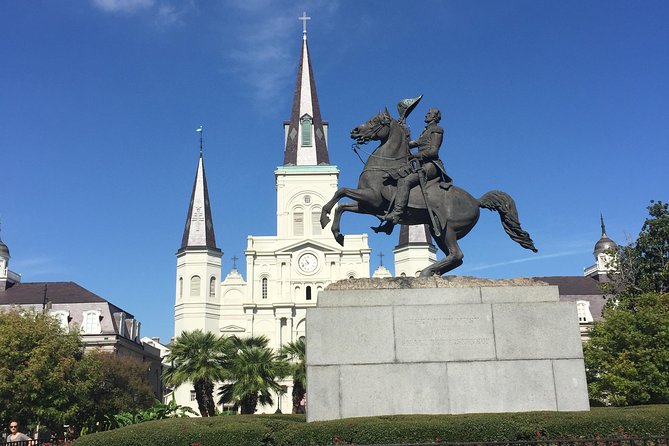
- Landmark stops in one loop: Jackson Square, St. Louis Cathedral, Cabildo, Presbytere, plus Chartres Street and Royal Street
- French and Spanish architectural influence explained in plain terms
- How to identify building types so you notice details after the tour ends
- Guides with local credibility including Caroline, Eva, Doug, Angela, Janet, and Guy, praised for storytelling and practical tips
- Follow-up ideas after the walk such as shop or reading suggestions some guides provide
A 2-Hour French Quarter Architecture Stroll With a Small Group
This is a compact, do-it-now kind of tour. Expect about 2 hours of walking in the heart of the French Quarter, with a route built around the most visually important landmarks. The group size matters more than you might think. With a maximum of 14 travelers, the guide can slow down when someone asks a question, and you do not feel like you are being moved along like baggage.
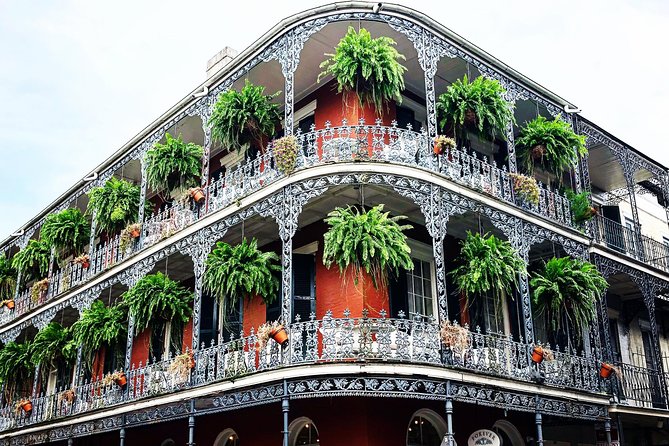
The focus is architecture, not just postcard history. You will learn how French and Spanish style choices shaped what you see, and how later American changes fit into the same neighborhood. The tour also aims to give you a mental toolkit. By the end, you should be able to look at facades and say, this part likely comes from this era and this influence, not just admire the beauty.
If you are the type who loves learning “why something looks the way it does,” this works well. If you want heavy technical training, you may still enjoy it, but the vibe here is guided storytelling with clear architecture basics rather than a textbook class.
More French Quarter walks and tastings near the same streets



Where You Meet, What You Do First, and What to Bring
The tour starts at 523 St Ann St., New Orleans, LA 70116 and ends back at the same meeting point. That is convenient. You are not trying to track a second drop-off location while juggling shoes, maps, and coffee.
You will receive a mobile ticket, and the tour is offered in English. Plan to arrive a few minutes early so you are not rushing into the first stop. The weather guidance is simple and sensible: bring an umbrella if rain is possible, sunscreen if the sun is out, and wear comfortable walking shoes.
This area can be uneven and crowded, especially around the major squares. You will be happier if you treat it like a sightseeing walk, not a workout. Also, if you know you struggle hearing in public spaces, stay near the front of the group. One guest noted hearing was sometimes difficult, and that is usually solved by getting closer to the guide.
Stop 1: The French Quarter Starter Lesson That Sets the Lens
The walk begins with a quick history and orientation at the French Quarter. This is not a long lecture. It is about giving you a lens so the rest of the route makes sense. The guide starts with an intro to New Orleans history, which helps you understand why buildings here feel like layers instead of a single style.
A short opener like this is a smart design choice. If you jump straight into landmark photo stops, you miss the context that makes the architecture click. By the time you get to Jackson Square and the church buildings, you already understand which influences were arriving, and what those influences tended to produce in the built environment.
This first stop is also where you get the chance to ask your earliest questions. A lot of guides on this route are strong at keeping things conversational, and several named guides have been praised for friendliness and question time. If you have specific interests, like balconies, courtyards, or how churches and civic buildings differed, ask early.
Jackson Square: Pontalba Buildings and the Cathedral-Cabildo-Curve Timeline
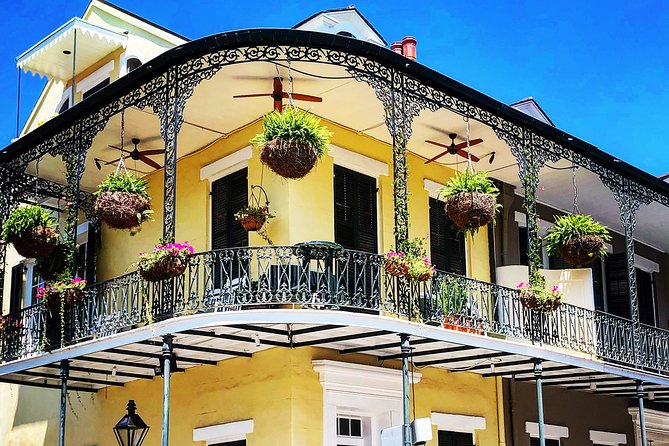
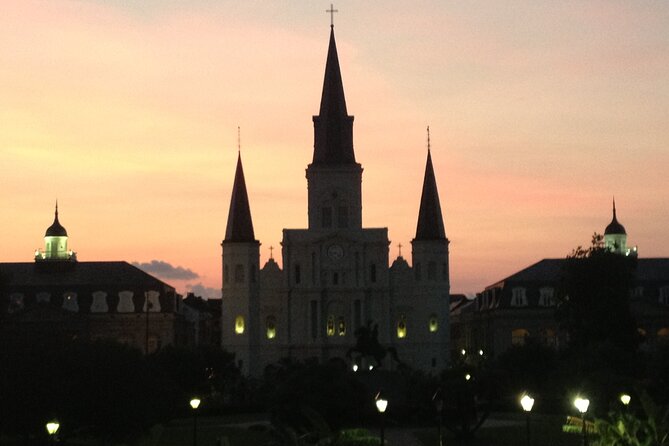
Jackson Square is the tour’s “big picture” moment. The guide explains the main buildings lining the park, including the Cathedral, Cabildo, and Presbytere. You will also hear about the Pontalba Buildings, which are a key part of how the square developed and how the neighborhood’s architecture communicated power and order.
The advantage of this stop is that the buildings are close enough for you to compare them quickly. You can stand in a single spot, look across, and connect form to function: a church with its role, a civic building with its role, and the surrounding structures that help define the square’s character.
What you should watch for here is how styles and eras start showing up as patterns. Even if you do not catch every term, you can learn the habit of noticing. Does a facade feel more ornate? More structured? More about street presence or internal life? This stop trains your eye without making it feel like homework.
Time here is about 10 minutes. That is enough for the highlights, but not enough for a deep architectural thesis. If you want to go further on your own, this is a great moment to note any details you want to photograph for later.
St. Louis Cathedral: From Wooden Parish Church to the Landmark You See
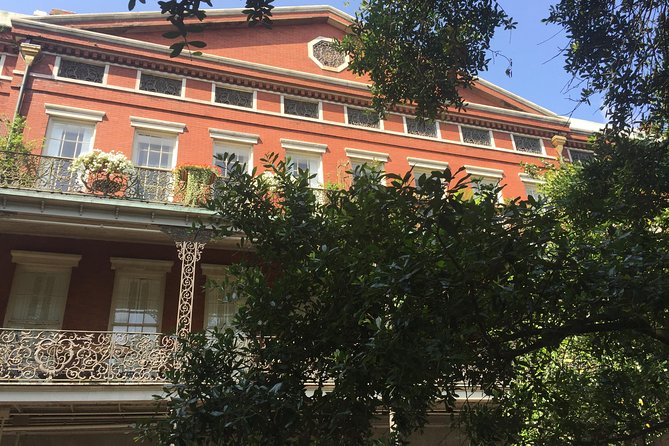
Next comes St. Louis Cathedral, with a focused explanation of how this building story evolved. The guide talks about the church’s beginnings as a wooden parish church, then connects that humble start to the cathedral you see today.
Why does this matter for an architecture tour? Because it shows that buildings here did not just “arrive fully formed.” Structures changed as communities grew, resources shifted, and priorities evolved. The cathedral becomes a visible marker of time.
This stop is short, about 5 minutes, so expect a tight narrative rather than a long walkthrough. If you are the kind of traveler who likes to read everything on-site, plan to spend extra time here after the tour if you want more. The tour is designed to get you oriented and excited, not to replace your own exploration.
Also, if you are visiting during a busy time, keep your place in the group. Some crowds can reduce how much you notice. Stay attentive to the guide’s positioning and you will catch the most important takeaways.
A few more ways to spend the day around New Orleans



Cabildo and Presbytere: Civic Architecture With Purpose
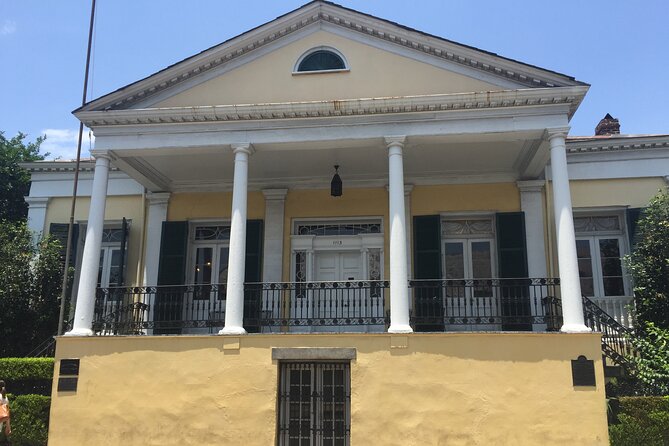
After the cathedral, you move to the Cabildo. Here the guide explains the historical era, the building’s significance, and its architectural style. The Cabildo is not just a pretty facade. It is a civic statement, and understanding its role helps you see why its design choices were made.
Then comes the Presbytere, also about 5 minutes. The guide shares its history and the current status of the building. Even with limited time, this is valuable because the French Quarter’s “ensemble” feel depends on civic and religious buildings sharing the same stage.
These two stops work well together. When you learn the differences in function, you start seeing the architecture as a system. Churches tend to signal spiritual life. Civic buildings tend to signal governance, public authority, and communal organization. Once you frame it that way, the facades stop being random decoration and start becoming readable history.
One practical note: this part of the tour is quick, so if you care about a specific feature, ask a targeted question. For example, you can ask what element most strongly signals the influence the guide is talking about. Guides like Caroline, Angela, and Guy have been praised for pointing out details and tying them to story, so your questions usually get good answers.
Chartres Street: A Built Bridge From Spanish Era Into American Period
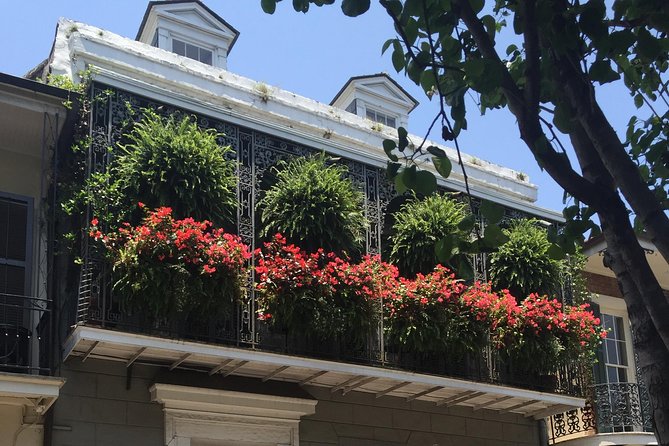
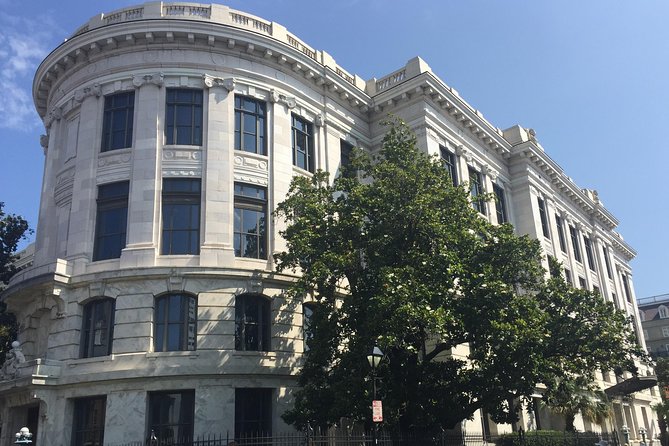
Chartres Street is one of the best stretches for architecture learning because it spans time. The tour includes buildings with historic significance that move from the Spanish era into the American period. That “bridge” concept is the point.
This stop is longer than the earlier ones, about 20 minutes. You are not just passing through. The guide helps you compare building cues across eras. The goal is to show you that the French Quarter did not freeze at one moment in time. It absorbed change, and the streets are where you can see that adaptation.
Here is what to do as you walk: stop at the corners when the group stops and look straight at the facade, not just at the storefronts. Notice structural rhythms, window patterns, and any details the guide calls out. This is where “how to identify different types of buildings” becomes real, not theoretical.
If the street feels busy, this is also where your comfort choices matter. Wear shoes you can trust for a long stroll, and consider keeping water nearby if it is hot. Several guests mentioned how guides helped keep people comfortable with sun and shade choices, so do your part by being ready to move when the group moves.
Royal Street: Identify Building Types While You Stroll Shops and Eats
Royal Street is the tour’s fun-to-walk stretch. The guide talks about how to identify different types of buildings, and the vibe here is more strolling, browsing, and noticing. Expect about 25 minutes at this point, which is the most time in the whole route.
Why Royal Street belongs on an architecture tour: you get architecture plus everyday street life. Shops and restaurants make the neighborhood feel lived-in, not like a museum. More importantly, the buildings are still the lead character. You can watch how design elements show up in storefront lines and building forms while you walk.
This stop is also great for learning how the past shows up in daily life. The guide frames it as a way to understand how history shaped what you see now. When the tour ends, you will likely look at the next block differently, and that is the real win.
One guest mentioned the guide pointed them toward an antique store on Royal Street that they did not know existed until the tour. That is the kind of practical bonus that makes a tour feel like local knowledge, not only facts.
Price and Logistics: Does $40 Buy Real Value?
At $40 per person for about 2 hours, this is one of the more straightforward “you pay for clarity” tours. The price is not the deal-breaker. The group size, the guide quality, and the fact that you leave with an architecture lens are what justify it.
Here is the simple value equation you should use:
- If you are visiting for the first time and you want to understand what you are seeing fast, this kind of guided architecture loop is a strong use of time.
- If you already know the French Quarter well, the tour still has value because it teaches a method to identify building types and eras, not just a list of landmarks.
- If you want purely technical, deep architectural theory, this may feel lighter than you want, and one guest noted the information could come off basic or more neighborhood oriented than expected.
Logistically, you start and end at the same place, which makes it easier to plan the rest of your day. The tour runs on good weather, and if it gets canceled for weather you should be offered another date or a full refund. If you like flexibility, free cancellation is offered up to 24 hours in advance for a full refund, and changes inside that window do not get accepted.
Weather, Crowds, and How to Hear the Guide in Busy Streets
The French Quarter can be loud. Even when guides are great, street noise can swallow details. If hearing matters to you, position yourself near the guide and avoid standing far back or at the edge of the crowd.
Cold or heat also affects comfort. One guest praised a guide for keeping the group on the sunny side of the street on a cold day. Another noted shade management during hot weather. You cannot control the weather, but you can control how you prepare. Wear layers if it is chilly. Bring sunscreen and consider a light hat if the sun is intense.
Umbrellas are recommended, but also think about where you stand with an umbrella in a crowded area. A smaller compact umbrella is easier to manage than a big one that blocks others.
Finally, keep in mind that this is a walking tour in a real neighborhood, not a quiet classroom. That is part of the charm. It also means you should be mentally ready to focus and ask questions when you have them.
Who This Tour Suits Best (And Who Might Want Something Else)
I think this tour is a smart match for:
- First-time visitors who want to get oriented quickly with major architecture anchors
- Travelers who like guided stories tied to real buildings
- People who want to walk away with practical observation skills for the next days in New Orleans
- Families and teens, since the pacing is relaxed and the route is full of recognizable landmarks
It may be less ideal if:
- You want a heavy technical course on architectural terminology, materials, and detailed building science
- You are sensitive to noise or have trouble hearing in crowded outdoor spaces
- You already have a deep architecture background and feel you need more specialized expertise than a narrative guided stroll
Should You Book This French Quarter Architecture Walking Tour?
If you are trying to make your first day in the French Quarter count, I would book this. The combination of small group size, landmark coverage, and the way guides connect French and Spanish influence to what you see makes it a good entry point. It also tends to leave people with practical next-step ideas, whether that is where to wander after the walk or what kinds of buildings to notice as you go.
Book it early in your visit if you can. The architecture lens you gain will make the rest of your walking feel smarter, not just longer. And if you are unsure, remember the tradeoff: you get clarity and storytelling fast, but you are not signing up for a long, technical deep study.
If you want a guided “start here” experience that helps you read the French Quarter, this one is a solid choice at $40.
FAQ
How much does the New Orleans French Quarter Architecture Walking Tour cost?
It costs $40.00 per person.
How long is the tour?
The tour lasts about 2 hours.
How many people are in each group?
The tour is limited to a maximum of 14 travelers.
Where does the tour start?
The meeting point is 523 St Ann St., New Orleans, LA 70116, USA.
Is the tour offered in English?
Yes, the tour is offered in English.
What should I bring or wear for the walk?
Bring an umbrella and sunscreen if needed, and wear comfortable walking shoes.
More Tour Reviews in New Orleans






More New Orleans Architecture Tours in New Orleans

More French Quarter Tours

More ways into New Orleans


French Quarter Tours, compared.
 ★ 5.0New Orleans Food Walking Tour of the French Quarter with Small-Group OptionFrom $756,118 reviews
 ★ 4.5New Orleans French Quarter, Voodoo and Culture Walking TourFrom $272,961 reviews
 ★ 5.0French Quarter Historical Sights and Stories Walking TourFrom $352,724 reviews
 ★ 4.5Ghost and Vampire Walking Tour Of The French QuarterFrom $212,406 reviews
 ★ 4.5New Orleans City Tour: French Quarter, Garden District & CemeteryFrom $402,209 reviews
 ★ 4.7French Quarter Walking and Storytelling TourFrom $351,251 reviews
 ★ 5.0New Orleans French Quarter Food Tour: Cajun, Creole and CultureFrom $811,246 reviews
 ★ 5.0New Orleans French Quarter and More Carriage RideFrom $651,141 reviews
Browse the lists this tour appears in