

REVIEW · HISTORICAL TOURS
New Orleans: History, Culture & Architecture Guided Tour
New Orleans reveals itself in 3 guided hours. I love the air-conditioned minibus comfort and the way the guide connects neighborhoods like the French Quarter and Treme to real buildings and local stories. My second favorite part is the stop in Faubourg Treme, including its African American roots stretching back to the 1700s. One possible drawback: this is a 3-hour tour, so you cannot expect long, wandering detours or deep independent exploring at every stop.
Hotel pickup and drop-off from selected downtown and French Quarter hotels makes the start simple, and the live English commentary helps you understand what you are seeing instead of just collecting names. I also like that the route mixes famous landmarks with less obvious history points, so you get more than the usual highlights.
At $55 per person for about 3 hours, it is strong value if you want structure, transportation, and a guide. Just plan for food and drinks on your own, since none are included.
Key highlights at a glance

- Air-conditioned transport with hotel pickup so you can focus on the sights, not the heat.
- French Quarter to Esplanade architecture stories with big-street views and mansion-scale scenes.
- City Park and the Besthoff Sculpture Garden stop plus an option for coffee and beignets at Morning Call Cafe.
- Faubourg Treme history from an African American neighborhood dating back to the 1700s.
- World War II Museum area views as part of the American Sector route.
- Metairie Cemetery above-ground tombs and the distinct burial approach that shapes the city’s look.
A 3-hour route that actually covers ground
This tour is built for people who want a lot of New Orleans in a short window without bouncing around on your own. In about three hours, you move through several of the city’s most recognizable areas, with a guide providing the connective tissue between them.
You start with hotel pickup, then ride in an air-conditioned mini-coach while your guide sets the story. After that, the route is arranged like a guided walk, except you do a good chunk from the comfort of the vehicle. You get the French Quarter, then you shift toward broader, more stately streets. Next comes a break near City Park, then you head through the Warehouse District and onward into Faubourg Treme.
The tour keeps rolling, with a look at key cultural and historical zones, including the area known as the American Sector. You also get a cemetery stop at Metairie, which is not usually on the fast, first-timer-only itineraries. Finally, you pass the Saint Louis Cathedral, with its roots dating back to 1720 along the Mississippi.
Because it is only 3 hours, you will want to treat this as a map of what to study deeper later. If you love reading street-level history and spotting architectural details, the format will feel satisfying. If you need lots of free time to shop, photograph, or linger in every neighborhood, you may feel rushed.
A few more ways to spend the day around New Orleans



Hotel pickup, AC comfort, and the timing that matters

One of the nicest things here is the friction-free start. Pickup and drop-off are included, but only from selected hotels in downtown New Orleans and the French Quarter. That means you should confirm your pickup zone before you assume you are eligible.
Once you are on board, you are in an air-conditioned mini-coach. New Orleans can be warm and sticky, and AC is not a luxury detail on a half-day overview tour. It helps you stay sharp for the guide’s commentary and keeps the whole experience from turning into a sweaty chore.
Timing is also clearly set up for you to arrive prepared. You are asked to be curbside 30 minutes before the scheduled pickup time. Pickup times can vary because the route depends on how many stops the tour has to make. So it helps to plan your morning or afternoon around a pickup window, not around a strict minute-by-minute timeline.
This logistics style works well for visitors who do not want to figure out parking, rideshares, or route planning across multiple neighborhoods. It also helps if you are traveling with limited mobility or you just do not want to spend your energy doing transit between far-apart areas.
French Quarter and Esplanade: the buildings do the talking
The tour’s first big neighborhood is the French Quarter. This is the kind of start that helps you orient fast. You see the area by passing key blocks, and you get guided commentary that frames what you are looking at so you can place it in context.
From there, the route shifts along the Esplanade, where the scenery changes in a way that feels immediately meaningful. Expect oak-lined streets and the more stately presence of the neighborhood, including majestic mansions. The guide’s job here is to connect the look of the streets to the stories behind them, including commentary about opulence and architectural character.
This portion is especially good if you care about architecture as more than decoration. The Esplanade segment gives you time to notice the scale and street rhythm, not just capture photos. It also sets up a useful contrast with later stops, when the tour pivots from postcard-famous scenery into neighborhoods with different historical themes.
A practical note: since the tour is mostly outside with short vehicle segments, plan for sun and wind. You will be outside long enough to notice weather, but you also get the advantage of hopping into the minibus between viewpoints.
City Park and Besthoff Sculpture Garden, plus Morning Call Cafe time
City Park is where the tour adds a palate cleanser. After streets and neighborhoods with heavy historical gravity, you get a more open, garden-like setting. This is also where the route offers you choice.
You can visit the Besthoff Sculpture Garden, which is tied directly to the City Park stop. If you would rather take a break that is more food-forward than art-forward, the tour also includes the option to savor coffee and beignets at Morning Call Cafe. The practical value is simple: you get a break and a taste of a classic New Orleans rhythm.
This segment works for different travel styles. If you enjoy outdoor art and you like slow visual moments, the sculpture garden gives you something to look at while the guide ties it back to local context. If you are more of a snacks-and-sitting type, the Morning Call option gives you an easy, low-effort win with a local favorite.
Either way, you are not just standing around. The guide keeps the commentary moving, so the time feels productive instead of like a random stop thrown in for convenience.
Also, because this is inside a 3-hour structure, it is a great choice for people who do not want a full museum day. You get a recognizable park stop without losing the rest of the itinerary.
Warehouse District to Faubourg Treme: two stories, one route
After City Park, you head toward the Warehouse District, a zone where art, culture, and history intersect in ways that feel easier to grasp when you have a guide to point things out. You are not only looking at buildings here. You are seeing how the city organizes its creative energy around past and present use.
Then comes Faubourg Treme, one of the oldest African American neighborhoods in the United States, dating back to the 1700s. This is one of the most praised parts of the experience because it changes how people think about New Orleans history. Instead of treating history as something that lives only in the French Quarter, the tour puts spotlight on a neighborhood that shaped the city’s identity over centuries.
Guides have a strong track record for making this stop feel specific, not generic. One example from past guides is Joseph, who has been recognized for going beyond the usual French Quarter storyline and for connecting historic themes to events and present-day context. Another guide, Bob, has also been praised for being funny while staying grounded in real facts.
If you want a tour that treats Treme as more than a name on a map, this route is a strong fit. It gives you a chance to understand how different parts of the city tell different chapters of the same story.
You can also read our reviews of more guided tours in New Orleans

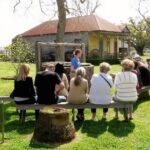




The American Sector: World War II Museum area and early art institutions
The route continues through the area once known as the American Sector, which is where you see two major cultural reference points: the World War II Museum and the Contemporary Arts Center. The value of including this stop is that it broadens New Orleans from architecture and neighborhood history into national-scale moments and institutions.
You do not need to be a WWII specialist to appreciate why this is on the itinerary. The guide’s commentary helps you connect why the American Sector mattered, and how the museum and art institution represent a city that keeps adding to its cultural footprint over time.
This also helps you avoid a common problem with short tours: the tendency to stay locked in one style of sightseeing. Here, you get history and art references that point beyond the French Quarter bubble.
If you plan to return to the World War II Museum later, this tour can act like a primer. You will at least know the geography of where it sits relative to other parts of the city, and you will have the guided context to make your later visit feel more intentional.
Metairie Cemetery: above-ground tombs and why the swamp matters

One of the most memorable stops is Metairie Cemetery. You get a brief visit that introduces the distinctive feature of New Orleans burial practices: above-ground tombs.
This matters because the cemetery is not just a place of monuments. It is part of the city’s design logic. The guide explains the idea behind the approach, and a strong version of the tour uses the cemetery to show how burials have been managed around the realities of the region since the city’s early days.
This is also where Joseph has been praised for making the cemetery visit feel surprising in a good way, including explanations about how burial methods were handled in swamp land conditions since the inception of the city. That kind of practical storytelling is exactly why a guided format helps. You might see tombs on your own, but you would likely miss the reasoning that shaped them.
If cemeteries make you uneasy, give yourself permission to treat the stop as a quick visual and a short history lesson. The tour keeps it brief, and you are not expected to spend the whole time wandering alone.
Passing Saint Louis Cathedral and planning your next step
Near the end of the route, you pass the Saint Louis Cathedral, described as North America’s oldest cathedral, with roots dating back to 1720 along the Mississippi River. Seeing it from the roadway in the tour flow is useful because the guide frames where it fits into the wider story of the city.
This is also a good moment for you to decide how you want to continue after the tour. If you like the feeling of the French Quarter but want to look closer, you can use the tour route as your mental checklist. If you prefer the neighborhood history theme from Treme, you might want to plan a separate walk or shorter revisit focusing only on that area.
A practical tip: because you will have passed so many major landmarks, write down the two or three places you most want to return to. Then, when you are on your own later, you can spend more time where you actually care.
Price and value, and what you get for $55
At $55 per person for a 3-hour experience, the value comes from four things you are not juggling yourself: hotel pickup and drop-off, an air-conditioned mini-coach, a live guide, and live commentary. If you are staying in the French Quarter or downtown, you also benefit from a route designed to hit multiple neighborhoods without you spending your energy coordinating transport.
Food and drinks are not included, so you should plan your day with that in mind. The good news is that the itinerary includes a park stop where you can choose coffee and beignets, which gives you a straightforward option if you want a snack moment.
This tour is particularly worth it if you are in New Orleans for a short stay and you want a coherent set of stops. It is also a good fit if you care about how neighborhoods connect through architecture and history, not just famous buildings.
Where it is weaker is if you want maximum free time, deep museum-level experiences, or long photo stops. The route moves, and you are riding between viewpoints.
Who should book this guided history and architecture tour
Book it if you:
- Want a structured 3-hour overview that ties neighborhoods together
- Prefer riding in an air-conditioned vehicle over doing everything on foot
- Like history and architecture explanations that go beyond the obvious French Quarter talking points
- Appreciate neighborhood social history, especially a stop in Faubourg Treme
Skip or consider a different option if you:
- Need lots of time to explore one area slowly
- Want food included as part of the ticket
- Are hoping for a museum-heavy day rather than an on-the-ground route with brief stops
Should you book this New Orleans tour
I think this one is a smart choice for first-timers and time-crunched visitors who still want substance. The biggest selling point is the guide experience. Past guides like Joseph and Bob have been praised for knowledge, storytelling, and even humor, plus for keeping the tour from feeling locked into cliché history.
If your goal is to see French Quarter landmarks, understand the significance of Faubourg Treme, get an atmospheric break at City Park, and end with the distinctive above-ground tombs of Metairie, this tour does that in a tidy 3 hours.
FAQ
How long is the New Orleans History, Culture & Architecture Guided Tour?
The tour lasts 3 hours.
What is the price per person?
The price is $55 per person.
Is hotel pickup and drop-off included?
Yes. Pickup and drop-off are included, but only from selected hotels in downtown New Orleans and the French Quarter.
Is transportation included, and is it air-conditioned?
Yes. You travel in an air-conditioned mini-coach.
What stops will I see during the tour?
You will see the French Quarter, the Esplanade, City Park (Besthoff Sculpture Garden and an option at Morning Call Cafe), the Warehouse District, Faubourg Treme, the American Sector area (World War II Museum and Contemporary Arts Center), Metairie Cemetery, and you will pass the Saint Louis Cathedral.
Is food or drinks included?
No. Food and drinks are not included.
Is the tour guided, and what language is it in?
Yes. It includes a live English guide with live commentary.
What should I do before pickup?
You should be ready and curbside 30 minutes before the tour’s scheduled time.
What happens if the weather is bad?
Good weather conditions are necessary. If conditions are adverse, you can reschedule for another date or receive a full refund.
Can I cancel for a full refund?
Yes. Free cancellation is available up to 24 hours in advance for a full refund.
More Tours in New Orleans






More Tour Reviews in New Orleans


More New Orleans Architecture Tours in New Orleans


More ways into New Orleans


Historical Tours, compared.
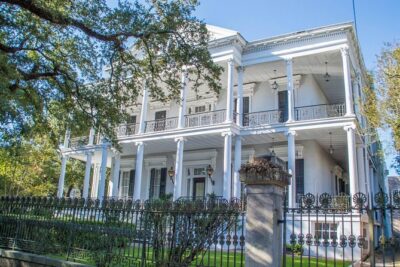 ★ 5.0New Orleans Garden District History Walking TourFrom $352,879 reviews
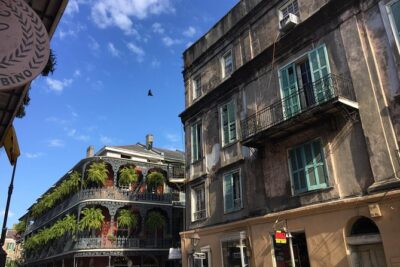 ★ 5.0French Quarter Historical Sights and Stories Walking TourFrom $352,724 reviews
 ★ 4.5New Orleans Small-Group Haunted History Carriage TourFrom $652,289 reviews
 ★ 4.5New Orleans Haunted History Ghost TourFrom $302,084 reviews
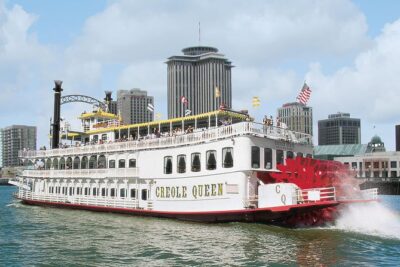 ★ 4.5Paddlewheeler Creole Queen Historic Mississippi River CruiseFrom $471,948 reviews
 ★ 5.0New Orleans Food and History Walking TourFrom $851,544 reviews
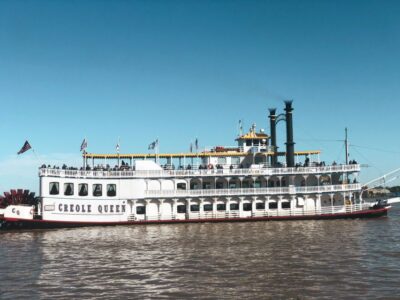 ★ 4.3Creole Queen History Cruise with Optional LunchFrom $471,112 reviews
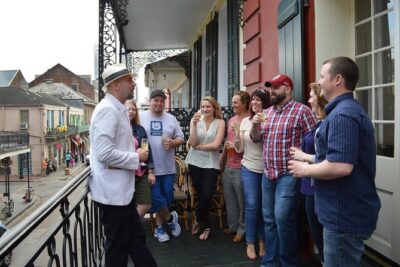 ★ 5.0New Orleans Cocktail and Food History TourFrom $160819 reviews
Browse the lists this tour appears in