

REVIEW · GARDEN DISTRICT TOURS
New Orleans Garden District Architecture Tour
Garden District streets feel like an open-air architecture class. This New Orleans walk is a small-group tour that turns the neighborhood into a story you can see, from Italianate houses and school buildings to Lafayette Cemetery No. 1. I really like the way the guide connects buildings to the people who commissioned and lived in them, and I also like that many stops are free to enter. One thing to plan for, though: you are outside walking for about 2 hours, and cemetery access can be limited if services are running.
The vibe is also a smart break from the usual big-ticket New Orleans route. You start at 2727 Prytania St, then finish back at the same spot, so it feels easy to plug into the rest of your day. With a maximum of 14 people, you get room for questions, plus guides sometimes use supporting photos to clarify details you might miss from the sidewalk.
You will walk away better at reading the neighborhood. Expect to learn what makes Italianate architecture stand out in the Garden District, how to spot differences in styles across time at the Women’s Guild of the New Orleans Opera building, and why New Orleans cemetery customs are so specific to the city.
Quick hits before you go

- Small group, max 14 people makes it feel personal instead of rushed
- Architectural focus means you learn what you’re looking at, not just where things are
- Lafayette Cemetery No. 1 gives you a rare look at the city’s “Cities of the Dead” burial customs
- Samuel Jameson buildings help you understand how one architect’s choices shaped the neighborhood
- Free entry at most stops, with Commander’s Palace discussion only, since admission is not included
- Most tours run in English, so you can ask questions and keep up easily
Why the Garden District walk beats the big bus vibe
The Garden District can feel like New Orleans wearing its Sunday clothes. Big mansions, tree-lined blocks, and that classic mix of old money elegance with everyday street life. This tour is built for slow looking. Instead of bouncing past houses, you get stops where the guide breaks down what matters, so the neighborhood starts to make sense fast.
I like that it’s not just “pretty houses.” You learn why those houses look the way they do, and how architecture ties back to the period when the neighborhood took shape. The final stretch in the Garden District also matters because you get time to apply what you just learned, not just hear it.
The only real tradeoff is the outdoor factor. Comfortable walking shoes are recommended, and you’re out there long enough to feel the weather. If it’s very hot, very rainy, or uncomfortable, that can make the experience less fun even if the guide is great.
More Garden District stories among the live oaks



Starting point on Prytania St, and why it makes the day easier

Meeting at 2727 Prytania St gives you a clear anchor. You can plan your morning or early afternoon around it, and you do not have to figure out a new end point. The tour also ends back at the meeting point, which is handy if you want to grab lunch nearby without reorganizing your whole day.
Since transportation to and from attractions is not included, treat this like a neighborhood walk you build your logistics around. The tour is near public transportation, which helps if you prefer to avoid driving or parking stress.
One more practical benefit: the tour uses a mobile ticket, so you’re not juggling printed papers. If you like having everything in one place, you’ll probably appreciate this.
Lafayette Cemetery No. 1: New Orleans burial customs in plain sight
Lafayette Cemetery No. 1 is the stop that gives the tour its deeper New Orleans edge. You only spend a short time there, but it focuses on burial customs tied to how New Orleans handles the idea of the dead and memory.
Here’s the important practical note. Entrance to the cemetery is permitted by the City of New Orleans, but it may be closed when services are being performed. So even though the tour includes this segment, you should expect that access could depend on what’s happening that day.
Why this stop is worth it: you see that New Orleans history is not only about architecture on land. It’s also about traditions that shape public space and community life. Even if you’re not a history deep-thinker, the cemetery setting makes the city’s quirks feel real and specific.
Morris-Israel House and the Italianate story you can actually spot

Two houses in particular do heavy lifting for the architecture part, and both tie to Samuel Jameson. You start with the Morris-Israel House, designed by Samuel Jameson in 1869. That date is useful because it places the building in a moment you can keep in your head while you keep walking.
Italianate architecture has clues, and the guide uses the Morris-Israel House as a way to teach you how to read the neighborhood. You’ll learn what elements signal the style and how those details connect to other buildings you’ll see nearby. Instead of treating each mansion like a random postcard, you start grouping them by style.
This stop also makes a great “aha” moment for first-time visitors. If you have trouble spotting differences between historic homes, this is exactly where the tour gives you a framework. When your brain gets a checklist, you start noticing windows, forms, and overall design choices without trying so hard.
Carroll-Crawford House and seeing how one architect shaped the block

The Carroll-Crawford House is another Samuel Jameson design, and the tour treats it as another chance to sharpen your eye. The guide highlights that Jameson was Irish-born and uses the building as a strong example of Italianate style in the Garden District.
If you’ve ever toured an area where every stop feels unrelated, this approach helps you avoid that. Seeing multiple buildings tied to the same architectural figure is one of the easiest ways to learn fast. You are not just collecting facts. You’re building patterns.
The drawback is minor but real. If you already know a lot about architectural styles, you might want to ask your guide for comparisons beyond the Garden District, since this tour mainly uses local buildings as examples. Still, the practical value is you’ll leave better able to identify what you’re looking at on your own.
A few more ways to spend the day around New Orleans



Women’s Guild of the New Orleans Opera House: one building, two eras
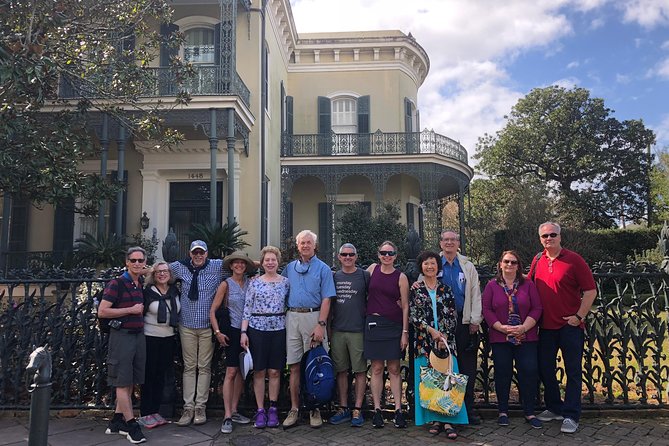
This is a clever stop because it trains your attention. The Women’s Guild of the New Orleans Opera building was built in two different eras and in two different styles. That means the structure itself becomes a mini lesson in how neighborhoods change over time.
The guide walks you through how to tell the differences between the styles. And that matters because the Garden District is not frozen in time. Even when you think you’re looking at a uniform “old New Orleans” look, layers exist.
One practical tip here: slow down. The value of a stop like this is in noticing what visually shifts from one part of the building to another. If you’re snapping photos and moving too quickly, you might miss the exact visual clues your guide is pointing out.
Louise S. McGehee School: when a house becomes a school library
Not every stop is a mansion. The Louise S. McGehee School offers a different kind of architecture lesson, one about how buildings get repurposed.
This late 19th century building began as a single family residence, then later transformed into the library for the McGehee School. That story helps you see the Garden District as a lived-in neighborhood, not just a museum of old homes.
If you like understanding how communities evolve, this stop lands well. Architecture here is not only style. It’s function, and it’s the changes that happen when a neighborhood’s needs shift.
Time-wise, this stop lasts about 10 minutes, so it’s enough to understand the transformation without turning it into a lecture.
Commander’s Palace: architecture talk with famous dining in the background
Commander’s Palace comes with a different flavor. The stop centers on the building’s architecture and the history of the owners, plus a mention of the culinary experience awaiting guests.
Admission is not included for this stop, and the tour focuses on discussion rather than a full interior visit. That makes it a good moment to ask your guide questions about how high-end institutions fit into the neighborhood’s story.
Even if you do not plan to dine at Commander’s Palace, hearing how the building relates to its owners and reputation helps connect architecture to New Orleans culture. It’s not just walls and windows. It’s status, tradition, and community branding.
The Rink Shopping Center: a skating rink fact that changes how you see the past
This stop is short, but memorable. The Rink Shopping Center is tied to early recreation in the neighborhood. It housed the largest skating rink in the country at the time it was built, in 1884.
Why I like this kind of detail: it breaks the “all mansions, no life” feeling you can get when you tour historic neighborhoods. Even a simple building can hold stories about what people did for fun back then.
At about 7 minutes, it’s enough to plant that idea, and then you move on with your brain already open to the neighborhood’s full timeline.
Final time in the Garden District: two hours of mansion spotting with context
The tour ends by turning into the part most people came for: spending time admiring the antebellum mansions and learning what was going on when the homes were built. You also hear stories about the designers and the people who lived in the houses.
This is where your new architecture “rules” start paying off. When the guide points out style cues earlier, that final section becomes much more than a scenic walk. You can look at a home and feel like you understand why it was designed that way.
The final segment is also your best chance to ask follow-up questions if your guide invites them. Many guides on this tour have an engaging style, and some use photos to support points. If you want to learn how to keep noticing things after the tour ends, this is the moment to press for specifics.
Price and value: what $40 buys in real terms
At $40 per person for about 2 hours, the math works because the experience is doing a lot of work for you. The guide is licensed and insured, and the tour includes a local perspective with extensive area know-how.
It also helps that most stop entries are free. The cemetery stop is free when access is permitted. Other stops like Morris-Israel House and the Women’s Guild building segments are also marked as free for the tour. The one clear exception is Commander’s Palace, where the discussion happens but admission is not included.
Transport is not included, so plan for how you’ll get there. If you’re already in or near the Garden District area, this becomes a very reasonable value. If you’re coming from far away, you’ll want to factor in your travel time and costs.
And because the tour is typically booked about 19 days in advance on average, it’s worth reserving early if you’re traveling during busy weeks.
Who this tour fits best, and how to get more out of it
This is ideal if you like architecture but you do not want to study it like a textbook. You’ll get enough structure to recognize Italianate features, understand why style changes over time, and connect buildings to local life.
It also works well for first-timers. Many people start in the French Quarter, then feel like they want something calmer and more grounded. The Garden District gives that “slow down and look” feeling without losing New Orleans character.
If you’re traveling as a family, the group format and varied stops make it easier to keep everyone engaged. If you’re a solo traveler, the small-group size helps you feel comfortable asking questions.
One more practical note: the tour is in English, and most travelers can participate. Comfortable shoes matter because it’s a walking tour, and weather can affect how enjoyable the day feels.
Booking decision: should you do this one?
I’d book this tour if you want the Garden District to make sense fast. For $40, you’re buying more than house photos. You’re buying a guide who can explain why the neighborhood looks the way it does, plus a cemetery stop that brings New Orleans tradition into view.
Skip it only if you hate walking outside for about 2 hours or if you’re extremely sensitive to weather. Also, keep in mind that cemetery access can be affected by services, and Commander’s Palace is a discussion stop rather than an included ticketed visit.
If your goal is to leave with better instincts for spotting architectural styles on your own, this is the kind of tour that pays off after you’re done.
FAQ
How long is the New Orleans Garden District Architecture Tour?
The tour is about 2 hours.
Where does the tour start and end?
It starts at 2727 Prytania St, New Orleans, LA 70130 and ends back at the meeting point.
What does the $40 price include?
You get a licensed, insured, local guide and a walking tour experience. Mobile ticketing is used. Some stop entry is free, but tickets for Commander’s Palace are not included.
Is Lafayette Cemetery No. 1 entrance guaranteed?
Entrance is permitted by the City of New Orleans, but the cemetery may be closed when services are being performed, so access can depend on the day.
What should I wear or bring?
Comfortable walking shoes are recommended.
Can I cancel for a full refund?
Free cancellation is available up to 24 hours in advance for a full refund. If you cancel less than 24 hours before the start time, the amount paid will not be refunded.
More Tour Reviews in New Orleans






More New Orleans Architecture Tours in New Orleans
More Garden District Tours



More ways into New Orleans


Garden District Tours, compared.
 ★ 5.0New Orleans Garden District History Walking TourFrom $352,879 reviews
 ★ 4.5New Orleans City Tour: French Quarter, Garden District & CemeteryFrom $402,209 reviews
 ★ 5.0New Orleans Small-Group Garden District Walking TourFrom $351,384 reviews
 ★ 4.5New Orleans City and Cemetery Tour with Garden District StrollFrom $55766 reviews
 ★ 4.9Garden District Guided Walking TourFrom $35514 reviews
 ★ 5.0New Orleans Highlights of the Garden District Walking TourFrom $37492 reviews
 ★ 4.8Garden District TourFrom $28480 reviews
 ★ 5.0Garden District Home and History Walking TourFrom $26470 reviews
Browse the lists this tour appears in