

REVIEW · NEW ORLEANS VOODOO TOURS
New Orleans: Voodoo, Storyville, and Treme Walking Tour
New Orleans has a talent for turning dark history into music. This tour links Storyville with early Jazz, then jumps into Voodoo and the neighborhoods that shaped Creole and African-American culture. You’ll walk from Backatown Coffee in the area of the old red light district to key stops tied to Marie Laveau, Congo Square, Louis Armstrong Park, and Treme.
I love how practical the tour feels, because you’re not just reading about the past, you’re seeing the places where it happened. I also like the way it tries to separate what people say about Voodoo from what you can actually explain through historical context, including the crossover with Roman Catholicism.
One possible drawback: it’s a full-on walking loop in changing weather, and a few stops touch on sensitive, respectful-attitude themes. Bring comfortable shoes and dress appropriately, so the day stays enjoyable instead of stressful.
Key things I’d watch for

- Storyville to early Jazz: you’ll connect the old red light district to names like Jelly Roll Morton, King Oliver, and Sidney Bechet.
- Surviving buildings at Bienville Basin Apartments: you see the physical evidence of Storyville’s era.
- Voodoo with context: you learn the West African religious basis and the Roman Catholic overlap, while sorting fact from myth.
- Congo Square and Louis Armstrong Park: you get the setting where music and culture have long public roots.
- St. Augustine and the War of the Pews: you’ll hear how church power collided with violence tied to the 1891 Parish Prison vendetta.
- Optional Backstreet Cultural Museum stop: if you want more on Mardi Gras Indians and Second Line culture, you can add it.
Starting at Backatown Coffee and Storyville’s double life

I like tours that start with a strong anchor point, and Backatown Coffee in the old Storyville area does that job. You’re standing where a red light district once operated for about 20 years, and the whole pitch is not shock value. The point is how a specific place and policy history can shape culture in unexpected ways.
Storyville was decriminalized prostitution. That sounds grim, but the tour frames it through a second thread: how the district became a training ground and a magnet for early Jazz talent. The names you’ll hear are serious ones, Jelly Roll Morton, King Oliver, and Sidney Bechet. You start to see the logic: musicians needed venues, audiences, and constant movement, and Storyville created that ecosystem.
If you’re the type who wants New Orleans to stay polite and surface-level, this is not that tour. If you want the real city, this kind of start helps you understand why New Orleans storytelling swings between celebration and consequences.
More music and neighbourhood history in Treme and Marigny
The Iberville Housing Project, Bienville Basin Apartments, and what survived
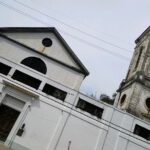
Next you head into the history at the former Iberville Housing Project, now called the Bienville Basin Apartments. This is where the tour gets hands-on in a good way: you learn the area’s layers and you’ll see surviving buildings tied to the Storyville district.
That matters because New Orleans can feel like a set of charming postcards. Storyville forces you to confront the fact that the city’s “old” structures are not just scenery. They are evidence. Even if you only take in a few facts at each stop, standing in the right location makes those facts stick.
The tour also touches on New Urbanism in architecture. You get a chance to think about how neighborhoods are redesigned, not just how they are remembered. It’s a useful lens for understanding why the city looks the way it does today, with restoration on one block and modern redevelopment pressures on another.
Practical note: this is still a walking tour, so you’ll want shoes that handle stop-and-start pacing. You’ll be changing mental gears constantly, from Storyville’s social history to the present-day built environment.
Voodoo in New Orleans: myths, realities, and the Catholic crossover

Then the route turns toward Voodoo, and the tone shifts into something more careful. You’ll explore Voodoo through realities and myths, with a strong emphasis on separating what’s fact-based from what’s sensational.
The tour explains the ancient West African religious foundation and then points out the crossover with Roman Catholicism in slave-holding colonies. This is one of the most important parts of the whole experience, because it helps you understand why Voodoo in New Orleans does not fit a simple, single-origin story.
You also learn the biography of Marie Laveau, often called the Voodoo Queen, and you’ll hear her story in a way meant to help you sort legend from historical framing. Whether you arrive believing in Voodoo as a spiritual practice, or arriving as a pure history and culture learner, the approach is the same: learn the context, don’t just repeat the scary movie version.
This segment is also where you’ll feel the “New Orleans complexity” most strongly. Religion, colonial power, survival, community memory, and public reputation all intersect here. If you enjoy cultural history that refuses to be neat, you’ll likely have a great time.
Basin Street Station, Congo Square, and Louis Armstrong Park

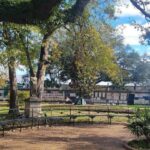
After Voodoo, the tour shifts into public cultural spaces. You’ll visit Basin Street Station, then move through Louis Armstrong Park and Congo Square. These stops are more than famous names. They are places where you can feel how New Orleans keeps reusing the same cultural energy for new generations.
Congo Square is tied to public gatherings and long-running cultural roots. Louis Armstrong Park carries the music legacy in a more modern, symbolic way. Together, these stops help connect the dots between performance, community presence, and the city’s identity.
The tour may also include Perseverance Hall and the Rabassa-de Pouilly House. Even without a lecture-heavy vibe, these kinds of stops give you a sense for how neighborhoods maintain continuity through institutions and architecture, not just through festivals.
One of my favorite ways to use a tour like this is to treat each stop as a clue. At Congo Square and Armstrong Park, you start asking yourself how public spaces shape music and social life. In New Orleans, the answer is often, a lot.
Finding the Marie Laveau site and learning how stories spread

You’ll also visit the site of Marie Laveau’s home. This is a moment where the tour slows just enough for you to think about how stories get attached to specific locations.
When you hear about Marie Laveau, it can be easy to accept a myth first and facts later. The tour approach nudges you in the other direction. It focuses on learning her biography and using that learning to understand why her name became a shorthand for Voodoo in American imagination.
Is it possible to leave with a perfect answer to what is true and what is embellished? Probably not, because oral tradition and public folklore are part of how the city works. But you should leave better equipped to ask better questions.
If you’re a visitor who wants New Orleans to feel real instead of staged, a site like this helps. It turns Marie Laveau from a headline into a place in the geography of the city.
More factual New Orleans voodoo history to explore


St. Augustine and the War of the Pews, plus the 1891 vendetta

St. Augustine Catholic Church is one of the stops where the tour’s storyline tightens. You’ll also hear about the Tomb of the Unknown Slave. This combination matters because it frames faith and public memory side by side.
From there, you’ll learn about the War of the Pews. The tour links it to the 1891 Parish Prison vendetta, where Sicilian convicts were killed after being accused of murdering Police Chief Hennessy. That sequence connects religion, power, and violence in a way that makes the phrase War of the Pews more than a quirky title.
This is the portion where I think it’s smart to keep your expectations balanced. You’re not signing up for a ghost-story tour. You’re walking through how authority and social tension played out in real events.
Also remember the respect factor. A Catholic church and a memorial space are not the places to treat the day like a photo scavenger hunt. If you handle the mood well, this segment becomes one of the most meaningful parts of the experience.
Treme: HBO scenery and the neighborhood as a living story

The tour spends time in Treme, a neighborhood that has long been associated with Creole and African-American culture. It also includes sites connected to HBOs Treme series, and that can be helpful even if you have not watched the show. TV locations often act like shortcuts into a real place, letting you orient faster.
The key lesson in this area is that Treme is not just a set dressing for New Orleans. It’s a community shaped by music, food, church life, migration, and long memory. The tour’s story style supports that. It keeps the focus on why these places mattered, not just how famous they became.
If Storyville gave you the cultural cause-and-effect, Treme helps you understand the effect that lasts. It’s one thing to hear that culture was shaped. It’s another to see a neighborhood still carrying that identity in everyday life.
You’ll walk enough that you’ll want to pace yourself. Take a moment when you can to look up, not just ahead. Streets in Treme can be easy to walk through quickly, but slow down and you’ll notice how much the built environment communicates.
Optional Backstreet Cultural Museum, worth the extra time?

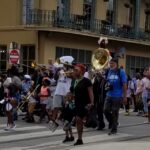
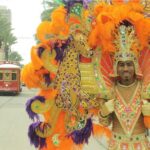
At one point, you’ll have the option to visit the Backstreet Cultural Museum. Admission is not included, but the museum is described as dedicated to preserving Mardi Gras Indian and Second Line culture.
This optional stop can be a smart add-on if you want the tour to convert ideas into artifacts and programming. It also gives your feet a chance to rest, which is honestly a practical benefit on a two-hour walk.
If you’re not into museums, you can skip it and still leave with a strong neighborhood storyline. But if you love street-level culture and want more than just outdoor stops, the museum is a logical way to extend the day.
Price and pacing: is $30 a good value?

At $30 per person for a two-hour walking tour, you’re paying for a guide-led route through multiple historically dense areas. The value is strongest if you want interpretation, not just landmarks. The tour isn’t only checking off famous names. It connects Storyville to early Jazz talent, explains Voodoo through historical frameworks, and walks you to places tied to Marie Laveau and major church-and-community conflict.
You’ll get included visits to the former Iberville Housing Project site, Congo Square and Louis Armstrong Park, the Marie Laveau home site, and other key stops such as St. Augustine Catholic Church and the Tomb of the Unknown Slave. You also get a brief description of St. Louis Cemetery if you ask your guide.
What you should plan for: food and drinks are not included, and transportation to or from the activity is not included. That means you should treat the tour as a focused cultural session. If you expect a full meal plan or rides between far-apart sites, you’ll be disappointed.
Who this tour suits best:
- You want New Orleans history that mixes dark and celebratory threads.
- You like cultural context, especially around religion and identity.
- You’re comfortable walking for a couple hours and using indoor stops if the schedule allows.
Who might find it less ideal:
- You want strictly light, kid-friendly storytelling.
- You dislike tours that discuss sensitive topics or require respectful behavior at religious or memorial sites.
Should you book the New Orleans Voodoo, Storyville, and Treme tour?
If your idea of a great New Orleans day includes Storyville, Marie Laveau, Congo Square, and Treme all in one connected storyline, I’d say yes. The structure helps you build a mental map quickly, and the tour’s focus on separating myth from context in the Voodoo segment is a big win.
Book it if you want your New Orleans to make sense, not just look good in photos. Skip it if you only want casual festival vibes, because this route spends time on real conflict, real power, and real tragedy.
If you go, I’d show up with two attitudes: curious and respectful. That combination is what lets these stories land the way they should.
FAQ
Where does the tour start?
The tour begins at Backatown Coffee, located in the area that used to be Storyville.
How long is the walking tour?
The tour lasts about 2 hours.
What is the price?
The price is $30 per person.
What stops are included?
Included stops include the former Iberville Housing Project (now Bienville Basin Apartments), Congo Square and Louis Armstrong Park, the site of Marie Laveau’s home, and visits to other listed landmarks such as Basin Street Station and St. Augustine Catholic Church area.
Is there an optional add-on?
Yes. Admission to the Backstreet Cultural Museum is optional, and it is not included in the tour price.
What is the St. Louis Cemetery component?
You can ask your guide for a brief description of St. Louis Cemetery, but it is not described as a full admission visit.
Does the tour include food or drinks?
No. Food and drinks are not included.
Is transportation provided?
No. Transportation to or from the activity is not included.
What should I wear or bring?
Wear comfortable walking shoes. Dress appropriately for respectful behavior at certain sites, and check the weather since you’ll be walking a significant amount.
Can I cancel?
The tour offers free cancellation up to 24 hours in advance for a full refund.
More Tour Reviews in New Orleans




More New Orleans Voodoo Tours

More Treme & Marigny Tours


More ways into New Orleans


New Orleans Voodoo Tours, compared.
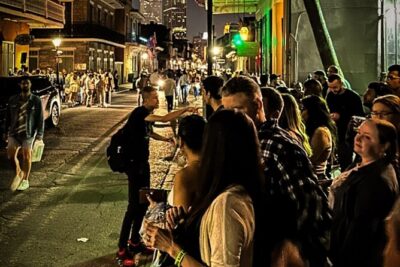 ★ 4.5New Orleans Premier Ghost, Voodoo and Vampire Walking TourFrom $2712,856 reviews
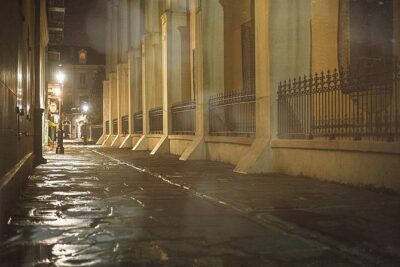 ★ 5.0Adults-Only New Orleans Ghost, Crime, Voodoo, and Vampire TourFrom $376,545 reviews
 ★ 5.0New Orleans Adults-Only Ghost, Voodoo and Vampire TourFrom $293,291 reviews
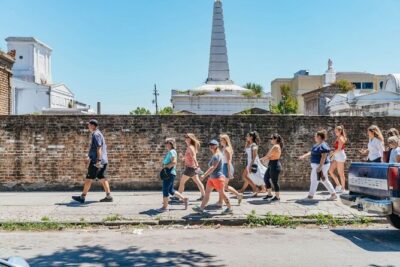 ★ 4.5New Orleans French Quarter, Voodoo and Culture Walking TourFrom $272,961 reviews
 ★ 4.5New Orleans Haunted Ghost, Voodoo & Vampire Walking TourFrom $322,731 reviews
 ★ 4.5French Quarter, Voodoo and Cultural ExperienceFrom $29972 reviews
 ★ 4.5New Orleans Ghost, Vampire, Witch, Voodoo, and Mystery TourFrom $30722 reviews
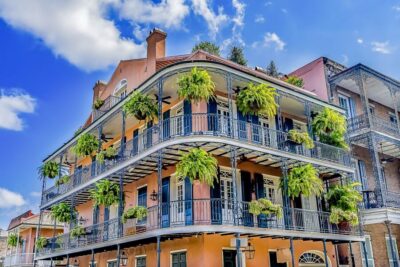 ★ 4.7Voodoo Queen Tour of French QuarterFrom $25482 reviews
Browse the lists this tour appears in