

REVIEW · CAJUN & CREOLE COOKING CLASSES
New Orleans: Hands-on Cajun Roux Cooking Class
Roux day in the French Quarter is fun. What makes this cooking class worth your time is the hands-on pace and the way you learn both Cajun and Creole staples, from gumbo to bananas foster. I like that you get practical technique, not just a demo, and I also like the full meal format with included wine, beer, and nonalcoholic drinks. One possible drawback: the menu is built around classic meat-and-seafood dishes, so if shrimp or sausage is a no for you, you may want to check how flexible the class can be.
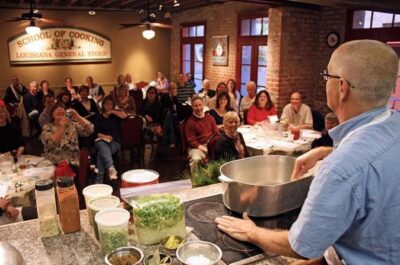
You meet in the French Quarter at Suite 101 on the ground level, and the group stays small, capped at 10 people. Instructors teach in English, and the space is wheelchair accessible, with a “everyone is cooking” setup that keeps the energy up.
Key Things I’d Prioritize Before You Go

- Small-group format keeps the class personal, capped at 10 participants
- Two roux styles for two different dishes, dark roux for gumbo and light roux for shrimp etouffee
- Three finished dishes chicken and andouille gumbo, shrimp etouffee, and bananas foster
- Included drinks including wine, beer, soda, and bottled water during class
- French Quarter location right where you want to be for food-first New Orleans sightseeing
- Chef-led teaching with English instruction and a history-and-technique approach
Where the Class Starts: Suite 101 in the French Quarter, Then Aprons On

The first thing you should know is that this is not a casual “watch and taste” situation. You start by getting acquainted with your classmates, then you put on aprons and jump into real prep. The meeting point is Suite 101 on the ground level, so you can plan to arrive a few minutes early and get settled without stress.
Because the group is limited to 10 participants, the room usually stays active. That matters, because Cajun cooking is one of those skill sets where timing, stirring, and seasoning go together. When you are stuck in a large crowd, you tend to fall behind. Here, the small size makes it easier to keep up with each step, especially once roux starts cooking.
Also, the class is built around English instruction. If you are more comfortable learning by doing than by reading a recipe later, this setup is a good match.
More Cajun and Creole cooking sessions in New Orleans

Cajun Holy Trinity and Mise en Place: The Real Skill Behind Great Flavor
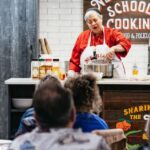
You begin with the foundations of New Orleans cooking: the importance of the Cajun Holy Trinity and the value of mise en place. That may sound like “kitchen jargon,” but here it is practical. When you chop, measure, and organize first, you move faster once the heat is on. Roux is a great example, because once you start cooking it, you cannot just walk away.
Instructors also build in the “why” behind the food. You learn history and context for the dishes you are making, with a focus on Cajun and Creole cuisine. The hands-on part and the background part work together, because knowing what a dish is supposed to taste like helps you make better decisions when you are seasoning and adjusting as you go.
If you like learning techniques that transfer to your own kitchen, this is one of the strongest parts of the class. It is not only about recipes, it is about process.
Dark Roux Gumbo: Chicken and Andouille, Built Step by Step

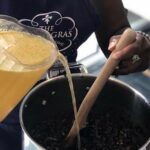
The first major cooking block is the gumbo. You prep, then start the Dark Roux specifically for the gumbo, and work through cooking until it is time to plate. The class structure keeps you from feeling lost, because you are guided through what to do next in order.
Gumbo is also the dish that teaches patience. Roux is where flavor is developed, and gumbo is where that flavor becomes the base for everything else. In a class like this, you learn how to approach the roux stage with attention, then you shift into assembling and finishing the pot.
Two things stand out as you cook:
- You are not stuck doing one small task all evening. You actively participate in prep and key steps.
- You are taught like you will cook again later, with pro-style technique and emphasis on seasoning choices.
If you are the kind of person who loves cooking with a plan, gumbo is a satisfying dish to work on because it has multiple stages and a clear payoff.
Light Roux Shrimp Etouffee: Why the Roux Changes Everything

After gumbo, you move to the shrimp etouffee, using a light roux approach for this dish. This is a smart teaching choice, because you get to compare roux styles in the same class. You can feel the difference in technique and result, and that makes the lesson stick better than watching a single roux version only once.
Etouffee is also a great “learn it once, repeat it forever” project. It tends to be the kind of New Orleans meal that impresses people without being complicated to understand once you know the method. In this class, you do not just end with a plate. You learn how the roux contributes to the final texture and flavor balance.
This is also where the class stays fun. You get rhythm after gumbo, and the shrimp etouffee stage keeps momentum going while the kitchen skills are still fresh.
Bananas Foster: The Dessert Finish That Looks Like Magic

The last part is dessert: bananas foster. This is often the favorite part for people because it turns into a showpiece. You get instruction on a fool-proof way to make it, so you are not left guessing when it comes time to combine ingredients and finish.
Dessert is a useful contrast to the savory dishes because the skills shift. Instead of focusing on roux depth for gumbo and etouffee base-building, you focus on timing and getting the sweet finish right. The class makes sure you understand what to do, not just what the final dish looks like.
It also helps that you end while your kitchen confidence is already up. By the time you reach dessert, you have already practiced chopping, organizing your work, and working with sauce-like textures. That carries over.
You can also read our reviews of more cooking classes in New Orleans


Eating What You Cook: Lunch or Dinner Plus Wine and Beer
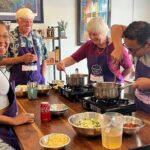
One of the best “value for your time” parts is that the class includes lunch/dinner and you eat what you prepare. You are also given complimentary wine, beer, soda, and water during the class. That turns the session into a true meal experience, not only a workshop.
In practice, this matters because cooking classes can be awkward. You leave hungry, or you spend extra money later. Here, your main cost goes toward both the teaching and the eating. You get three dishes, plus drinks, without having to plan a separate restaurant meal in the middle of your day.
The French Quarter setting also plays into the mood. After cooking, you are right there to continue with your New Orleans food crawl, whether you want to walk to nearby spots or just decompress in the neighborhood.
Price and Value: Is $157 a Fair Deal for 3 Hours?
At $157 per person for a 3-hour class, the price is not low. But you should measure value by what you get, not by what it costs in isolation.
Here is what you are buying:
- Professional-style instruction focused on Cajun and Creole techniques
- Hands-on cooking for multiple dishes, chicken and andouille gumbo, shrimp etouffee, and bananas foster
- Included meal, lunch/dinner
- Included drinks, including wine and beer, plus soda and bottled water
- Small-group attention, limited to 10 people
- A French Quarter location that makes it easy to pair with other plans
The main “trade-off” is that transportation is not included, so you either need to walk, taxi, or plan your own local transit. If you already plan to be in the Quarter, that is usually not a big deal.
For many people, the real value is the skill transfer. If you want to cook these dishes again at home, this class can work like a focused, guided shortcut to better results, especially with roux and seasoning approach.
Who This Cooking Class Fits Best

This is a great match if you:
- Want a hands-on cooking lesson in New Orleans, not a passive tour
- Like learning technique you can repeat, especially roux-based sauces
- Are excited to make a full meal, gumbo plus shrimp etouffee plus bananas foster
- Prefer small-group settings, with room for questions and active participation
It may not fit as well if you:
- Are not comfortable with the class focusing on shrimp and andouille sausage in the menu
- Are bringing younger kids who will not fully participate, because children under 10 are not suitable
Children over 10 can book if they are willing to participate and love to cook, which is a nice reality check. This class assumes you will actually be doing work at the cutting board and stove.
Should You Book This New Orleans Cajun Roux Cooking Class?

If you want a fun, skill-building food experience in the French Quarter, this one is an easy yes. The standout reason is the combination of hands-on cooking plus structured technique around roux, with three full dishes you can actually sit down and eat.
Book it if your goal is to bring home a repeatable approach to Cajun and Creole cooking, especially roux and the savory sauce foundations of gumbo and etouffee. Skip it or plan carefully if your diet cannot handle the core dishes, since the class is built around specific recipes.
FAQ
Where is the meeting point?
The class meets at Suite 101 on the ground level.
How long is the cooking class?
It lasts 3 hours.
What dishes will I cook in the class?
You will prepare chicken and andouille sausage gumbo, shrimp etouffee, and bananas foster.
Is food and drink included?
Yes. Lunch/dinner is included, along with alcoholic beverages, soda/pop, and bottled water.
Is there a limit to how many people are in the group?
Yes. It is a small group limited to 10 participants.
Is the class wheelchair accessible?
Yes, it is wheelchair accessible.
Are kids allowed?
Children under 10 are not suitable. Children over 10 can book if they are willing to participate and love to cook.
What is the cancellation policy?
Free cancellation is available up to 24 hours in advance for a full refund.
More Cooking Classes in New Orleans
More Tour Reviews in New Orleans




More Cajun & Creole Cooking Classes
More ways into New Orleans


Cajun & Creole Cooking Classes, compared.
 ★ 5.0New Orleans Demonstration Cooking Class with MealFrom $433,000 reviews
 ★ 5.0New Orleans Hands-On Cooking Class with MealFrom $1621,183 reviews
 ★ 4.9Cajun and Creole Cooking ClassFrom $40730 reviews
 ★ 5.0Hands-on Cajun Roux Cooking Class in New OrleansFrom $163356 reviews
 ★ 5.0Hands-on Cajun Traditions Cooking ClassFrom $163132 reviews
 ★ 4.5New Orleans Cooking Class and Cocktail Walking TourFrom $105109 reviews
 ★ 5.0New Orleans Small-Group Food Walking Tour and Cooking ClassFrom $10847 reviews
 ★ 4.7Cooking Class & Cocktail Walking TourFrom $10516 reviews
Browse the lists this tour appears in