
REVIEW · CAJUN & CREOLE COOKING CLASSES
New Orleans Demonstration Cooking Class with Meal
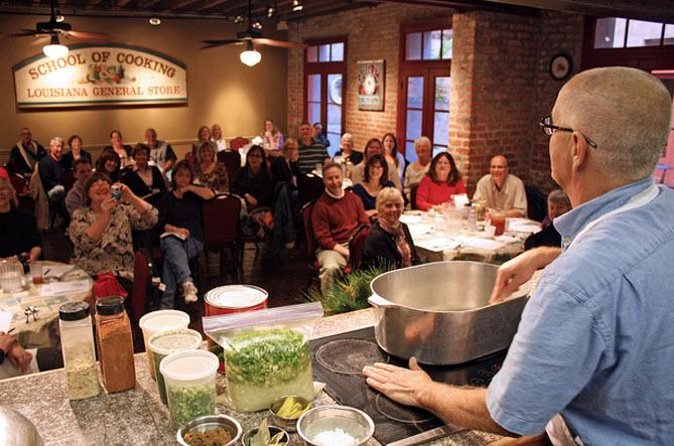
Roux first, then a full NOLA meal. In this converted 19th-century molasses warehouse at the New Orleans School of Cooking, I love how the chef-driven demo turns gumbo, jambalaya, and pralines into both a food lesson and a story. With instructors like Lynn, Chef Eric, and Chef Austin showing the why behind the how, you get a clear sense of what makes Louisiana cooking tick.
Two things I especially like are the generous samplings of every dish and the chance to hear the Cajun versus Creole explanation, right there in the room. One caution: this is not a tiny class. Even with a great chef, larger groups can make it harder to hear every detail, so choose your seat with sound in mind.
Key Things to Know Before You Go
- Converted molasses-warehouse setting makes the demo feel like New Orleans, not a cafeteria show
- Roux and spice technique talk helps you understand how gumbo and other dishes actually get built
- A full meal from the menu usually includes gumbo, jambalaya, etouffee, plus multiple desserts
- Local beer plus iced tea, coffee, and water are included, so you can taste and relax
- Recipes to take home plus a diploma for cooking later motivates you to try it again
- Dietary substitutions exist, with limits (the vegan and gluten-free option is discussed, not fully demonstrated)
How the New Orleans School of Cooking Makes Lunch Feel Like a Show
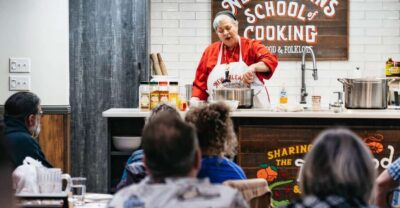
If you want New Orleans food culture in two hours, this class is built for that goal. You start at 524 St Louis St, inside the New Orleans School of Cooking, where the atmosphere does some of the work for you. The setting, a repurposed molasses warehouse, gives the whole thing a laid-back, old-school vibe, the kind of place where you expect stories along with food.
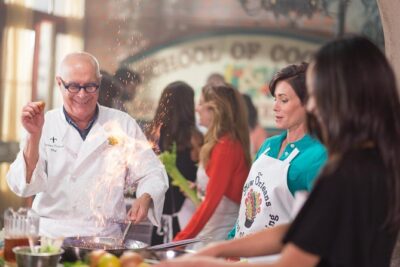
You sit down among other hungry people and get pulled into a structured presentation. The chef cooks live, explains what matters, and gives you the cultural context you can connect to later while you explore on your own. And since you are eating what you just saw, you are not stuck waiting for the payoff.
More Cajun and Creole cooking sessions in New Orleans
Stop 1: The Cooking Demo at 524 St Louis St
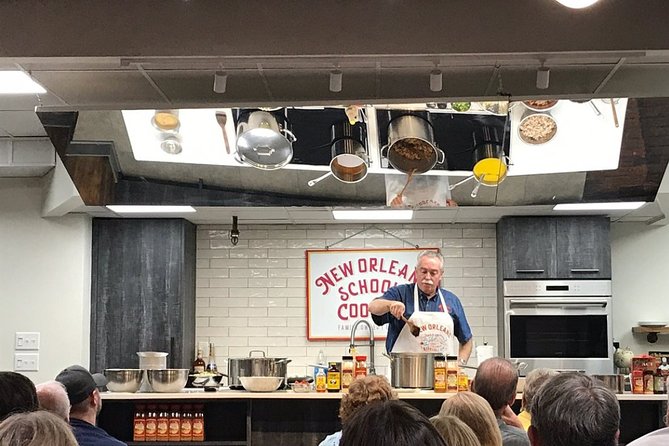
This first stop is the heart of the experience: watch classic Louisiana dishes get made, learn the techniques, then eat generous samples.
What the chef focuses on, beyond just the recipe
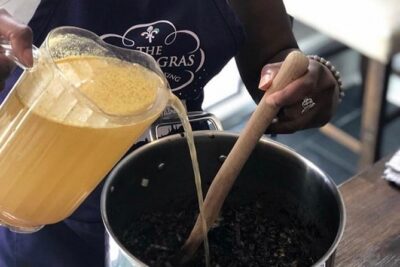
The demo is heavy on fundamentals, especially the importance of roux for dishes like gumbo. That is one of those things that sounds basic until you understand it. When a chef breaks down what roux does, and why timing and stirring matter, suddenly the recipe stops looking like a mystery and starts looking like a process you can repeat.
You also get a guided tour of spices and flavor building. Expect discussion of the spice approach that makes Creole cuisine what it is, plus practical notes that help you stop guessing when you cook later.
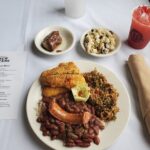
The dishes you will actually see and eat
Menus can vary, but the demo commonly includes the classics on your meal plan. In one typical flow, you may watch and sample:
- Corn and crab bisque as a starter
- Gumbo as a centerpiece
- Jambalaya and either shrimp or chicken creole
- Crawfish etouffee
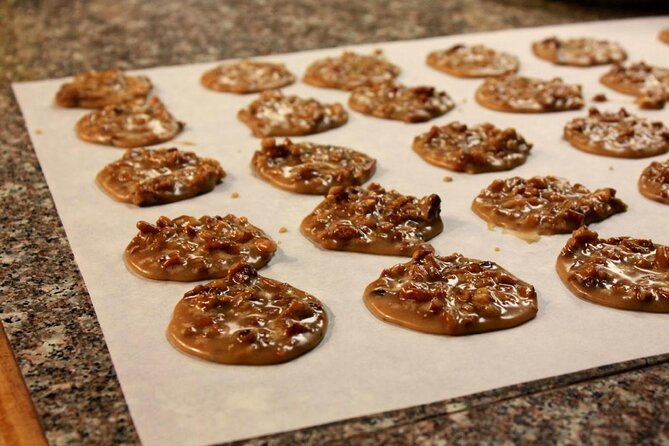
- A sweet lineup that can include bread pudding, bananas foster, pralines, and pecan pie
That is a lot for two hours, and it is not just “tiny taste” portions. Most people leave full because the class is designed as a meal first, then a lesson second.
Drinks are part of the pacing
You do not just get water and hope. Coffee, iced tea, water, and one local beer are included with the meal. The beer is a nice reset between savory bites, and the iced tea keeps things light while you work through dessert.
You can also read our reviews of more cooking classes in New Orleans


Cajun vs Creole: What You Learn Without Needing a Textbook
One of the best parts of this class is that the chef frames Louisiana cuisine as something shaped by many cultures. You hear about why certain dishes show up in New Orleans and how the region’s influences shaped flavors and cooking methods.
And yes, there is a moment where the difference between Cajun and Creole gets explained, especially if you ask. This matters because tourists often treat “New Orleans food” as one big category. Here, it becomes two related stories, and you start to recognize why a gumbo or a jambalaya feels the way it does.
Stop 2: French Quarter Time for Context
The activity includes a stop in the French Quarter after the cooking session. The details are light here, but the purpose is clear: once you understand what you just ate, you can walk the neighborhood with better context.
Even if you do not turn that time into a full tour, this is a useful add-on. Food in New Orleans is tied to the streets. The more you connect your meal to the city’s culture, the easier it is to enjoy the sights without feeling like you missed a big chunk.
The Meal: Where Value Shows Up Fast
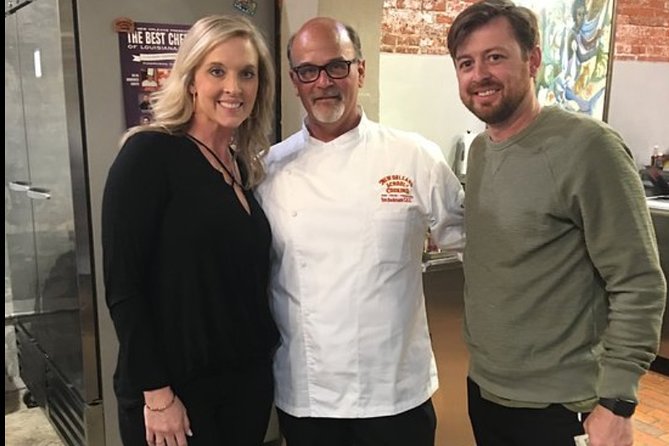
Let’s talk value, because this class is priced to feel like a deal. At $43 per person for about two hours, you are getting:
- A live cooking demonstration
- A full meal made up of multiple prepared dishes
- Coffee, iced tea, water, and one local beer
- A copy of the class recipes to take home
- A diploma-style follow-up, where you submit photos after you cook the recipes later
For many visitors, the “food only” value is already strong, since you are not paying extra for dessert hopping or drink refills. But the real advantage is that you eat right after learning what you are tasting. That connection is what makes the class feel more useful than a simple restaurant lunch.
How spice levels are handled
One practical note: the food is not always wildly hot. If you want to adjust flavor, ask about what is available on the table. In past classes, sauces like Joe’s Stuff (original, Bayou Blend, and Hot) have been set out so you can add heat and personalize your plate.
So if you are the type who expects every bite to be fiery, plan to customize. If you are spice-sensitive, this format can work well since you control how far you take it.
How Big the Group Feels (and How to Make It Work for You)

This is a class with a maximum capacity of 68 people. Some classes run smaller, but this is still not an intimate, one-on-one cooking chat.
The main drawback is audio and interaction. If your seat is far back or blocked, you might miss a few details. If you are the kind of person who likes to hear every word, arrive a few minutes early and pick a spot that gives you a clear line to the chef.
The trade-off is that you still get a lot of food and a polished program. Most people are there for the meal and the technique basics, and that setup tends to run smoothly when a chef is comfortable managing the room.
Dietary Restrictions: Options Exist, With an Important Limit
If you need a dietary accommodation, you should know what is possible. The class can accommodate dietary restrictions, but there is a specific process and there are limits.
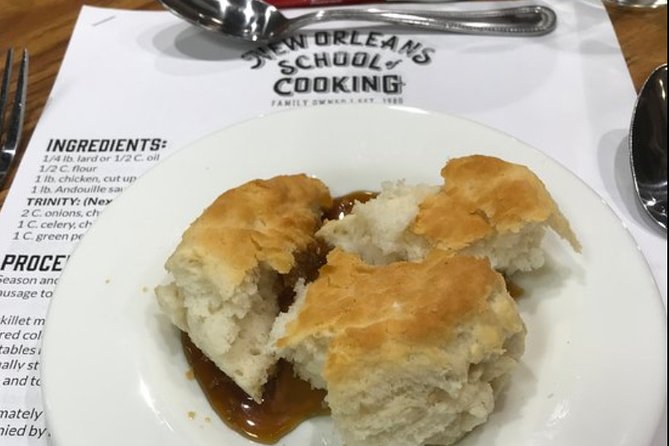
For a $5 upcharge at check-in, you may receive substitutions that are vegan, gluten-free, and nut-free, including gumbo z’herbes (soup) and creole z’herbes (entree). However, the important catch is that these substituted meals are not demonstrated on the stove. They are discussed, and you receive a copy of them through the class materials.
So you might get the soup part but not everything in the exact demonstrated format if your restriction conflicts with the demo recipes. The best move is to inform the stewards at check-in, so the staff can steer you to what fits your needs.
Recipes and the Diploma: The Part People Forget to Value
The recipe packet is not just a souvenir. You actually get enough detail to try again at home, and that is where the class has staying power.
Then there is the diploma follow-up. You submit photos of the recipes you cook later, and you receive a diploma for completing the at-home challenge. It is a clever nudge, and honestly, it is a better incentive than simply taking a paper home you never open.
If you cook at all, this is the section that turns a fun meal into a skill you can reuse.
Who This Cooking Class Is Best For
This is a great fit if you fall into one of these groups:
- You want New Orleans food basics without doing the planning of a culinary workshop
- You like learning while eating, especially if you are curious about roux and spice technique
- You want a low-stress activity that still feels special
- You are traveling with friends or family who might not be “food nerds” but do want a fun show and a full meal
It is less ideal if you need a quiet, small group experience, or if you expect hands-on cooking. This is a demonstration class only. You watch the chef cook; you do not do the chopping and stirring yourself.
What to Do Before You Sit Down
If you want the smoothest experience, come ready to eat and ask one good question.
Since the chef covers technique and history, a smart question can turn the whole class from entertainment into learning. If you care about the Cajun versus Creole distinction, ask. If you are curious about how roux timing works, ask. If you are unsure how to adjust spice later, ask what the table options are for heat control.
Also, go in hungry. The desserts alone can be a lot, and you are sampling multiple savory dishes first.
Quick Price Reality Check
At $43 for about two hours, this class is not cheap compared to a casual lunch. But it compares very favorably to paid tours that do not include a full meal, drinks, recipes, and a structured chef program.
You are essentially paying for three things at once:
1) live cooking instruction you can understand,
2) a full-course tasting you would otherwise buy in restaurants,
3) take-home tools to cook later.
If that combo sounds like your kind of trip, it is hard to beat.
Should You Book This New Orleans Cooking Demo?
I think you should book it if you want a hands-off, high-reward way to understand Louisiana cooking in a short time. The format is simple: watch the chef cook, eat what you watched, take home recipes, and leave with better food context for the rest of your trip.
Skip it if you need a small-group setting, or you hate the idea of sharing a room where sound can be an issue. Also skip it if you want hands-on cooking. This is watching and tasting, not doing.
FAQ
Is this a hands-on cooking class?
No. This is a demonstration class only, so you watch the chef prepare the dishes and then sample what is cooked.
What is included in the meal?
You get a full meal with generous sampling of the dishes prepared during the class, plus coffee, iced tea, water, and one local beer.
How long is the cooking demonstration?
The class runs for about two hours.
Where does the class begin?
Meet at the New Orleans School of Cooking at 524 St Louis St, New Orleans, LA 70130. The activity ends back at the meeting point.
What dishes are on the menu?
Menu items may include gumbo, jambalaya, corn and crab bisque, shrimp or chicken creole, crawfish etouffée, bread pudding, bananas foster, pralines, and pecan pie.
Can they accommodate dietary restrictions?
Yes. You can request accommodations after booking by calling the reservations line. For a $5 upcharge at check-in, vegan, gluten-free, and nut-free substitutions are available, but the substituted dishes are not demonstrated on the stove.
Are drinks included?
Yes. Coffee, iced tea, water, and one local beer are included.
Do I receive recipes to take home?
Yes. You receive a copy of the class recipes.
What if the class is canceled due to weather?
If it is canceled due to poor weather, you will be offered a different date or a full refund.
More Cooking Classes in New Orleans
More Tour Reviews in New Orleans



More Cajun & Creole Cooking Classes
More ways into New Orleans


Cajun & Creole Cooking Classes, compared.
 ★ 5.0New Orleans Hands-On Cooking Class with MealFrom $1621,183 reviews
 ★ 4.9Cajun and Creole Cooking ClassFrom $40730 reviews
 ★ 5.0Hands-on Cajun Roux Cooking Class in New OrleansFrom $163356 reviews
 ★ 5.0Hands-on Cajun Traditions Cooking ClassFrom $163132 reviews
 ★ 4.5New Orleans Cooking Class and Cocktail Walking TourFrom $105109 reviews
 ★ 5.0New Orleans Small-Group Food Walking Tour and Cooking ClassFrom $10847 reviews
 ★ 4.7Cooking Class & Cocktail Walking TourFrom $10516 reviews
 ★ 5.0Traditions Cooking ClassFrom $1579 reviews
Browse the lists this tour appears in