

REVIEW · FRENCH QUARTER TOURS
Beyond the French Quarter Bike Tour
A bike tour is a fast way to see New Orleans differently. I love that this ride mixes big-name landmarks with quieter neighborhoods, and it does it with a small group (up to 10). I also like how the pacing gives you real time to look, not just roll past. The one thing to plan for: you need moderate fitness for a steady ride of several miles.
You’ll meet at 3027 Chartres St, start at 9:30 am, and get a mobile ticket, plus the basics that make the day smoother: bike, helmet, bottled water, and a poncho if rain shows up. When the guide is Tonya, the route feels like a guided walk turned into motion, with friendly, street-level stories that help the neighborhoods click into place.
This tour steers you away from the usual only-in-one-area approach. Expect a long stop in City Park, a cemetery moment in the “Cities of the Dead,” and a break at Café du Monde where beignets are on you (not included). It is an efficient half-day, so bring a little curiosity and let the city come to you.
Key things to know before you pedal

- A route designed for perspective: you cover areas most walking tours skip, so you get more New Orleans per hour
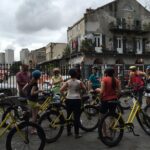
- Small-group attention: max 10 riders helps you stay connected to the guide, not lost in a crowd
- City Park plus cemetery time: live oaks and Spanish moss, then burial rituals in St. Louis Cemetery No. 3
- Flat riding, but watch the road: many streets feel manageable, but potholes can still surprise you
- Food stop is optional: Café du Monde is a planned break, and you can choose what to buy
Why this tour works beyond the usual French Quarter loop

New Orleans is compact on a map, but it can feel scattered once you start walking, especially when you want more than one “zone.” This bike tour is built for momentum. You keep moving, yet the schedule still includes enough pause time to actually look at what you are passing.
Two things I think you will appreciate right away. First, the ride is designed to show you the city as a connected set of neighborhoods, not as a highlight reel. Second, the format fits travelers who like their history in human scale, the kind you can understand while you are rolling past the real streets.
The tour also leans into “less popular” areas in a smart way. You get memorable anchors like the cemetery and City Park, but you also pass through the Creole neighborhoods that shape how the city developed. That combination is what makes the time feel worth it, even though this is only about 3.5 hours.
More French Quarter walks and tastings near the same streets



The exact route, stop by stop, and what each one adds
The tour runs about 3 hours 30 minutes and covers roughly 9 miles on the ride plan, with at least one rider seeing about 6.5 miles on their own map. Either way, the point is not distance math. It is that the route links different sides of New Orleans so you see how they relate.
Stop 1: Esplanade Avenue, the oak-lined showpiece
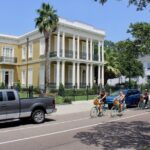
You start by biking up Esplanade Avenue, a grand stretch once nicknamed Creole Millionaires Row. From the saddle, you get a different kind of view than you would get from a sidewalk. The trees create a natural tunnel feel, and the architecture reads more clearly when you are moving at a steady pace.
You also get a sense of where the neighborhood story shifts. The route carries you past Faubourg Treme and then into Faubourg St. John. That matters, because it is the first hint that this tour is mapping a city, not just sightseeing it.
Stop 2: Degas House and Luling Mansion area
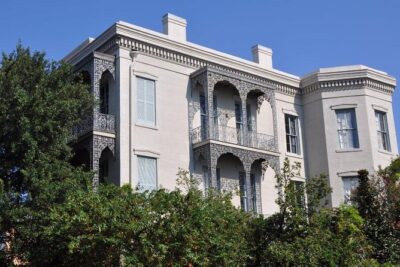
Next comes a short look at charming homes, including Degas House and the nearby Luling Mansion. This is not a long deep dive where you go inside and spend hours. It is more like a quick visual introduction, a chance to spot details and architecture types you might otherwise miss.
If you enjoy seeing the “why” behind a neighborhood, this brief stop helps set the stage. You will start connecting the look of the street to the stories you hear later.
Stop 3: Seventh Ward, Creole neighborhoods, and everyday local clues
From there, you ride through parts of the Seventh Ward, with stops that focus on Creole neighborhoods like Faubourg Treme and Faubourg St. John. This portion is about stories and street context. You get commentary that helps you understand what you are seeing, plus hints about hidden local spots to try.
This is also one of the most valuable parts of the tour for practical travelers. The guide is not only teaching landmarks. You are picking up a mental map of where to go next if you want to eat or wander like a regular, not like a schedule follower.
More New Orleans bike routes beyond the Quarter


Stop 4: St. Louis Cemetery No. 3, Cities of the Dead
Then you reach St. Louis Cemetery No. 3, where you learn about burial rituals in the Cities of the Dead. Even if cemeteries are not your usual activity, a guided ride makes this easier to understand.
The time here is brief (about 10 minutes), but the purpose is clear: give you the essential context so the cemetery does not feel like random headstones behind a wall. You will come away with the idea that New Orleans cemeteries are part of a living cultural tradition, not just a spooky photo stop.
Stop 5: City Park, live oaks and Spanish moss
One of the biggest scheduled chunks is City Park, about 45 minutes. This is where the tour gets more relaxed. You pedal through live oak groves and Spanish moss, and the guide points out things like museums, botanical areas, and sculpture gardens.
This stop is a win because City Park is one of those places where the atmosphere does most of the work. Even if you only do part of it, you get the feeling of escape from the street noise. And because you are biking through rather than only walking one path, you see more of the space without burning your whole afternoon.
Stop 6: Café du Monde in City Park, the break you actually need
After the park, there is a planned break at Café du Monde in City Park. You get about 25 minutes here. Beignets and café au lait are not included, but the stop is built into the tour so you are not scrambling for food halfway through your ride.
This is one of those practical “yes, do it” moments. You have been pedaling, listening, and stopping. A warm drink and a sugary plate are a nice reset, and it also gives you a chance to regroup with your group before heading back.
Stop 7: Bayou St. John, Bayou Road and why New Orleans exists
Next you follow Bayou Road, tracing the trail of Bayou St. John. The tour frames it as one of the oldest roads in the US, tied to the reasons New Orleans exists. That is the kind of line that clicks best while you are moving along a corridor that feels historic.
This stop adds a different “New Orleans” angle. Instead of only architecture and parks, you get geography and infrastructure, the kind that shaped settlement patterns long before the city became famous for festivals and nightlife.
Stop 8: French Quarter pass-through, then back to Chartres
On the way back, you pass through the historic French Quarter and Faubourg Marigny. You are not stopping there for a long sit-down. You are getting the payoff view as you return, which keeps the ride from turning into the same French Quarter tour you can do on foot anytime.
Then the tour ends back at the meeting point, where you started at 3027 Chartres St.
What your guide brings, and why the small group matters
This is the kind of tour where the guide can make or break your experience. The best part of the reviews quality-wise is the consistency: the guides are friendly, and they keep the information tied to what you are actually seeing.
Tonya is specifically mentioned for being fantastic, and that name comes up for a reason. Riders describe clear, helpful street-level commentary and a sense that the guide genuinely knows the neighborhoods, not just memorized stops. You also get the benefit of dialogue. If something catches your eye, you are more likely to get an answer when the group is small.
That max group size of 10 is not just a number. Smaller groups help with traffic flow, route adjustments, and comfort during stops. It is easier to ask questions, easier to regroup when you slow down, and easier to feel like you are moving with a person who understands the city’s rhythms.
Pace, road conditions, and what moderate fitness really means

The tour is marketed for moderate physical fitness, and your body should expect a steady ride for the duration. Reviews also reinforce that it works best if you are comfortable with a longer, continuous effort rather than lots of short bursts.
The streets are generally flat, which is a huge help. Multiple riders specifically note the ease of riding and that the pace is good. Still, one caution shows up: potholes. New Orleans roads can be uneven, and a bike tour means you feel more of the pavement than you would in a car.
Here is how to prepare so it feels fun, not tense:
- Wear comfortable shoes with grip for stop-and-go moments
- Dress for sun and shade changes, especially when you move from streets into park paths
- Bring a light layer if you get cool in the mornings, even in warm months
- If you are sensitive to bumps, take it slow through rough patches
You also have practical gear covered. Helmets are included, plus bottled water and a poncho if it rains. That setup matters because it lets you focus on the ride instead of managing gear.
If you are planning to bring kids, the tour asks for children’s heights so the right bike size can be chosen. That is a helpful detail to take seriously at booking time.
Value check: is $60 a fair trade for 3.5 hours on bikes?

At $60 per person, you are paying for more than just bike time. You get the bike, helmet, bottled water, and rain protection, plus a local guide. You also get admission tickets listed as free at the stops, meaning the cost is mainly for the guided cycling experience and the time together.
Where the value really lands is in how much you see without exhausting yourself. You are combining a grand avenue (Esplanade), architectural looks at homes, neighborhood context, a cemetery orientation moment, a full City Park immersion chunk, and then the Bayou St. John connection, all in one half-day format.
If you try to do this with public transport and walking, you will spend more time in transit and more time deciding what to skip. The bike tour reduces that friction, and the route plan does the thinking for you.
And yes, you should budget a little extra for Café du Monde. Beignets are not included, but having it built into the schedule means you do not lose the day searching for a reliable option.
Who should book this, and who should skip it

This tour is a great fit if you:
- Like history and culture but want it explained while you see the real streets
- Prefer walking alternatives that still include stops for photos and questions
- Want to get out of the French Quarter bubble without cramming in a full-day plan
- Enjoy biking at an easy, steady pace, not aggressive workouts
Skip it if you cannot handle a continuous ride for the full session, or if you know pothole bumps will make you uncomfortable. This is not described as a gentle trickle of brief cycling, it is a real ride with time on the bike.
Families can consider it too, as long as the kids can fit the bikes based on height information provided. The small group size also helps keep things controlled.
Should you book Beyond the French Quarter Bike Tour?

I think you should book it if you want a guided way to see New Orleans beyond the obvious postcard zones, without spending your entire day traveling or walking. The mix of Esplanade Avenue, Creole neighborhoods, St. Louis Cemetery No. 3, and a meaningful City Park stop gives you variety. The small group format makes it feel personal, and the guides, including Tonya, are repeatedly praised for being friendly and for strong street-level commentary.
If you are choosing between options, ask yourself one question: do you want New Orleans as a connected ride through neighborhoods, or do you want a single district experience? If it is the connected ride, this tour hits the sweet spot.
FAQ

How long is the Beyond the French Quarter Bike Tour?
The tour runs about 3 hours 30 minutes.
How much does the tour cost?
It costs $60.00 per person.
Where do we meet, and does the tour end nearby?
You start at 3027 Chartres St, New Orleans, LA 70117, and the tour ends back at the meeting point.
What is included in the price?
The tour includes bike use, helmet, bottled water, a local guide, and a poncho when it is raining.
Is food included?
No. Beignets are not included in the tour price. You will have a break at Café du Monde, where you can purchase beignets and café au lait.
Is the tour offered in English?
Yes, it is offered in English.
Is there any rain plan?
The tour operates rain or shine. A poncho is provided, and if dangerous weather happens, the operator will work with you to reschedule or refund.
What is the cancellation policy?
You can cancel for a full refund if you cancel at least 24 hours before the experience’s start time. If you cancel less than 24 hours before, the amount paid is not refunded.
More Tour Reviews in New Orleans





More New Orleans Bike Tours
More French Quarter Tours

More ways into New Orleans


French Quarter Tours, compared.
 ★ 5.0New Orleans Food Walking Tour of the French Quarter with Small-Group OptionFrom $756,118 reviews
 ★ 4.5New Orleans French Quarter, Voodoo and Culture Walking TourFrom $272,961 reviews
 ★ 5.0French Quarter Historical Sights and Stories Walking TourFrom $352,724 reviews
 ★ 4.5Ghost and Vampire Walking Tour Of The French QuarterFrom $212,406 reviews
 ★ 4.5New Orleans City Tour: French Quarter, Garden District & CemeteryFrom $402,209 reviews
 ★ 4.7French Quarter Walking and Storytelling TourFrom $351,251 reviews
 ★ 5.0New Orleans French Quarter Food Tour: Cajun, Creole and CultureFrom $811,246 reviews
 ★ 5.0New Orleans French Quarter and More Carriage RideFrom $651,141 reviews
Browse the lists this tour appears in