
REVIEW · NEW ORLEANS BIKE TOURS
New Orleans Creole Odyssey Small-Group Bike Tour
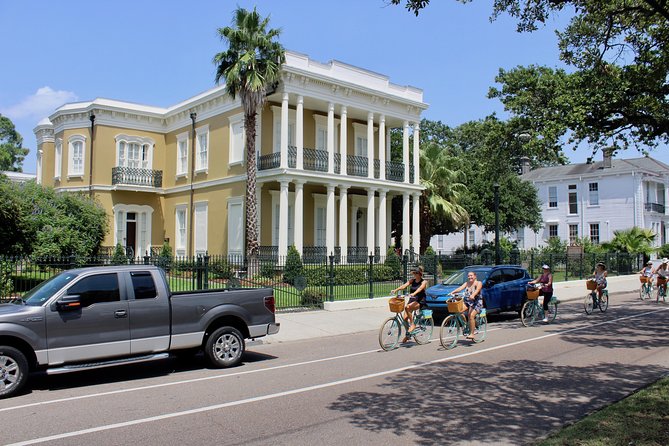
Pedal from legends to bayou air in three hours. This small-group New Orleans Creole Odyssey bike tour strings together the French Quarter, City Park, and Bayou St. John, with a guide who keeps you connected to what you are seeing. I like that it stays flat and easy-going, so you can focus on the neighborhoods instead of fighting the ride.
What I really like is the way the tour mixes big themes with specific stops. You get the Creole-flavored story of the city’s fabric, then you hit landmarks that make the past feel concrete, like St. Louis Cemetery No. 3 and Congo Square.
One thing to consider: you are still on a bike for real stretches, and the tour takes weather seriously. Also, you cannot wear flip-flops or slippers, so plan footwear like a local, not like a weekend vacation.
Quick hits before you ride
- Small group, max 10 riders, so questions do not get lost in a crowd
- Flat route with easy pacing, built for most riders who can pedal steadily
- St. Louis Cemetery No. 3 + Congo Square stops, where the guide connects place to culture
- City Park ride through New Orleans’ biggest urban green space, plus a short Cafe du Monde break nearby
- Bayou St. John at the city edge, with stories that reach back to Native Americans and early French settlers
A 3-hour Creole route that actually changes the way you see New Orleans
This tour is designed to do a specific job: help you get past the French Quarter-only view. You start in the French Quarter area, then you gradually move outward, ending up near Bayou St. John. That shift matters because New Orleans is not one theme. It is neighborhoods, history layers, and different rhythms.
The route is also planned for comfort. You are not doing steep climbs or long, exhausting distances. The guide keeps you moving between stops, with the longest stretch in Mid-City where you settle into a steady pedal cadence.
The best part is how the tour turns geography into context. When you roll through leafy parks and along watery edges, the stories stick. You are not just hearing facts, you are seeing how the city is laid out and how that influenced daily life.
More New Orleans bike routes beyond the Quarter


Price and value: what $55 buys you, and what it does not
At $55 per person for about three hours, this tour is priced like an activity, not a museum day. You get a professional guide, bike and helmet rental, and bottled water. For many visitors, that is the real value: your transport and equipment are handled, so you spend your time learning and moving, not figuring out gear.
What is not included is also important. Food and drinks are not part of the price. If you need coffee or a snack before you start, plan ahead, because you will have only short breaks during the ride.
Is it a deal? If you want neighborhood variety without renting a bike for the whole day or paying for multiple separate attractions, this format can feel efficient. You cover a lot of ground in a short window, and the route includes several learning stops rather than turning into a quick photo loop.
Starting point at 626 N Rampart: check-in flow and what to wear
The tour meets at 626 N Rampart St in the French Quarter area. When you arrive, you start at the Flambeaux Bicycle Tours location. Expect a quick start where you get oriented and ready to roll, then you head into the city.
Wear closed-toed shoes if you can. Flip-flops and slippers are hazardous and are prohibited on the tour. If you are wearing sandals, go for ones with heel straps, because they stay on when you pedal.
Two practical rider requirements are worth flagging early:
- Minimum age is 13
- You must be over 4’11”
If you are between sizes, plan for height first. A bike fit makes everything easier, especially if you have never ridden a rental before.
French Quarter orientation stop: the old-building clue that sets the tone
You begin with a stop in the French Quarter area, where the guide points out the oldest building in the city. That sounds simple, but it is a smart trick: it gives you an anchor point. Once you know what the city considers its oldest reference, it is easier to spot themes as you move.
Timing here is short, about 15 minutes after your initial check-in, so do not expect a deep dive. Think of it as orientation. You are getting a mental map so the later neighborhood stories make sense.
A small drawback of the French Quarter opening is also predictable: the area around it can be busy. If you get there a little early, you will settle in faster and avoid a rushed start.
Faubourg Marigny and Frenchmen St: culture you can feel without staying put
Next up is Faubourg Marigny, with a focus on Frenchmen St, music, history, and the neighborhood’s cultural heartbeat. This stop is less about formal monuments and more about the vibe and identity of the area.
The timing is brief, around 15 minutes, so the goal is not to memorize every detail. Instead, you get a cultural lens. When the ride continues on toward Mid-City, you are not moving blind. You know the city has different centers of gravity, and Marigny is one of them.
If you like wandering where locals spend time, this is a good match. If you only want tidy, high-profile sights, you might wish the stop were longer. Still, it does its job by setting you up for what follows.
You can also read our reviews of more cycling tours in New Orleans
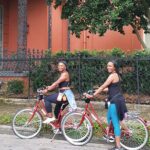
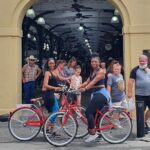
Mid-City’s long pedal time: where the tour really earns its keep
About two hours of the ride is in Mid-City. That is the real engine of the itinerary. It matters because you get more time for the landscape of New Orleans to come into focus: oak-lined streets, leafy parks, and the feel of moving through residential and civic areas instead of just tourist corridors.
Because the route is described as flat and leisurely, Mid-City is where many riders relax into the experience. You are not constantly braking and starting again like in a short, stop-and-go walk.
The main consideration here is endurance. Even on an easy route, you need to be comfortable pedaling for a while. If you are new to biking, take it steady. The group is small, so you should have an easier time keeping your pace than on big bus tours.
St. Louis Cemetery No. 3: burial practices explained where you can see them
One of the most meaningful stops is St. Louis Cemetery No. 3, around 20 minutes. This stop is focused on the district burial practices, and it is the kind of place where a guided explanation helps a lot. Cemeteries in New Orleans do not work like modern burial grounds elsewhere. They are part of how the city organized memory, family, and status.
This is also one of those stops where your guide’s delivery can make or break the experience. In prior tours, guides like Eric have brought a personal tone and a clear love for the city, and it shows in how the stories get told in places like this.
Practical tip: wear comfortable shoes and stay aware of your footing. Cemetery areas can be uneven, and you will want your balance when you pause for photos and explanations.
City Park ride and the Cafe du Monde break you will actually use
The tour rides through City Park, described as the largest urban park in the city, with time built in for a short 10-minute brake at the Cafe du Monde location in the park area. You get about 20 minutes here total, so it is enough to take a breath, stretch your legs, and decide if you want a coffee or a treat.
This stop is valuable because it shifts you from streets and neighborhoods into open space. After the more compact city areas, City Park helps the whole tour feel varied rather than repetitive.
One thing to keep your expectations straight: the break is short. If you want a full meal, this is not that moment. Think of it as a reset, not a feast.
Bayou St. John at the city edge: watery history you can see
The final riding focus before you close out the tour is Bayou St. John, about 15 minutes. This waterway has a long timeline, and the guide explains it as a historic route that was traversed by Native Americans and early French settlers.
This stop changes the mood. Instead of dense blocks, you are listening and looking for the water’s presence at the edge of town. Even if you only spend a short time here, you come away with a different sense of New Orleans as a whole system, not just a set of famous streets.
If you like photos, bring your camera ready before you arrive. Bayou St. John is the kind of place where the light and the waterline can make a dramatic shot, even in a short stop.
Congo Square: Jazz origins explained in a sacred setting
You also stop at Congo Square, around 15 minutes, where the guide covers the origins of Jazz in this sacred location. This is one of the cultural heart points of the tour, and it is a great example of how the ride is built around meaning, not only scenery.
Because the time is limited, do not expect a music lecture. Expect a guided explanation that connects the idea of Jazz to where it grew and why the space carried weight. If you enjoy history that feels tied to lived culture, this is the kind of stop you will remember later.
This is also a good reminder that New Orleans is not just food and music on menus. It is places where communities gathered and shaped art.
Guides like Eric and Gomez: why the storytelling matters
The small-group format is one thing, but the guide is the real multiplier. In this tour style, you can get a lot from personality and clarity, and guides such as Eric and Gomez have stood out for engagement and strong city storytelling. Gomez has also been described as fully bilingual, which can be a comfort if you want the information in more than one language.
Here is what I suggest you listen for on this ride:
- How the guide connects each stop to the next neighborhood shift
- The practical details that make the history feel usable, not just memorized
- The way they translate place names into what people did there
You are not just collecting facts. You are building a map in your head, and a good guide keeps that map coherent.
Who should book this bike tour, and who should skip it
This tour fits best if you want:
- Neighborhood variety beyond the French Quarter
- A short, guided way to see multiple landmarks without hopping between cars
- A bike-friendly experience where most of the route is flat
It may not be ideal if:
- You hate biking or you cannot pedal steadily for extended stretches
- Your footwear options do not meet the tour rules, since flip-flops and slippers are prohibited
- You need fully guided time inside buildings, because several key stops are outdoors
The tour also has a maximum group size of 10, which helps keep the pace manageable. That is great if you like direct answers and a guide who can actually see your faces when you ask something.
Booking timing, group size, and what to do if the weather shifts
The tour is typically booked around 23 days in advance on average, which tells you it is popular enough that waiting can cost you your preferred dates. If you have fixed plans, booking earlier is smart.
The experience requires good weather. If it gets canceled due to poor weather, you will be offered a different date or a full refund. That flexible approach matters in New Orleans, where one hour can change everything.
Should you book the New Orleans Creole Odyssey bike tour?
I would book this tour if your goal is to see New Orleans as a patchwork of neighborhoods, not a single highlight reel. The route is built for easy motion, and the stops go beyond surface photos, especially at St. Louis Cemetery No. 3 and Congo Square.
Book it too if you want value for $55 that includes the bike, helmet, guide, and even bottled water. You trade some freedom for a tight, well-timed route, which is usually a good deal when you only have a few days in town.
Skip it if biking does not sound fun for you, or if you are not comfortable with footwear rules and a steady ride through Mid-City. In that case, you might be happier with a walking-focused plan or a different sightseeing option that better matches your pace.
FAQ
How long is the New Orleans Creole Odyssey bike tour?
It lasts about 3 hours.
What does the $55 price include?
The tour includes a professional guide, bike rental, helmet rental, and bottled water.
Where does the tour start?
You meet at 626 N Rampart St, New Orleans, LA 70116.
What are the requirements for riding?
The minimum age is 13, and you must be over 4’11”. Closed-toed shoes are preferable, and flip-flops or slippers are prohibited. Sandals with heel straps are the better option.
Is the route flat and beginner friendly?
The route is described as flat and suitable for most fitness levels. You do have a long riding stretch through Mid-City, so you should feel comfortable pedaling.
What are the key places the tour visits?
You ride through the French Quarter, Faubourg Marigny, Mid-City, stop at St. Louis Cemetery No. 3, ride through City Park with a short Cafe du Monde break, and reach Bayou St. John, plus Congo Square.
What happens if weather is bad or you need to cancel?
The tour requires good weather. If it is canceled due to poor weather, you will be offered a different date or a full refund. You can cancel for a full refund up to 24 hours before the experience start time.
More Tours in New Orleans




More Tour Reviews in New Orleans


More New Orleans Bike Tours

More ways into New Orleans


New Orleans Bike Tours, compared.
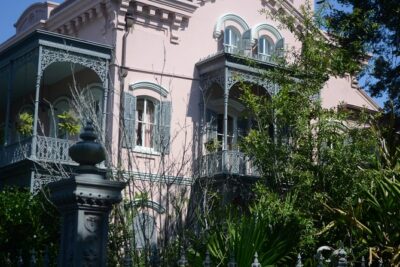 ★ 5.0New Orleans French Quarter and Garden District Bike TourFrom $55410 reviews
 ★ 5.0Creole New Orleans Electric Bike Tour (ages 16 & up)From $89230 reviews
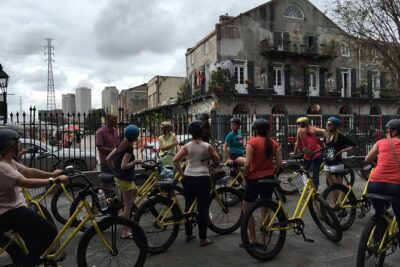 ★ 5.0New Orleans History and Sightseeing Small-Group Bike TourFrom $55215 reviews
 ★ 5.0New Orleans Heart of the City Bicycle TourFrom $55202 reviews
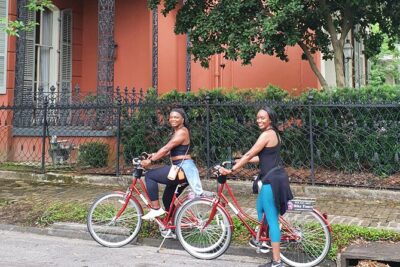 ★ 5.0New Orleans Garden District and Cemetery Bike TourFrom $55187 reviews
 ★ 5.0New Orleans City Bike TourFrom $60162 reviews
 ★ 5.0The Original ‘Creole and Crescent’ Bike TourFrom $5567 reviews
 ★ 5.0Garden District and French Quarter Bike TourFrom $5060 reviews
Browse the lists this tour appears in