
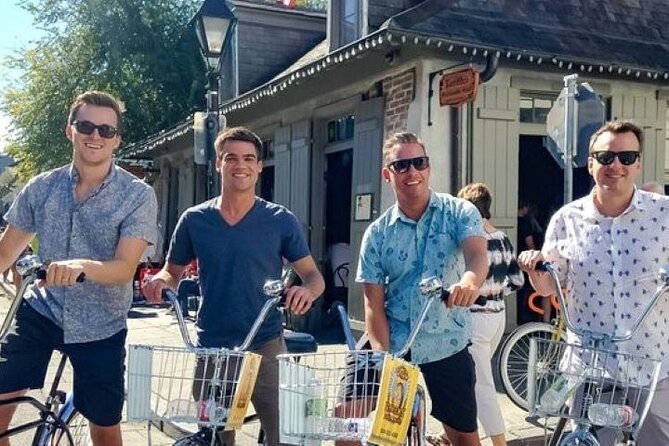
REVIEW · NEW ORLEANS BIKE TOURS
The Original ‘Creole and Crescent’ Bike Tour
Two wheels, old New Orleans, and real stories.
This tour is interesting because it takes you from the French Quarter out into the neighborhoods that shape the city, then brings you back to the same pulse. I really like the small group size and the guide-led pace that keeps things moving without feeling rushed. I also love that the route connects major spots like Esplanade Avenue and Congo Square with plain, human explanations of what you are seeing. One drawback to plan for: the ride is only about 2 to 3 hours, so each stop is brief, especially the cemetery.
The meeting point is easy to find, and you start right in the heart of things. You meet at the FreeWheelin shop at 317 Burgundy St, then roll out past landmarks and through areas where locals actually live their day. Guides also put safety front and center, which matters when you are biking through a city full of pedestrians and surprises.
If you cannot ride a bike confidently, skip it. This isn’t a slow sightseeing walk, and the tour specifically notes it is not recommended for people who cannot ride a bike. Also, bring your patience if the weather is iffy, because the tour depends on good conditions.
Key points before you pedal
- Original New Orleans operator: established in 2011, first “legitimate” bike tour company not run from a living room sofa.
- Route goes beyond postcard New Orleans: French Quarter, Esplanade, City Park, Bayou St. John, and Treme.
- Stop that people remember most: Congo Square, tied to the origins of jazz and the start of Jazz Fest.
- A quick look at St. Louis Cemetery No. 3: brief stories and a photo stop, not a full cemetery walkthrough.
- All the gear you need for comfort: helmet, handlebar bag, bell, bottled water, and ponchos if it rains.
- Small enough to feel personal: capped at a maximum of 12 travelers.
The original Creole and Crescent route: why it feels more real
New Orleans can be a little too good at selling itself. This tour keeps it grounded by connecting the city’s famous front door with the places that give it personality. You start in the French Quarter, then steadily move outward, so you see how neighborhoods change as the streets get quieter and more local.
What I like about the approach is the way it links places to people, not just buildings. The tour frames the founding story too, including how early settlers cut through a mosquito-infested swamp in 1696 to establish what became the City of New Orleans. That kind of context makes the ride feel like a story you are moving through, not a slideshow.
And the company factor matters. FreeWheelin has been running since 2011, with the original owner and original guides, and it has thousands of strong ratings across multiple platforms. In practice, that usually means smoother bike operations, consistent guide training, and fewer awkward moments.
More New Orleans bike routes beyond the Quarter

From Burgundy Street to Millionaires Row: your first big history punch
You begin at 317 Burgundy St at the FreeWheelin Bike Tours and Rentals shop. Then you roll into the French Quarter, where the tour sets the tone with early stories before you start chaining together sights.
From there, you ride down Esplanade Avenue, known locally as the Avenue of the Creoles and also as Millionaires Row. This stretch is long enough to enjoy the rhythm of biking, and you get a clear sense of how power, wealth, and culture showed up in the architecture. Along the way you stop at Gayerre Place to see the Peace, the Genius of History monument. It’s the kind of small stop that can be easy to miss on your own, so it is worth the included time.
Next, you get a short taste of music culture on Frenchmen Street. It is a quick stop, but it helps you understand that the city’s music scene is not only on the most famous strip. If you want a moment that feels like you are rubbing elbows with real New Orleans energy, this is it.
City Park’s live oak grove, then the Bayou Bridge moment
City Park is one of those places where you feel the temperature drop under the trees. The tour rides through a thousand-year live oak tree grove, and you stop to hear stories tied to duels and tragedy connected to the setting. Even if you are not usually into dark history, the park context makes it easier to listen. It also changes the feel of the tour, from street-level city sights into something more atmospheric.
After City Park, you cross Bayou St. John via Magnolia Bridge. That bridge moment matters because it gives your brain a reset. You are moving out of “downtown sightseeing” mode and into the parts of New Orleans that feel less stage-managed.
Then comes Bayou St. John itself, where the ride turns into a neighborhood experience. You spend time on Ursuline Avenue under more tree-lined calm, and the guide adds history in a way that matches the setting. You also get a sense of how bayou geography shapes daily life, not just tourist photos.
Going deep into Treme, not just skimming the edges
The tour’s biggest differentiator is that it heads into Treme for real. Many tours stay at the border, then call it a day. This one takes riders deeper so you see the neighborhood in a way that is harder to fake.
You get that Treme vibe right away, with the tour emphasizing that locals are part of the welcome. Think smiles, waves, and friendly greetings as you roll by Armstrong Park and on toward Congo Square. That social energy is one of the reasons this ride feels different from a scripted route.
Treme also matters historically, not as a theme, but as a living neighborhood. When your guide connects what you are seeing to how communities survived and shaped music and culture, the tour stops feeling like generic sightseeing. It becomes a lesson in how New Orleans identity sticks to the streets.
St. Louis Cemetery No. 3 and Congo Square: two stops that frame the finale
Not every bike tour manages a cemetery moment without turning it into a long, awkward detour. Here, St. Louis Cemetery No. 3 is handled as a brief, story-focused stop. You do not get a full guided cemetery tour, but you do get the burial-process explanation, a photo opportunity, and a short stroll among the tombs.
That “brief but meaningful” approach is a good fit for a 2 to 3 hour tour. If you want deep cemetery study, you can do that on a separate trip. If you want a quick but respectful sense of why these cemeteries are so important to New Orleans, this works well.
Then you finish at Congo Square. This is where the tour’s story clicks. Congo Square is framed as the birthplace of jazz music and the origins of Jazz Fest. Even with a short visit, you get a clear payoff: you go from city streets and mansions to a public gathering space tied to the music that shaped the city.
You can also read our reviews of more cycling tours in New Orleans
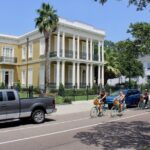
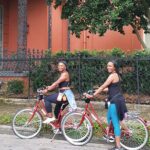
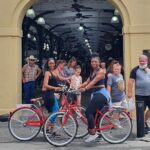
Bike setup, safety, and small comforts that keep the ride pleasant
You do not show up stressed about gear. The tour includes use of a bicycle plus the comfort basics: a helmet, a handlebar bag, and a bell. You also get bottled water and complementary ponchos if rain pops up.
That matters because New Orleans weather can change fast. Ponchos are not glamorous, but they do keep the ride enjoyable instead of turning it into a cold, wet scramble. The handlebar bag is also a practical detail for sunglasses, a phone, or a small camera.
Safety gets emphasized by the guides. In the reviews you can feel the difference when a guide keeps the group moving safely and explains the rules without drama. Names that came up include Teddy and Laura, both described as friendly, fun, and strong on keeping riders safe while sharing stories. That mix, safety plus humor plus history, is exactly what you want on a bike tour in a busy city.
Price and value: why $55 can feel fair for a 2 to 3 hour ride
At $55 per person, this is not a budget “drop-and-go” activity, but it also is not priced like a premium day-long excursion. For the money, you get a guided ride that hits multiple major areas, plus bikes and safety gear.
Here is the practical value equation:
- You are paying for a guide who connects stops, not just a path on a map.
- You are getting provided bike equipment, water, and ponchos, so you avoid last-minute rental problems.
- The route covers several neighborhoods, including the parts many visitors skip.
The main thing to understand is time. You only have about 2 to 3 hours, and the stops are short by design. That is great if you want an efficient orientation ride. It can feel a little “I could use 15 more minutes here” if you are hoping for long, deep conversations at each location.
Who this tour suits best (and who should skip it)
This tour is best if you want a guided New Orleans introduction that goes beyond the French Quarter. It is also a good choice for people who like history told in a story voice. The route hits well-known sights, but the Treme and bayou sections make it feel less generic.
You should have moderate physical fitness. Also, it is not recommended if you cannot ride a bike. That is not the time to learn on the fly, and the tour’s structure assumes you can pedal steadily.
It can also work across ages. One review highlighted that the guide was accommodating for a group that included a 67-year-old mother and an 11-year-old daughter, which suggests the ride can be paced in a way that fits mixed comfort levels. Still, you should be the one to judge your own biking confidence.
Should you book the Original Creole and Crescent bike tour?
I would book it if you want your New Orleans day to include both the famous sights and the neighborhood texture that makes the city feel like a place, not a set. The included helmet, water, and ponchos remove friction, and the guide-led format gives you context you likely would not get wandering solo.
Skip it if any of these are true: you cannot ride a bike confidently, you hate short stop-and-go outings, or you expect a long cemetery walkthrough. Also, if you are only in town for a single hour, this tour still helps, but it may crowd out other must-dos.
If you can do the ride and you want the city’s story in motion, this is a strong pick.
FAQ
How long is the Original Creole and Crescent bike tour?
The tour lasts about 2 to 3 hours.
Where do I meet for the tour?
You meet at FreeWheelin Bike Tours & Rentals, 317 Burgundy St, New Orleans, LA 70112.
Is the bicycle included in the price?
Yes. The tour includes use of a bicycle.
What safety and comfort items are provided?
You get a helmet, handlebar bag, bell, bottled water, and complementary ponchos for rainy weather.
How much does it cost?
The price is $55.00 per person.
What fitness level do I need?
The tour calls for a moderate physical fitness level.
Is it refundable if I cancel?
This experience is non-refundable and cannot be changed for any reason.
What happens if the tour is canceled due to weather?
It requires good weather. If it is canceled due to poor weather, you are offered a different date or a full refund.
More Tours in New Orleans



More Tour Reviews in New Orleans


More New Orleans Bike Tours

More ways into New Orleans


New Orleans Bike Tours, compared.
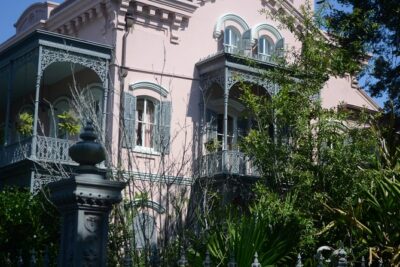 ★ 5.0New Orleans French Quarter and Garden District Bike TourFrom $55410 reviews
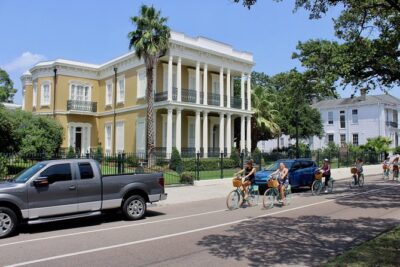 ★ 5.0New Orleans Creole Odyssey Small-Group Bike TourFrom $55268 reviews
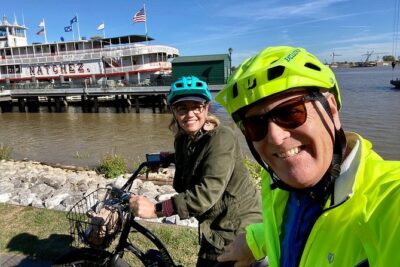 ★ 5.0Creole New Orleans Electric Bike Tour (ages 16 & up)From $89230 reviews
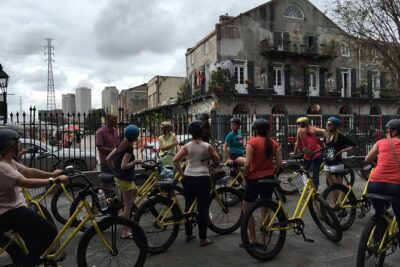 ★ 5.0New Orleans History and Sightseeing Small-Group Bike TourFrom $55215 reviews
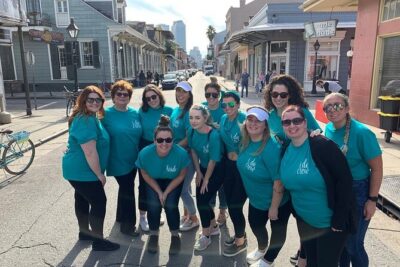 ★ 5.0New Orleans Heart of the City Bicycle TourFrom $55202 reviews
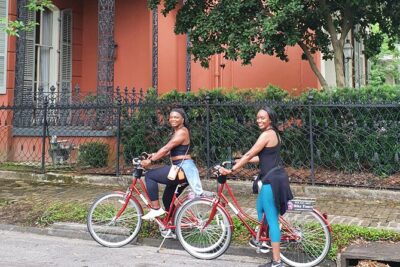 ★ 5.0New Orleans Garden District and Cemetery Bike TourFrom $55187 reviews
 ★ 5.0New Orleans City Bike TourFrom $60162 reviews
 ★ 5.0Garden District and French Quarter Bike TourFrom $5060 reviews
Browse the lists this tour appears in