
REVIEW · NEW ORLEANS VOODOO TOURS
True Voodoo History of NOLA’s Congo Square with Local Guide
Voodoo in New Orleans is more than spooky stories. I like how this tour ties Congo Square to real African traditions, not Hollywood myths, and I also like the hands-on finish with a stop at a working temple where you can bring home gris-gris. Guides such as Logan, Matthew, and Evian are known for clear storytelling and for separating fiction from fact.
One possible drawback: the tour doesn’t sugarcoat the city’s religious roots, it includes the Code Noir and slavery. If you prefer light and purely playful sightseeing, this may feel heavy at times, because the meaning behind voodoo in New Orleans is tied to survival, control, and resistance.
Key highlights to look for
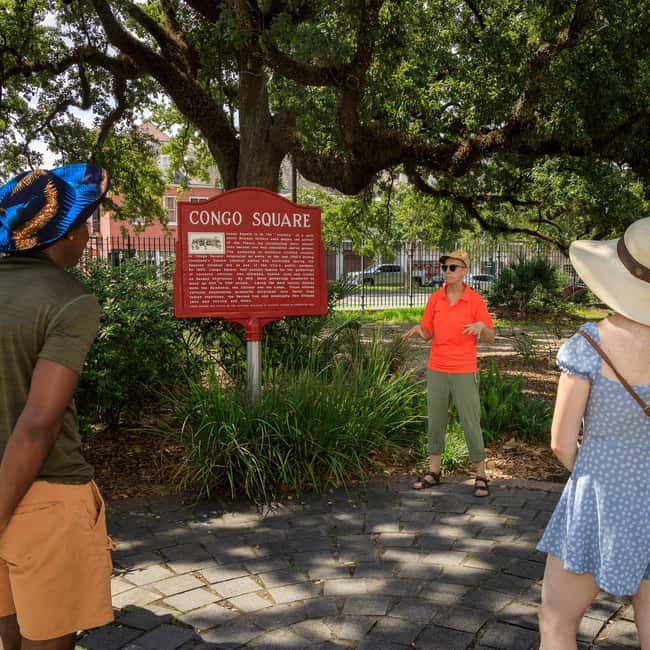
- Congo Square walk with cultural context: you see where enslaved Africans gathered to practice music and rituals.
- Code Noir and slavery’s impact: you get the legal and human backdrop behind New Orleans spirituality.
- Marie Laveau, with clear boundaries: the tour discusses her legend while noting that offerings at her tomb are discouraged and St. Louis #1 Cemetery is not visited.
- Hands-on artifacts explained: you’ll learn what voodoo dolls, vevers, and gris-gris bags mean and how those items are used.
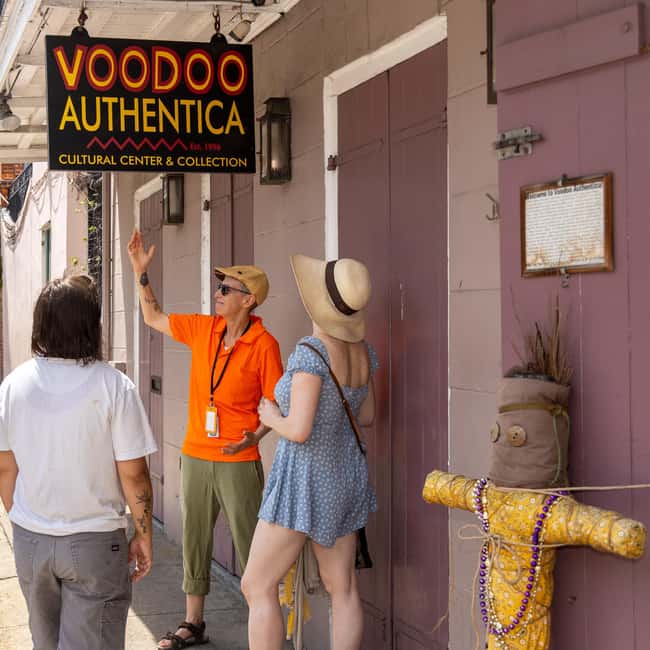
- Modern practice at Voodoo Authentica: you end at a contemporary temple rather than treating voodoo like a museum exhibit.
Where the tour starts, and why Rampart matters
The experience begins at the archway to Louis Armstrong Park on Rampart Street. That spot is a helpful starting line, because you’re immediately in the French Quarter gravity zone, close enough to feel the city’s history without getting lost in it.
In plain terms, this is a short, focused walk. 90 minutes is long enough to connect several neighborhoods and ideas, and short enough that you’re not stuck sprinting from stop to stop.
More factual New Orleans voodoo history to explore


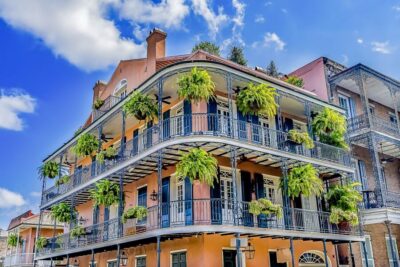
French Quarter photo stops and an older home with voodoo ties
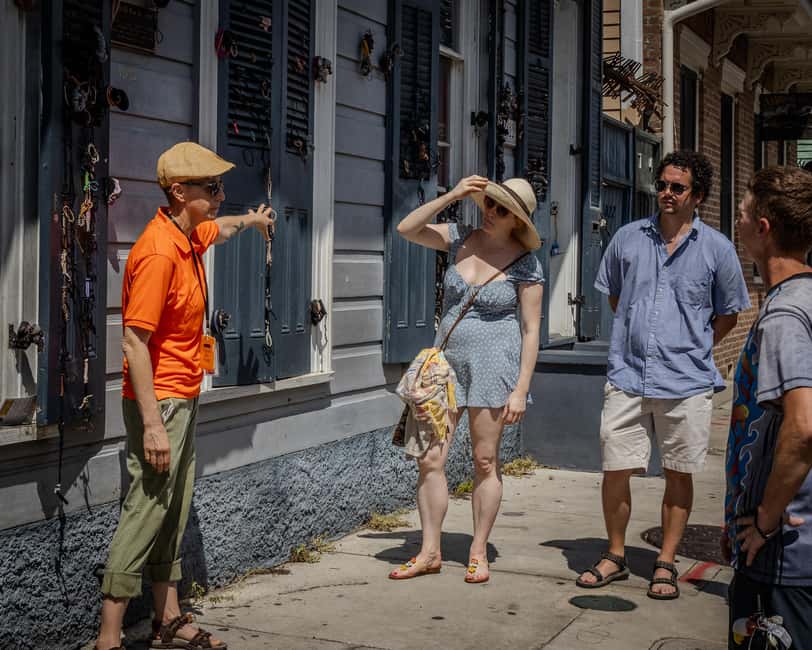
Early on, you’ll make a photo stop and move into guided walk time around the French Quarter. The tour is designed to give you more than “cool street corners.” It’s built to connect what you see on the ground to what people believed, practiced, and feared.
One standout promise is a visit to one of the oldest homes in the French Quarter and the way it’s tied to voodoo traditions. That matters because it anchors the story in place, not just in words. You get a sense of why these beliefs could survive in a city built to monitor enslaved people and control behavior.
There’s also a strong emphasis on correcting myths. You’ll hear how voodoo has been distorted through entertainment, and the guide works to separate what’s legend from what’s historically grounded.
Tremé and Lafitte: why the story moves out of the Quarter
Next, you shift toward Tremé / Lafitte, with another photo stop and guided walking. This is where the tour starts to feel less like a history lecture and more like a lived-in city map.
Tremé is part of why New Orleans spirituality doesn’t only live in postcards. It’s tied to communities, memory, and neighborhood identity, and the guide uses that to explain how practices traveled and changed over time.
The tour’s tone stays respectful while still being direct about the difficult parts. If you want to understand voodoo as a cultural system rather than a set of movie props, this neighborhood segment helps.
Marie Laveau’s legend, the cemetery limit, and how respect is handled
A key stop is at the original spot of the home of Marie Laveau. That’s the kind of detail I love in walking tours, because it gives the story a physical footprint. Even if you know her name already, standing near the place where her life intersects the city’s legend helps the narrative click.
Just as important, the tour follows the current rules and avoids certain sites. Due to new security regulations involving pilgrimages, this tour does not visit St. Louis #1 Cemetery. The tour also notes that offerings to Marie Laveau’s tomb are discouraged.
That boundary is worth appreciating. It keeps the visit from turning into a scavenger hunt for spectacle, and it helps the guide steer the conversation toward history and practice rather than superstition-only theatrics.
Congo Square: the walk that reframes voodoo
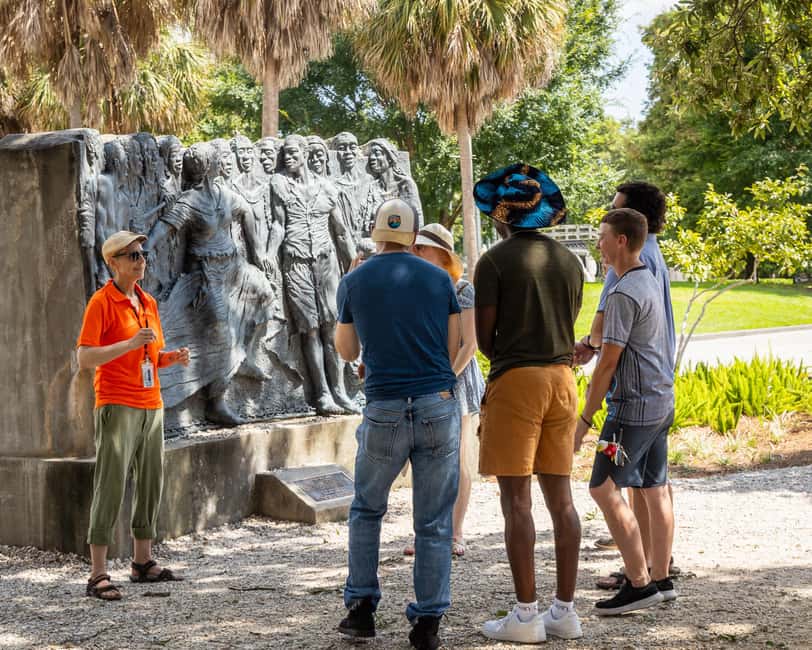
Then you arrive at the heart of the experience: Congo Square. This is the part I’d highlight if you only did one element, because the guide connects the space to enslaved Africans gathering to practice cultural rituals, music, and community life.
When you understand Congo Square this way, voodoo stops feeling like an isolated “mystery religion.” You can see it as something shaped by forced migration and ongoing cultural preservation.
The tour also uses Congo Square as a bridge into bigger themes. You’ll hear about slavery under colonial systems, including the Code Noir, and how that history affected spirituality and identity in New Orleans. You’ll also learn about the Haitian rebellions and how they influenced the spread of voodoo practices in the region.
One practical note for your brain: this stop can feel intense because it’s about people whose freedom was stripped away. Plan to listen closely and take breaks if you need them.
A few more ways to spend the day around New Orleans


Code Noir and Haitian rebellions: the hard context that makes the rest make sense
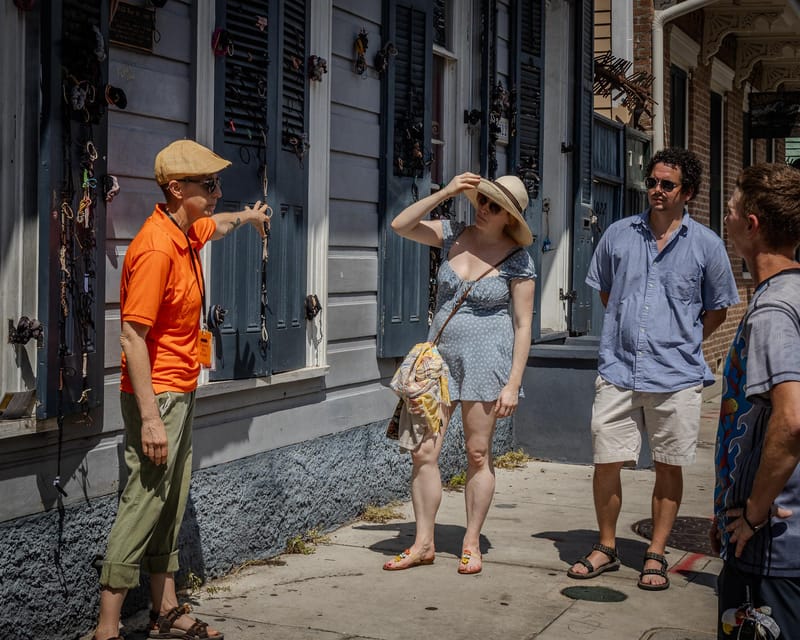
Mid-tour, the guide brings you through the darker legal and political background: slavery under Code Noir and what that meant for the city’s culture and spirituality. This isn’t included to be grim for grim’s sake. It’s included because without it, voodoo can get reduced to “spells and dolls,” not survival and adaptation.
Then you get the thread of the Haitian rebellions. The point is to show how events outside New Orleans fed back into local practice. It’s a reminder that culture doesn’t sit still in one port city. It moves, it changes, and it responds to power.
If you’re the type who likes clear cause-and-effect, you’ll probably enjoy how the guide stitches these events into the everyday New Orleans you’re walking through.
New Orleans Historic Voodoo Museum: what context looks like
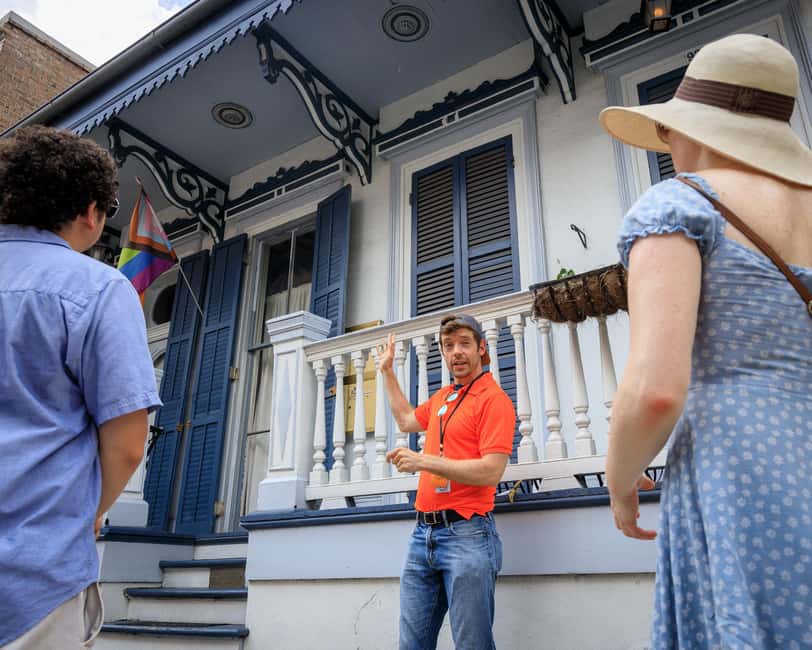
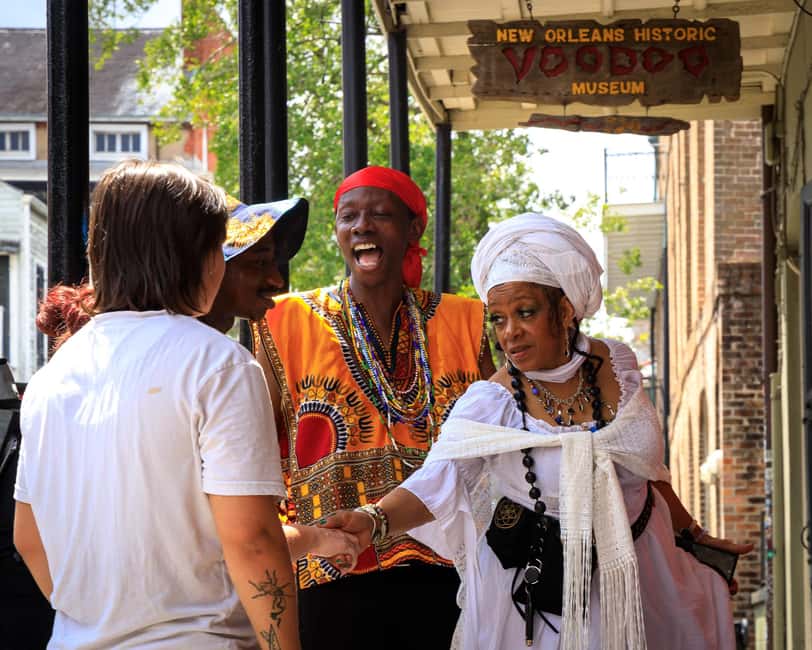
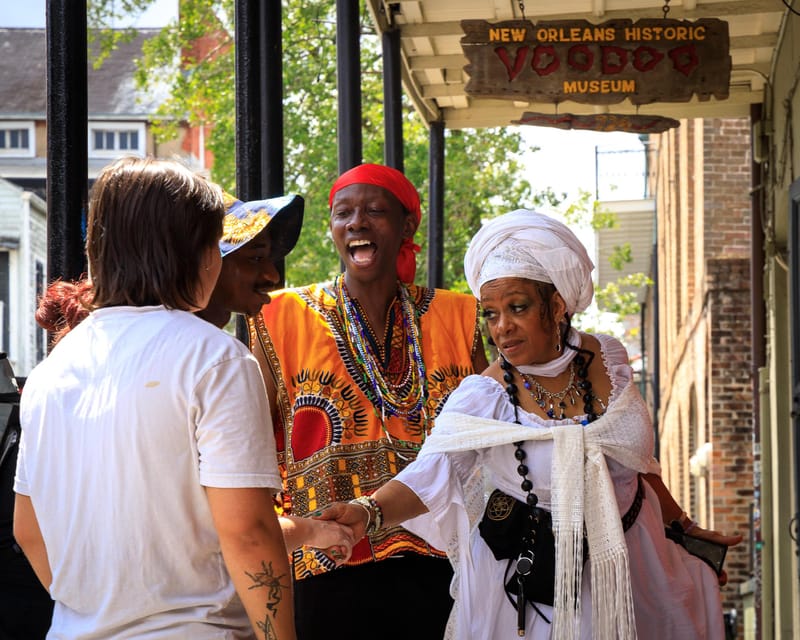
There’s a stop at the New Orleans Historic Voodoo Museum. Even without turning it into a long museum day, this fits the tour format well because it gives you a reference point.
I like that the guide uses museums as more than photo backdrops. You’re encouraged to connect objects and symbols to their meanings in New Orleans practice, not just to their visual look.
This is also where you may hear more about the overlap between Catholic culture and voodoo beliefs, in a way that avoids the usual simplistic either/or story. You’ll get a clearer sense of why these traditions have shared social space in New Orleans for generations.
Voodoo artifacts explained: dolls, vevers, and gris-gris bags
A major part of the tour is the hands-on discussion of voodoo dolls, vevers, and gris-gris bags. The value here is interpretation. Instead of treating these items like props, the guide explains what they represent and how they have been used in the past.
In particular, you might hear the story behind the doll and pin idea, and the guide’s clear point is that it’s not like the movies. That kind of correction is one of the biggest reasons this tour tends to earn near-perfect scores.
If you’re curious but a little skeptical, this is where the tour earns your trust. The guide tries to ground the odd-seeming items in real cultural logic.
Ending at Voodoo Authentica Inc: modern practice, not a costume party
The tour finishes at Voodoo Authentica Inc. This ending location matters because you’re not only learning about historic voodoo. You’re witnessing modern temple life and the continuity of practice.
At this point, the tour includes a chance to pick up some New Orleans gris-gris to take home. That turns the story into something tangible, even if you treat it as a souvenir and not a personal ritual.
The guide also covers voodoo holidays such as Saint John’s Eve and other seasonal traditions. I like that you leave knowing these beliefs aren’t only tied to one spooky night or one famous name. They show up across the year.
Price and timing: does 90 minutes deliver value?
At $39 per person for 90 minutes, the price is in line with a specialty walking tour. The reason it can feel like good value is the combination of places and themes: French Quarter streets, Congo Square, slavery context, and then a modern temple stop.
This is not a full-day deep study. It’s a guided sprint with enough structure to make you feel oriented. If your time in New Orleans is tight and you want one guided experience that connects geography, religion, and history, the schedule works.
Also, since the tour includes 6+ stops and a walk through Congo Square, you’re not just hearing stories from one sidewalk. You’re moving, looking, and getting meaning with every change of scene.
Who should book this Congo Square voodoo tour?
Book this if you want:
- Religion and history together, with the hard context included.
- A guide who helps you separate fiction from fact, especially around dolls and pin stories.
- A real stop at Congo Square plus a working temple ending at Voodoo Authentica.
Skip it if you want only casual sightseeing with no heavy material. This tour includes slavery history tied to Code Noir, and it also covers ritual practice in a respectful, direct way.
Should you book it?
I think this is a strong pick if voodoo is on your New Orleans “must understand” list. The walk is short, but it hits the points that usually get lost when people only see the Hollywood version, Congo Square, Marie Laveau’s legend with boundaries, and what voodoo practice looks like now at a temple.
If you’re willing to sit with tough history and you want a guide who speaks in clear explanations instead of spooky performance, this is the kind of tour that will give you something you can carry past the French Quarter streets.
More Tour Reviews in New Orleans




More African American Heritage Tours in New Orleans
More New Orleans Voodoo Tours


More ways into New Orleans


New Orleans Voodoo Tours, compared.
 ★ 4.5New Orleans Premier Ghost, Voodoo and Vampire Walking TourFrom $2712,856 reviews
 ★ 5.0Adults-Only New Orleans Ghost, Crime, Voodoo, and Vampire TourFrom $376,545 reviews
 ★ 5.0New Orleans Adults-Only Ghost, Voodoo and Vampire TourFrom $293,291 reviews
 ★ 4.5New Orleans French Quarter, Voodoo and Culture Walking TourFrom $272,961 reviews
 ★ 4.5New Orleans Haunted Ghost, Voodoo & Vampire Walking TourFrom $322,731 reviews
 ★ 4.5French Quarter, Voodoo and Cultural ExperienceFrom $29972 reviews
 ★ 4.5New Orleans Ghost, Vampire, Witch, Voodoo, and Mystery TourFrom $30722 reviews
 ★ 4.7Voodoo Queen Tour of French QuarterFrom $25482 reviews
Browse the lists this tour appears in