

REVIEW · WALKING TOURS
Black History & Tremè Neighborhood Walking Tour
Congo Square changes how you hear New Orleans. This Black History & Treme Neighborhood Walking Tour links the story of jazz, community life, and remembrance across key stops in the Treme area, with free admission where it counts. You’ll move from music legacy to sacred space and back into the streets that still feel shaped by the people who lived here, Congo Square and the New Orleans Jazz National Historical Park leading the way.
I like two things the most: the way the tour uses real places, like the Sunday drum history at Congo Square, and the guide-led storytelling that keeps facts human and understandable. I also appreciate that the itinerary is built around free admission sites, so your $40 mainly buys a focused walk and interpretation, not museum fees.
One consideration: this is a street-level walking tour, and it depends on good weather. If you’re sensitive to heat, rain, or uneven sidewalks, you’ll want sturdy shoes and a rain layer ready.
Key highlights at a glance

- Congo Square’s Sunday drum tradition since 1724, explained in a way that connects past and present
- New Orleans Jazz National Historical Park with back stories tied to Moses Hogan, Mahalia Jackson, Louis Armstrong, Buddy Bolden, and more
- The Tomb of the Unknown Slaves at St. Augustine Church, a serious moment in a neighborhood with deep roots
- Louis Armstrong Park as a place where music, cuisine, architecture, and culture connect, even if it’s not always easy to spot
- Small group size up to 28, which helps the guide keep the flow conversational
Why this Treme walk feels different than a typical history tour

New Orleans has plenty of history sprinkled on plaques. This tour is different because it takes you to places where history is still physical: outdoors for music and community, and inside church grounds for memory and mourning.
The core idea is simple. You’re not just learning names. You’re learning why names matter, how community formed, and how culture survived. Guides like LaToya Papillion and Malika show up again and again in strong reviews, and you can feel the difference in how they connect music, faith, and neighborhood life without turning it into a lecture.
Also, the tour keeps a tight pace at about 1 hour 45 minutes. That matters in New Orleans because weather changes fast, and your feet will decide how much you can enjoy afterward.
A few more ways to spend the day around New Orleans


Price and value for a 1 hour 45 minute neighborhood walk
The price is $40 per person. For that, you get a guided walk that hits four major stops tied to Black history and New Orleans music culture, plus free admission at the featured sites.
Here’s the practical value angle. You’re paying for interpretation and context, not tickets. With a walking route, a good guide can save you time you would otherwise spend figuring out what you’re looking at and why it matters.
It also helps that the tour is small by default. With a maximum of 28 travelers, it’s more likely you’ll get real answers instead of just hearing the loudest question in the group.
Meet-up point and timing that actually works for a morning plan

The tour meets at 801 N Rampart St, New Orleans, LA 70116, and it ends back at the same meeting point. It starts at 10:30 am, and confirmations are sent at booking time.
If you plan your day around this, keep your afternoon flexible. Even though the tour itself is about 1 hour 45 minutes, you’ll probably want time to linger near the stops, take photos, and grab a drink or snack afterward.
One more tip for timing: since this tour is often booked about 22 days in advance on average, earlier booking gives you more control over your schedule.
New Orleans Jazz National Historical Park: the music legends behind the names

Your first stop is the New Orleans Jazz National Historical Park. It’s scheduled for about 30 minutes, and admission is free.
This is where the tour sets the tone. Instead of treating jazz like one big story, you get the back stories of people connected to the music and the neighborhood. The itinerary highlights include Moses Hogan, Mahalia Jackson, Louis Armstrong, Buddy Bolden, and others. Even if you only know a couple of those names today, the guide’s job is to explain why they belong in the same conversation.
What I like about starting here is momentum. Jazz is something you can hear, even before you can fully picture it. When you begin with the legends, later stops like Congo Square and Armstrong Park feel less like random “important places” and more like parts of one living network.
A practical drawback to plan around: you’ll likely do some standing and moving around signage and exhibits. If you’re short on mobility, you may want to ask the guide where the most comfortable viewing spots are as you arrive.
Congo Square: standing where West African drum culture shaped Sunday life
Next up is Congo Square, scheduled for 30 minutes, with free admission. This is the heart of the tour’s community theme.
You’ll be walking to the actual site associated with West African drum circles held every Sunday since 1724. That date matters because it pushes the story much earlier than most people assume when they hear the words jazz history.
The tour also frames Congo Square as a rare kind of space. It’s described as one of the few places in the US where enslaved people were allowed to mass congregate, including opportunities to congregate for church, get married, and trade wares. The guide’s angle is that these weren’t just events happening to people. This was community life, sustained in the face of brutal systems.
This is also a spot where you might feel the contrast with today. You’re in a public space, and the guide helps you understand why this openness was so unusual for its time. If you’re the kind of traveler who likes to connect the present to the past, Congo Square usually delivers.
You can also read our reviews of more walking tours in New Orleans






St. Augustine Catholic Church and the Tomb of the Unknown Slaves

Stop 3 is St. Augustine Catholic Church, where the tour focuses on the Tomb of the Unknown Slaves on the church grounds. Time here is about 15 minutes, and admission is free.
This is the tour’s most sobering moment. You’re not supposed to rush it, and it doesn’t read like a quick photo-op stop. The emphasis is on respect and remembrance, especially in Treme, described in the tour materials as the oldest Black neighborhood in the nation.
I appreciate tours that don’t skip the hard part. When the route hits Congo Square first, and then shifts to a memorial at St. Augustine, the emotional arc makes sense. You leave with a fuller understanding of what “community” also meant: survival, family, faith, and loss.
If you’re traveling with teens or you’re a parent deciding if this tour fits your group, this stop tends to land well because it’s clear and grounded. You can explain it without needing technical background.
Louis Armstrong Park: the hard-to-find key to music, food, and architecture

Stop 4 is Louis Armstrong Park, with about 15 minutes allotted, and admission is free.
The tour explains this park as a foundation point for New Orleans music, cuisine, architecture, and culture. One practical note from the way this stop is introduced: it can be surprisingly hard to find, and that’s exactly why it’s worth having a guide.
Why this stop matters after the church and Congo Square stops is that it ties the story to something you can see and walk around. Parks and public spaces in New Orleans aren’t just scenery. They often reflect who was valued, how the city remembered people, and how culture got shaped into public form.
If you like your sightseeing with a point, this is the stop that gives you a “so that’s why” feeling. You look at the park with more context than you would on your own.
What you’ll learn from guides like LaToya Papillion and Malika
Across strong reviews, the guides show up as the reason the tour feels lively rather than heavy. LaToya Papillion is described as a gifted storyteller who keeps people engaged, with deep personal investment in New Orleans history. Malika is described as warm, funny, and very strong at factual context, sometimes mixing serious topics with a style that stays approachable.
What stands out in how they’re described is not just information. It’s how the information is delivered:
- encouraging questions and answering them
- weaving past and present so it doesn’t feel like a history slideshow
- keeping the tone human, with humor that doesn’t erase the realities
The tour is also described as historically accurate and not white-washed. That shows up in how sensitive topics are handled, including references to myths versus truths around voodoo and the history of enslaved and free Black populations in the area.
That matters to me because New Orleans history can get distorted easily by careless storytelling. A guide who brings context helps you walk away with understanding you can build on, not just names you forget.
How the tour pace and group size affect your experience
The tour runs about 1 hour 45 minutes. With four stops (30 minutes, 30 minutes, 15 minutes, 15 minutes), that’s a brisk but manageable pace.
You’ll also be in a group with up to 28 travelers. That size is large enough for a lively group atmosphere, but small enough for a guide to keep track of questions if they stay engaged.
If you’re the type who likes time for photos and slow walking, build in the reality that the guide has a schedule. The best strategy is to take your photos at the moments that feel meaningful to the story, not just when you see a landmark from the street.
Getting ready: comfort, shoes, and weather
This experience requires good weather. If the forecast looks messy, you’ll be glad you brought a rain layer and dry socks you can manage.
Wear comfortable, closed-toe shoes. New Orleans sidewalks can be uneven, and your feet will notice quickly on a neighborhood walk. Also plan for sun exposure. Even if the morning starts pleasant, it can shift.
Because the tour uses a mobile ticket, have it accessible on your phone at meeting time. It’s a simple detail, but it prevents stress before you start.
Who should book this Black history Treme tour
This is a great fit if you:
- want New Orleans music history tied directly to Black community spaces
- like stories that connect faith, culture, and neighborhood life
- want more than general sightseeing and you care about accurate context
- appreciate a guide who can answer questions as you walk
It’s also a solid choice if you’ve visited New Orleans before and feel like you’ve only scratched the surface. Treme-based walking tours tend to change how you understand the city’s cultural roots because you’re seeing the “where” behind the “what.”
If you hate walking or you need frequent long breaks, this might feel tight. The structure is fixed, and the stops are designed to be visited in a certain order.
Should you book this tour?
Yes, I’d book it if you want a focused, respectful way to understand Treme through music and memory. The stop choices work as a sequence: legends at the jazz park, community and early drum culture at Congo Square, remembrance at St. Augustine’s grounds, and then music culture through Louis Armstrong Park.
It’s also a strong value at $40 because the admissions at the featured stops are free, and what you’re really paying for is a guide who can connect details without losing the emotional meaning.
One last check before you go: look at the weather. The tour needs good conditions, and you’ll enjoy it more if you can walk comfortably between stops.
If you’re ready for a story-driven walk that doesn’t tiptoe around the hard truths, this Treme tour is an excellent use of a morning in New Orleans.
FAQ
Where is the meeting point for the tour?
The tour meets at 801 N Rampart St, New Orleans, LA 70116, USA. It ends back at the same meeting point.
What time does the walking tour start?
The start time listed is 10:30 am.
How long is the tour?
It runs about 1 hour 45 minutes (approx.).
How much does the tour cost?
The price is $40.00 per person.
Is the tour offered in English?
Yes, the tour is offered in English.
Are there admission tickets included for the stops?
The listed admission for the featured stops is free.
How large is the group?
The tour has a maximum of 28 travelers.
Do I need a printed ticket?
No. It’s a mobile ticket.
What if the weather is bad?
The experience requires good weather. If it’s canceled due to poor weather, you’ll be offered a different date or a full refund.
What is the cancellation window for a full refund?
Free cancellation is available. You can cancel up to 24 hours in advance for a full refund. If you cancel less than 24 hours before the start time, the amount paid will not be refunded.
More Tours in New Orleans



More Tour Reviews in New Orleans


More African American Heritage Tours in New Orleans

More ways into New Orleans


Walking Tours, compared.
 ★ 4.5New Orleans Premier Ghost, Voodoo and Vampire Walking TourFrom $2712,856 reviews
 ★ 5.0New Orleans Food Walking Tour of the French Quarter with Small-Group OptionFrom $756,118 reviews
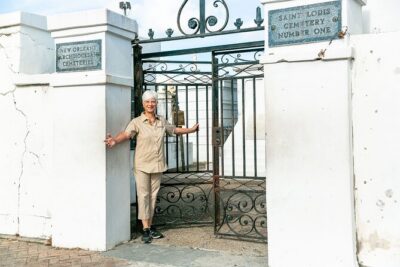 ★ 4.5St. Louis Cemetery No. 1 Official Walking TourFrom $253,941 reviews
 ★ 4.5New Orleans French Quarter, Voodoo and Culture Walking TourFrom $272,961 reviews
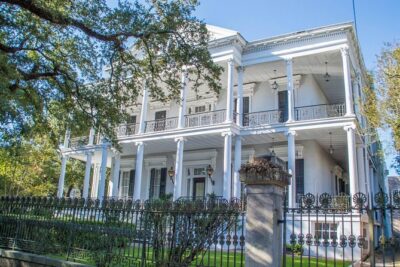 ★ 5.0New Orleans Garden District History Walking TourFrom $352,879 reviews
 ★ 4.5New Orleans Haunted Ghost, Voodoo & Vampire Walking TourFrom $322,731 reviews
 ★ 5.0French Quarter Historical Sights and Stories Walking TourFrom $352,724 reviews
 ★ 4.5Ghost and Vampire Walking Tour Of The French QuarterFrom $212,406 reviews
Browse the lists this tour appears in