

REVIEW · FRENCH QUARTER TOURS
New Orleans: French Quarter Walking Tour
New Orleans moves fast. This French Quarter walking tour turns familiar street corners into clear stories about danger, music, and survival.
I love the hands-on feel of the stop at Cafe du Monde, where you can watch the beignets get made. I also love how the tour links music to place, with stops tied to Danny Barker and the old-school spirit you still hear at Preservation Hall.
One thing to consider: parts of the route cover slavery and the devastation of Katrina, so it is emotionally heavy, even though the pace stays manageable for a 2-hour walk.
Key Highlights Worth Showing Up For

- Watch beignets get made at Cafe du Monde, not just eat them
- Hurricane protection and Katrina context told through the city’s real constraints
- Great Fire of 1788 on Chartres Street, sparked by Vincente Nunez’s carelessness
- Slave-trade locations, including the St. Louis Hotel and Exchange and former slave markets
- Traditional jazz connections, including Danny Barker’s role and a visit to Preservation Hall
- French architecture storytelling at the end, with Madame de Pontalba’s legacy in Jackson Square
Enter at 529 St. Ann Street, Then Let Jackson Square Do the Teaching

The tour starts outside 529 St. Ann Street, in the lower Pontalba Rowhouse area near Jackson Square. That storefront space is now an oyster spot called Fives Bar, but the meeting point is still easy to find because it sits mid-block to the left of Jackson Square when you face the river. It is also close to the Chartres Street corner at St. Ann, in a block where St. Ann is pedestrian-only, which keeps things simple for walking and regrouping.
If you arrive early, spend a few minutes getting oriented. Jackson Square is a magnet for street music, tarot card readers, and performers, but it is more than a show. Historically, it was used as a parade ground, and you feel that purpose in how the space is arranged. The guide uses this spot as a kind of baseline, then “zooms in” on what happened when the city was tested.
One of the best parts here is how you immediately understand what you are about to see. This is not just dates and names. It is geography plus consequences, meaning the same street you are standing on has a reason it matters.
Also, wear solid shoes. The tour runs rain or shine, and you will be on your feet for the full walk.
More French Quarter walks and tastings near the same streets



Cafe du Monde Beignets: Watching the Snack Makes It Stick
Yes, you can eat beignets in New Orleans. But the value of this tour is that it treats Cafe du Monde like a living workshop. You are there to watch the beignets get made, which gives you a quick sensory lesson in how the Quarter turns flour, heat, and timing into something iconic.
Since food and drink are not included, think of this stop as optional for purchases. You can still get plenty out of it just by watching. And if you do buy something, you do it with a clearer appreciation for the process, which makes the whole moment feel less like a tourist checkbox.
This is also a good psychological reset point. After you’ve been walking through heavier stories, seeing a busy, comforting tradition in action gives your brain a breather without losing the thread of the tour.
Downriver on the Old French Market to the Ursuline Convent

From Jackson Square, you walk downriver along the route tied to the old French Market, heading toward the Ursuline Convent. This is where the tour shifts from daily life to early survival and faith.
You pass the Ursuline Convent, described as the oldest building in the Mississippi Delta from Colonial times. The story includes the early 1700s nuns who came here, and the emphasis is on courage and action, not just architecture. Even if you do not pause long, you get a real sense of what it meant to commit to a community and a mission in a place that was still taking shape.
What I like about this segment for you is that it slows your pace mentally. The Quarter can feel like one long open-air postcard. This walk gives you a second layer: the people who lived here before the streets became famous.
Drawback? There is no guarantee you’ll get long, sit-down time at every location. You should treat this as a guided walk with informative stops, not a museum schedule.
Danny Barker and Traditional Jazz: More Than a Music Trivia Stop

At some point you will feel the tour’s music thread. You pass the house of famous jazz player Danny Barker, a banjo player who is especially important among New Orleans musicians because of how he helped preserve traditional jazz.
Then the tour ties that legacy to a physical place of listening, with a stop at Preservation Hall. This is framed as the city’s holy grail of traditional jazz, and the point is not just hype. It is a reminder that the Quarter’s music culture is not only about performances, it is about keeping a style alive.
For me, the practical benefit is this: when you leave, you have a clearer idea of what to seek. You can still wander the Quarter for shows, but now you know what “traditional jazz” means in the local conversation and why certain venues carry real weight.
If your group includes kids, this music segment can work surprisingly well. One of the guides credited for strong feedback was great at answering questions, and a family with a 9-year-old found the tone engaging without turning the subject matter into something childish.
Hurricanes, Katrina, and How a City Plans for Water
This tour does not treat hurricanes like weather trivia. You learn how New Orleans has protected itself from the threat of hurricanes, and you also hear about the deadly storm Katrina.
That topic can feel huge in a walking tour format, and it can be hard to do justice to something this complicated in only two hours. But the way this tour handles it is by focusing on the city’s relationship with risk. You’re not handed a textbook. You get a human-scale understanding of why planning matters in a place where water can change everything.
For you, the value is the perspective you gain. After the tour, you will notice how New Orleans talks about resilience in everyday ways, even when the streets look carefree.
Emotional consideration: Katrina is not a comfortable topic. If you prefer lighter history, you might find that part a lot. But if you want context for why people talk about preparedness with seriousness, this is one of the most meaningful segments on the route.
You can also read our reviews of more walking tours in New Orleans


Chartres Street and the Great Fire of 1788
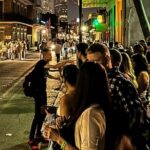
The tour’s dramatic historical marker is on Chartres Street, tied to the Great Fire of 1788. You stop at the house associated with Vincente Nunez, a Spaniard whose carelessness is said to have started a fire that destroyed 80% of the city.
Here’s why this works as a story for real people: it shows how accidents scale in dense places. The Quarter’s charm comes from closeness, old building lines, and a layout that encourages walking. The same traits can make fire spread faster when conditions are wrong.
A good guide uses this moment to connect the past to modern thinking, even when the exact mechanics are not spelled out. The takeaway you should keep is that city design and risk are connected, and New Orleans learned that the hard way.
If you are the type who likes “how did it actually happen” details, you’ll probably enjoy how the tour anchors the event to a specific location, not just a date on a screen.
Slavery Sites: St. Louis Hotel and Exchange and Former Slave Markets

This is the segment where the tour turns blunt, and it deserves your full attention.
You visit the former St. Louis Hotel and Exchange, a place where thousands of Africans were sold into slavery. The tour also shows you several former slave markets and discusses Jean Francois Merieult, described as an influential and powerful Creole businessman and slave trader.
I appreciate that the tour does not soften this. It presents the reality directly while keeping the walking pace steady. You get the sense that these were not abstract tragedies, they were systems with buildings, transactions, and people behind them.
A practical tip: if you know your comfort level with heavy topics, plan accordingly. This tour is only two hours, but the content is intense. If you want a break later, you can build it in by planning an easy afternoon after the walk.
Also, because food and drink are not included, you can control your energy. If you need a snack later, you can choose your timing.
Sicilian Macaroni Factories and the Immigrant Footprints You Can Still See

After the big historical stops, you also get human-scale texture through everyday industry. The tour passes one of the many former macaroni factories of the lower French Quarter, evidence of the major role Sicilian immigrants played in the city’s history.
It is one of those details that helps you stop seeing New Orleans as a single identity. Food production, craft, and trade added up to a city made by many hands. When you understand that, you start to notice similar patterns in other neighborhoods and even in menus.
This segment also balances the earlier heavy content. Instead of asking only how people suffered, it asks how people built livelihoods, fed families, and shaped a shared culture.
Preservation Hall and the Endgame in Jackson Square
After the jazz stop, the tour ends back in Jackson Square. That return matters. You started at the square with the noise and performances, but now you carry stories that change how you read the space.
The final part focuses on Madame de Pontalba, a French baroness and businesswoman with an eye for beautiful architecture. This is where the guide ties the personal to the physical, meaning the buildings and layout are not just background scenery, they are part of how power and taste shaped the Quarter.
Jackson Square can look like pure entertainment from the curb. After the tour, you’ll likely see it as a stage built on layers, with old decisions still visible.
If you want a simple win after the walk: stick around in Jackson Square for a short while. But now, listen with purpose. You can treat the music and performances as the living present that grew from the past you just learned.
Price and Value: $50 for a Two-Hour Dose of Place-Based Storytelling
At $50 per person for two hours, this is priced like a focused guided experience, not a casual stroll. The value comes from what is covered in a short window: beignets made at Cafe du Monde, hurricane protection and Katrina, the Great Fire of 1788, major slavery sites, Danny Barker, Preservation Hall, and an architecture finale in Jackson Square.
Food and drink are not included, so your personal spending plan depends on whether you want to buy beignets or coffee at the end of that stop. But you still get the main benefit either way, watching the beignets get made and hearing the context.
Where this price makes extra sense is if you want direction. The French Quarter is full of signs, but history is harder to connect on your own. A good guide does the connecting for you, and that is exactly what this tour is built to do.
Possible drawback on value: if you only want light fun, and you do not want heavy topics, you might feel $50 is too much for a walk that includes slavery and Katrina. If you’re open to learning, it feels like a smart use of time.
Who This Tour Fits Best (And Who Might Prefer Something Else)
This tour is a great fit if you love New Orleans for its contradictions. You want the joy of the food and music, but you also want the hard context that shaped the city.
It is especially good for:
- People who want traditional jazz context linked to real locations
- Travelers who like history that is grounded in what you can point at on the street
- Families who want a structured walk with a guide who answers questions well (one family with a 9-year-old came away impressed)
It might be less ideal if:
- You want only entertainment and short, cheerful stops
- You prefer long museum visits rather than an always-moving walking format
- You are sensitive to intense topics and want something lighter
Either way, the two-hour length helps. You can go deeper later if you want, but you start with a strong baseline.
Should You Book This French Quarter Walking Tour?
If you want a French Quarter experience that is more than photos and playlists, I think this is a smart booking. The tour gives you the kind of place-based context that makes the rest of your trip click: why people still talk about storms, why certain buildings matter, how jazz traditions were protected, and how architecture shaped the square you keep seeing.
If you are okay with hearing about slavery and Katrina, you’ll likely come away feeling grounded and informed, even after a long day of wandering.
If those topics would be too much, you can still consider a lighter music-only or food-only option. But for a single best “New Orleans explained by the streets” walk, this one is worth your time.
FAQ
Where does the tour start?
The meeting point is in front of the former Louisiana Welcome Center at 529 St. Ann Street. The storefront is now an oyster restaurant called Fives Bar. It is mid-block to the left of Jackson Square when you face the river.
How long is the tour?
The tour lasts 2 hours.
What is the tour price?
The price is $50 per person.
What is included in the tour price?
It includes a 2-hour guided walk through the French Quarter.
Is food or drink included?
No. Food and drink are not included.
Does the tour run in bad weather?
Yes, it takes place rain or shine.
What languages are the guides?
The live tour guide offers English and German.
Is the tour wheelchair accessible?
Yes, it is listed as wheelchair accessible.
Where does the tour end?
The tour ends back in Jackson Square.
Is there free cancellation?
Yes. You can cancel up to 24 hours in advance for a full refund.
What is the booking option for pay later?
You can reserve your spot and pay nothing today.
More Tours in New Orleans


More Tour Reviews in New Orleans


More French Quarter Tours


More ways into New Orleans


French Quarter Tours, compared.
 ★ 5.0New Orleans Food Walking Tour of the French Quarter with Small-Group OptionFrom $756,118 reviews
 ★ 4.5New Orleans French Quarter, Voodoo and Culture Walking TourFrom $272,961 reviews
 ★ 5.0French Quarter Historical Sights and Stories Walking TourFrom $352,724 reviews
 ★ 4.5Ghost and Vampire Walking Tour Of The French QuarterFrom $212,406 reviews
 ★ 4.5New Orleans City Tour: French Quarter, Garden District & CemeteryFrom $402,209 reviews
 ★ 4.7French Quarter Walking and Storytelling TourFrom $351,251 reviews
 ★ 5.0New Orleans French Quarter Food Tour: Cajun, Creole and CultureFrom $811,246 reviews
 ★ 5.0New Orleans French Quarter and More Carriage RideFrom $651,141 reviews
Browse the lists this tour appears in