
REVIEW · FRENCH QUARTER TOURS
New Orleans French Quarter Walking and History Tour
One street. One square. Then the whole city explains itself. This New Orleans French Quarter Walking and History Tour turns the Quarter into a clear storyline, from the river and levees to famous buildings and the people behind them. I like that it is paced for real listening, not sprinting, and you get a tight route that still leaves room for photos and questions.
I especially love two things. First, the guide-led mix of Mississippi levee history and French Quarter landmarks gives you context fast. Second, the stops are timed so you notice details you would normally glide past, from markets and museum buildings to A Streetcar Named Desire and Pirate’s Alley style lore.
One possible drawback to plan for is that it is a walking tour. You are on your feet for about 2 miles, mostly outdoors, so bring comfortable shoes and dress for the weather since the experience runs best in good conditions.
Key Things I’d Book This For
- Small group size up to 9 means more room for your questions and a less chaotic route.
- Levee and river context early on, so the Quarter feels less random and more logical.
- Jackson Square focus, including major museum stops like the Cabildo and Presbytere.
- Literary and film landmarks, including Tennessee Williams and William Faulkner inspired stops.
- A classic French Quarter circuit that’s long enough to matter in 2 hours, short enough to keep your day flexible.
- Wrap-up near the river area, so you can keep exploring right after the tour.
Entering the French Quarter Like a Local, Not a Tourist
The French Quarter can feel like sensory overload, especially on a first visit. This tour helps you tame it. Instead of treating every corner like a separate postcard, you start connecting the dots.
You begin with introductions and a history promenade that leads you from the Mississippi riverbank area into the Quarter’s heart. That matters because New Orleans did not just appear. It was engineered, argued over, rebuilt after disasters, and shaped by culture that kept evolving. This walk gives you the framework, so when you look at a building or a street, you understand what problem it solved or what story people attached to it.
The pacing also earns points. It is a steady, leisurely walk, with frequent stops that let you reset your brain and actually hear the guide. Reviews consistently highlight how clearly the guide speaks and how the walk stays an easy rhythm, which is a big deal when you are listening for history while dodging foot traffic.
More French Quarter walks and tastings near the same streets



Price and Pace: What You Really Get for $29

At $29 per person for about 2 hours, this is priced like a thoughtful “orientation ticket,” not a long expedition. You’re paying for two things: a local guide who can translate the place, and a route that compresses the most meaningful highlights into a short window.
It also helps that the group is capped at 9 people. Small groups are not just cozy. They tend to run smoother, and you get more back-and-forth. That shows up in how the tour is described, including guides answering questions and tailoring the experience when the group size is small.
In terms of effort, expect about a 2-mile (3.2 km) stroll. That is not huge, but it is enough walking that you should commit to comfortable shoes and a sensible pace. If you plan to spend the rest of your day doing more walking, do yourself a favor: treat this as your warm-up and orientation, then let the afternoon be free-form.
Where the Tour Starts and Ends (So You Don’t Waste Time)
You meet at Cafe Beignet on Royal Street, at 334 Royal St. From there, the tour follows a route that ends back in the Jackson Square area. The overall walk is designed to finish near the river levee region, so you get a satisfying “I get the layout” feeling right when the tour ends.
This route design is practical. Jackson Square sits at the center of the Quarter’s grid of sights. So after the tour, you can spin out in multiple directions without needing a map to figure out where you are.
Musical Legends Park to the River: The Levee Story That Explains Everything
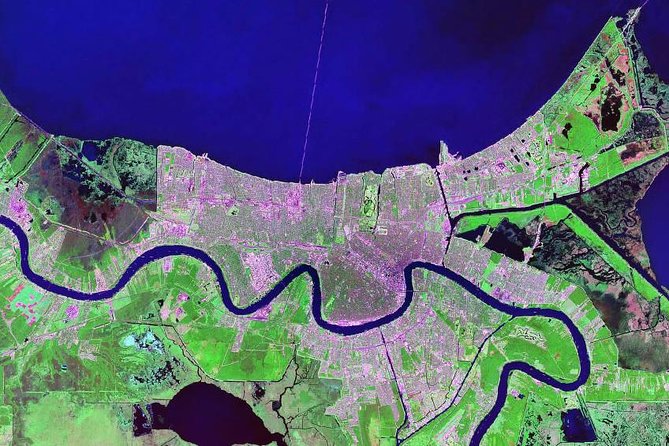
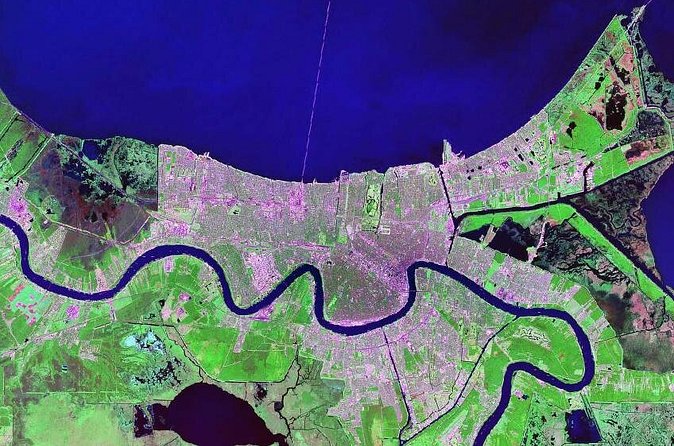
The tour’s opening focus is smart: start with the river. New Orleans is famous for music and food, but the reason people could build a city here in the first place comes down to water management.
At the start point area near Musical Legends Park, the guide sets the stage by explaining how levee construction transformed swampy, sea-level terrain into livable land. Once you understand that shift, the whole Quarter feels more intentional. You stop seeing it as random charm and start seeing it as engineered survival that grew into culture.
You’ll also get a close look at the idea of the Mississippi riverbank as a working boundary. Paddlewheel steamboats come up in the storytelling, which helps you imagine what the river was like when it was the city’s main highway.
A good orientation like this pays off later. When you spot water-adjacent streets or you see the scale of levee space, you know what you are looking at. That is exactly the kind of “insider facts” the best guides use.
French Market Stops: Old Traditions, Real-World Snacks
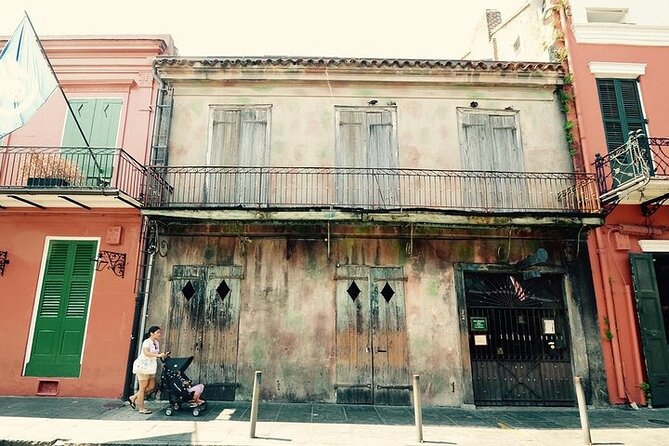
Next you head toward the river-facing side of the Quarter through the waterside French Market. This is a practical break in both scenery and pace, and it is also where the Quarter’s everyday rhythm shows up.
The tour frames French Market as the oldest open-air market in the United States, tied to legends of Native American bartering. Even if you treat legends as legends, what matters is the market’s role as a long-running meeting point where local life and outside trade mix.
You can wander the stalls briefly and look for local produce, fish, and Creole-inspired foods. Food is not included on the tour, but the timing sets you up perfectly to grab a bite before or after. If you want to make the most of the stop, keep a little cash ready for a snack on your own terms.
You can also read our reviews of more walking tours in New Orleans


Jackson Square: The Central Stage for Government, Museums, and Architecture

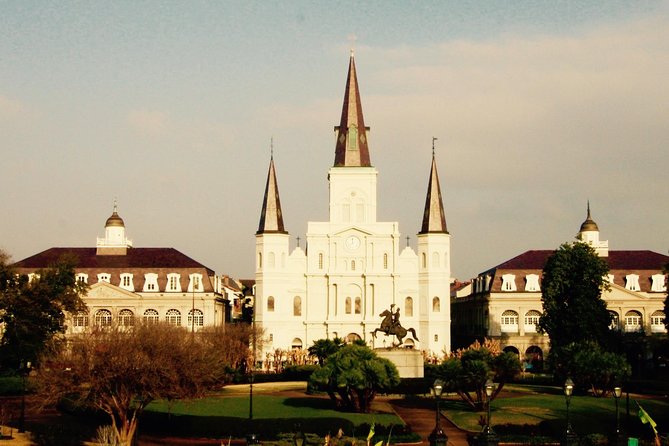
Then comes Jackson Square, the visual anchor of the French Quarter. Standing here, you feel the scale of the area: it is not just a pretty photo spot, it is a historic stage where buildings and institutions clustered around power and public life.
Your guide brings you past major landmarks and museums that circle the square. You see the Cabildo and the Presbytere, both built in the late 1700s, with the Cabildo constructed between 1795 and 1799. The Cabildo served as a center of government in New Orleans and now functions as a Louisiana State Museum stop.
On the opposite side, the Presbytere is described as matching the Cabildo and hosting permanent exhibits that reflect resilience and celebration. That contrast is worth noticing. The square reads like architecture first, but the tour makes you see the human story behind it.
You also learn about the square’s origin on the site of the original Place d’Armes. Andrew Jackson’s association is part of the square’s modern identity, but the guide keeps pulling you back to the earlier layers underneath.
St. Louis Cathedral: A Fire, a Rebuild, and the Look of the Quarter
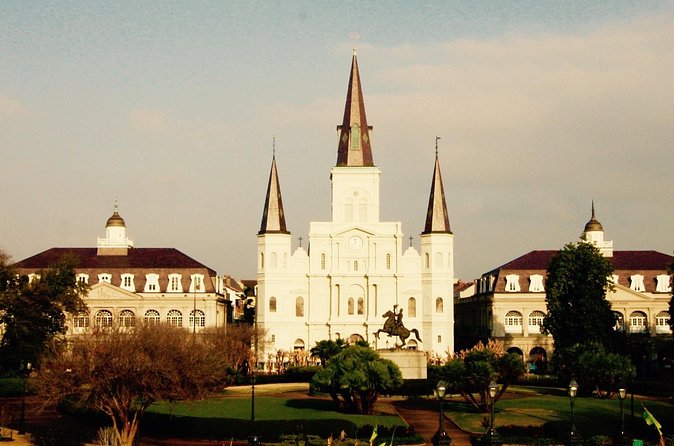
Next is St. Louis Cathedral, one of the Quarter’s most recognizable buildings. Here the tour connects disaster and design.
You go inside the cathedral, and your guide explains how the Great New Orleans Fire of 1788 started at a specific point. That story is more than drama. It helps you understand why rebuilding shaped what the Quarter looks like today.
Architectural style comes into focus after the fire, and suddenly the streets feel more like a repaired document than a random collection of old facades. You can also think of the cathedral as a compass. Even when you wander later, the shape and location help you navigate mentally.
If you like the feeling of seeing a “why” behind the “what,” this stop is a highlight.
Cabildo, Presbytere, and the Square’s Two-Sided Story
Jackson Square works best when you see its edges. The tour’s attention to the Cabildo and Presbytere helps you understand why the square feels balanced.
Instead of just pointing at buildings for photos, the guide frames these as purposeful public structures. That includes how they served civic and religious life in different ways, and how their roles shifted over time.
This is also where the tour’s entertainment style shows up. In multiple accounts, guides like Dave Roberts and Davi Higgins are described as mixing humor with story. That matters in a place like New Orleans, where the lines between politics, religion, music, and folklore can blur unless someone organizes it for you.
Pirate’s Alley and the Courtyard Secrets of Creole Society
After the square area, you move into the more intimate, story-heavy corners of the Quarter, especially around Pirate’s Alley.
One of the best parts is that the guide does not treat history as a lecture. You step into a Creole courtyard setting and learn about the complexities of Creole society and slavery in South Louisiana. That is heavy material, and the tour’s value is in how it connects the system to specific locations, so you are not left with vague ideas.
You also get a balcony-focused moment at the former Quadroon Ballroom, where the guide discusses the system known as placage. Even if you do not know the term going in, the tour makes the explanation location-based, which helps memory stick.
Then the tour blends the academic with the artistic side of the Quarter. You get literary landmark spotting that includes the building where Tennessee Williams wrote A Streetcar Named Desire, plus a stop at William Faulkner’s home. You even enter Faulkner’s home as part of the experience, which adds a physical sense of place instead of just name-dropping.
Finally, Pirate’s Alley wraps in local legend. The guide recounts dueling and prison escape type stories, and you pass by the kind of spots where street musicians often show up during the walk. If music is your New Orleans obsession, this part gives your ears something to catch while your brain keeps absorbing.
Old Ursuline Convent Museum: The Oldest Building Perspective
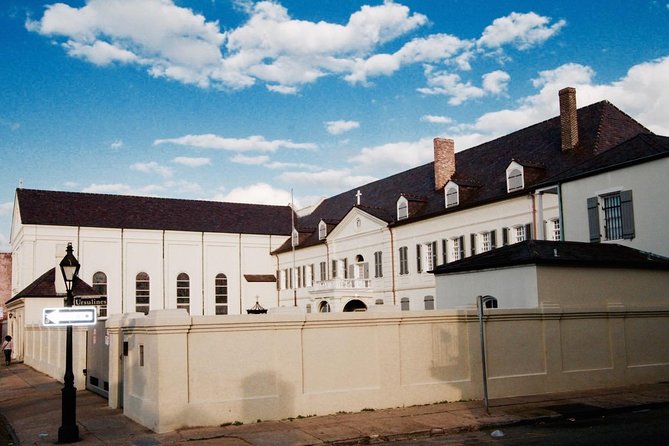
The tour ends with a step outside the Old Ursuline Convent Museum, described as standing in front of the oldest building in the Mississippi River Valley. Even with limited time inside, the framing is the point.
This stop gives you a colonization-era perspective, a reminder that the Quarter’s famous later layers sat on top of much earlier roots. It helps the story stay broad instead of turning into just a list of landmarks.
The walk closes with you near the Jackson Square region and the river levee area, which is a nice finish. You are not dropped in the middle of nowhere. You finish at a central spot where you can continue exploring, grab a drink, or just wander without feeling lost.
The Guides, Humor, and Why It Makes the Tour Worth It
The tour’s reputation leans hard on guide quality. Names like Dave, David, Dave Roberts, and Davi Higgins show up in guide praise, and the consistent theme is that the guide makes the material easy to follow and fun to listen to.
A standout detail from feedback you can use: guides often speak with clear cadence and answer questions, which helps when you are stopping constantly through a crowded area. Another consistent note is that the tour feels safe and well-paced, even for solo travelers.
If you are the kind of person who hates tours that feel like you are being dragged, this format is the right fit. You get the structure of a route, but the tone stays conversational.
What to Do Before and After the 2-Mile Walk
A few practical moves can make this feel effortless.
Wear comfortable shoes, because the 2-mile distance adds up when you also stop often. Bring water if you run warm. Since the tour depends on good weather, have a light layer that can handle a sudden breeze.
Before the tour, consider fueling near the start area. Cafe Beignet is there for a reason. After, you are in position to keep exploring the Quarter. If you want a smoother day, schedule this early, so the rest of your sightseeing clicks into place faster.
Also, it helps to keep your expectations aligned. This tour is designed to be a focused circuit, not a full-day deep dive into every museum. For that, you can always return later with your own plan.
Who This French Quarter Tour Is Best For
This is a strong choice if you are:
- Visiting for the first time and want a fast orientation
- Interested in how geography shaped the city, not just what buildings look like
- A literature fan who likes spotting real-life locations tied to authors
- Traveling in a small group or solo and want interaction without chaos
If you want a hands-on, activity-based experience, you might find it more “walk and listen.” Still, for most people, that is exactly what makes it valuable. Two hours gives you a framework you can build on.
If you are traveling with kids, the tour can work well because it mixes story, humor, and visible landmarks. Just keep shoes and energy levels in mind.
Should You Book This French Quarter Walking and History Tour?
I’d book this if you want your French Quarter experience to feel guided but not controlling. For $29, you get a tight 2-hour route, a small group, and a guide who explains why places matter, from the levee system to Jackson Square to Pirate’s Alley and the literary trail.
Skip it only if you already know the Quarter’s basics and you prefer self-guided wandering with no structured storytelling. Otherwise, this tour is one of the best ways to get your bearings fast, understand the city’s water-and-rebuild logic, and leave with a mental map that makes later exploring easier.
FAQ
How long is the New Orleans French Quarter Walking and History Tour?
It runs for about 2 hours.
How far do I walk?
You walk about 2 miles (3.2 km) at a leisurely pace.
What is the group size?
It is a small-group experience with a maximum of 9 travelers.
Where does the tour start and end?
It starts at Cafe Beignet on Royal Street, and it ends around Jackson Square in the French Quarter area.
Is food included?
No. Food and drinks are not included.
What is included in the price?
A local guide is included.
Is the tour offered in English?
Yes, it is offered in English.
Are there admission fees at the stops?
The tour highlights stops marked as admission ticket free, and St. Louis Cathedral is part of the guided experience.
What is the cancellation policy if my plans change?
You can cancel for a full refund if you cancel at least 24 hours in advance. Within 24 hours of the start time, refunds are not available.
What if the weather is bad?
The experience requires good weather. If it is canceled due to poor weather, you will be offered a different date or a full refund.
More Tours in New Orleans


More Tour Reviews in New Orleans


More French Quarter Tours


More ways into New Orleans


French Quarter Tours, compared.
 ★ 5.0New Orleans Food Walking Tour of the French Quarter with Small-Group OptionFrom $756,118 reviews
 ★ 4.5New Orleans French Quarter, Voodoo and Culture Walking TourFrom $272,961 reviews
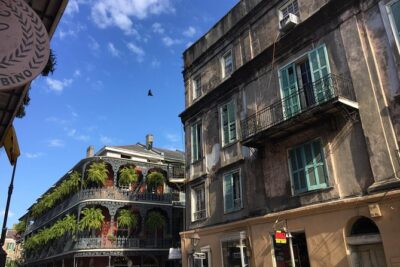 ★ 5.0French Quarter Historical Sights and Stories Walking TourFrom $352,724 reviews
 ★ 4.5Ghost and Vampire Walking Tour Of The French QuarterFrom $212,406 reviews
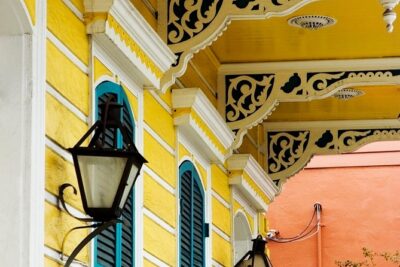 ★ 4.5New Orleans City Tour: French Quarter, Garden District & CemeteryFrom $402,209 reviews
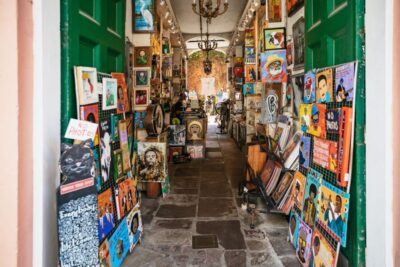 ★ 4.7French Quarter Walking and Storytelling TourFrom $351,251 reviews
 ★ 5.0New Orleans French Quarter Food Tour: Cajun, Creole and CultureFrom $811,246 reviews
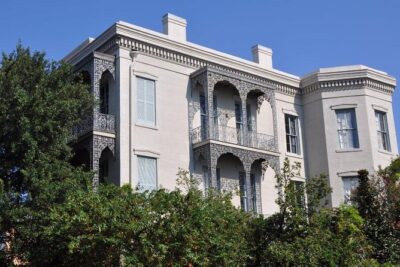 ★ 5.0New Orleans French Quarter and More Carriage RideFrom $651,141 reviews
Browse the lists this tour appears in