

REVIEW · FRENCH QUARTER TOURS
French Quarter History and Landmark Waking Tour
History walks in the French Quarter can go fast. This one strings big stories to real corners, so you get meaning, not just photos.
I like that it is built around iconic landmarks you already want to see, like Jackson Square, the French Market, the Cabildo, and Café du Monde. I also like the cemetery stop at St Louis No. 1, where above-ground tombs make the city’s past feel close and oddly personal.
One thing to consider: it is still a walking tour, and you’ll want to plan for heat and sun, especially around the cemetery since there is limited shade.
Key highlights you should care about

- A tight 2-hour format that helps you get oriented without swallowing your whole morning
- St Louis No. 1 with above-ground tombs, plus the legend of Marie Laveau’s final resting place
- Congo Square taught as a long story, starting before colonization and changing over time
- Royal Street and Bourbon Street context, so you understand what you’re seeing now
- A small-group cap of 16, which can make questions easier and pacing feel humane
- Professional guide focus, with multiple guides praised by name for entertaining, personable explanations
Why this $30 French Quarter walk feels like a smart buy

For $30, you’re not paying for a bus or a long day. You’re paying for someone to turn a confusing patchwork of streets into a clear story. In the French Quarter, that is the difference between wandering and really getting it.
The best value here is the pairing of famous public spaces with the one place many visitors cannot access on their own: the licensed-guided atmosphere of St Louis No. 1. When a guide can connect architecture, religion, and local legend, the Quarter stops feeling like a theme park and starts feeling like lived-in history.
The tour also has a simple rhythm that suits first-timers. You start in the heart of the neighborhood, hit major landmarks while they are still awake, then end with the cemetery stop that makes New Orleans feel spooky in a grounded way, not just for effect.
More French Quarter walks and tastings near the same streets



Meeting at 540 Chartres and getting your bearings fast
The tour starts at 540 Chartres St at 10:00 am, and it ends back in the French Quarter. That matters because the Quarter is compact, but directions can still feel like a maze. Chartres is a great starting point for that reason. You get to walk in the direction that naturally flows through the sights.
It is also a practical setup for your day. The tour runs about 2 hours, and you’re still free afterward to do your own food and photo stops around Café du Monde, Royal Street, or Jackson Square.
A nice detail: the experience uses a mobile ticket, which means less paper juggling. And since the group size is capped at 16, it’s not a cattle-car situation. Based on the guide feedback people shared, the experience can even feel extra personal when the group is small, which helps if you like to ask follow-up questions.
One small tip I give you in any walking tour in hot weather: wear comfortable shoes and plan to move at a steady pace. This tour includes a cemetery component, so you’ll want to be ready for some standing and slow walking.
Catholic influence, Jackson Square energy, and the city’s power center
Early in the walk, you’ll get the thread of Catholic influence in New Orleans. This isn’t just trivia. It gives you a lens for understanding why certain buildings and public spaces look the way they do, and why the city’s identity has always blended faith, authority, and community life.
Then you’ll connect those ideas to Jackson Square, the Quarter’s main stage. Jackson Square is easy to spot, but it can feel like a postcard if you don’t know what to look for. A good guide helps you notice how the square functions as a public gathering space and how the surrounding structures reflect the city’s European roots.
The guide framing also helps with a common first-timer problem: you may see crosses, statues, and ceremonial-looking spaces and wonder what they all have to do with each other. With the right context, you start recognizing patterns, like how power and religion showed up in public spaces long before the modern tourist wave.
If you like history that actually explains the street view in front of you, this portion is the foundation. It’s where the tour turns into something you can carry with you for the rest of your visit.
Royal Street, French Market, Cabildo, and the “workday” side of the Quarter

Next, you move into the kind of scenes you’ll probably notice on your own: Royal Street with its shops and galleries. But here’s the difference. Instead of treating Royal Street like a backdrop for window-shopping, you’ll understand how it fits into the Quarter’s development and reputation as a place where commerce and culture overlap.
From there, you head toward landmark stops tied to the Quarter’s everyday rhythm, including the French Market and the Cabildo, plus nearby sights like Café du Monde. Even if you do not plan to stop for coffee or beignets during the tour, you’ll learn enough to know what you are looking at.
Café du Monde is one of those places where everyone photographs the same scenes. A guided walk helps you understand why it became part of the Quarter’s identity, not just why it looks photogenic. And that makes it more fun when you eventually try it on your own time.
The French Market and Cabildo add another layer. You see how the Quarter kept changing while still keeping its old structure visible. For many visitors, that is the moment the French Quarter stops being just “cool streets” and starts feeling like a city with a functioning past.
Practical note: since food and drinks are not included, this is not a coffee-sampling tour. It is history and interpretation. If you want a snack, you’ll need to handle it separately.
Bourbon Street context, and why nightlife has a long memory

Then the tour turns toward Bourbon Street. People know Bourbon Street as nightlife. The value in this stop is learning the backstory: how the street earned its reputation, and how the current scene fits into a longer pattern of performance, commerce, and public gatherings.
This is where the tour keeps you honest. You can romanticize the Quarter and also miss what makes it historically real. A good guide connects the street’s present-day energy to earlier city life, so you understand why crowds happen here and why the atmosphere can feel both celebratory and tense.
You’ll also pick up a few ways to read what you see. For example, you start noticing which blocks feel more residential versus commercial, and how that affects the look and behavior of the street.
If Bourbon Street is on your must-do list, you’ll likely enjoy this portion because it gives your photos a story. If you usually avoid Bourbon Street, you’ll still benefit from understanding it from the outside, so you can choose how close you want to get.
You can also read our reviews of more historical tours in New Orleans




Congo Square to the present, a stop that changes your map of the city

One of the most interesting parts of the route is Congo Square. This stop is ticket free and lasts about 20 minutes. The guide approach here focuses on pre-colonial origins and how Congo Square’s role evolved over time across empire and generations.
Why this matters: most visitors arrive in the French Quarter with a quick mental model, like French and Spanish influence, then everything else as an add-on. Congo Square disrupts that. It centers the story of people who shaped New Orleans culture long before the modern city layout took over.
You’ll also learn how space can hold memory. Even if the square looks like just another open area today, the historical context turns it into a landmark with weight. That makes the Quarter’s later stories, including religion and legend, feel more connected rather than stitched on.
If you care about cultural history, this is a stop you’ll remember even after you leave the neighborhood. It also sets the stage for the tour’s later supernatural thread, because New Orleans legends often travel through living community practices, not just folklore books.
St Louis No. 1 cemetery, Marie Laveau, and the kind of haunting that feels respectful

The tour’s most emotionally memorable stop is St Louis No. 1 cemetery. You’ll walk among the above-ground tombs, which is the part people do not expect until they see it. The architecture is striking, and it changes how you think about burial. Instead of a hidden resting place, the dead are visible, and the city treats the site as part of its landscape.
A key highlight is learning about the final resting place of voodoo queen Marie Laveau. The important thing is not just the legend itself, but the way the guide helps you understand why her story matters in New Orleans culture.
The cemetery stop also earns praise for tone. Multiple guides were described as both knowledgeable and respectful at St Louis No. 1, which you will appreciate because this is not the place for loud, careless behavior. If you want a guided explanation that respects the site, this tour is built for that.
One practical consideration, straight from real traveler notes: it can get scorching hot, even in months you might think are mild. The cemetery may have limited shade, so bring water and consider a hat. Dress comfortably, since you’ll be walking and standing.
If you want the French Quarter’s spooky side, this is where it shows up in a grounded way. You’ll leave with the feeling that New Orleans treats the past like it still has a job to do.
Guides, group size, and how to get the most out of 2 hours

Guides are the make-or-break factor on walking tours, and this one has serious standout feedback tied to actual names. People praised guides like David, Dane, Graham, Tara, Randy, Mike, Mark, and Michael Naughton for being entertaining, flexible, and great at answering questions.
That matters for your experience because the tour hits a mix of topics: Catholic influence, street history, cultural origins at Congo Square, and cemetery legend. If your guide can explain all of it without rushing, you get a clear picture in a short time.
It also helps that the group size is limited to 16, and in some runs people reported getting a very small group or even a nearly one-on-one feel. When that happens, you can ask follow-ups about what you’re seeing right in front of you, like specific buildings, the meaning of certain symbols, or why a location became important.
My advice: decide what you want most before you start walking. If you want a quick orientation, you’ll enjoy the landmark flow. If you want depth, focus your questions around Congo Square and St Louis No. 1, where context changes how you interpret everything else.
Should you book this French Quarter History and Landmark Walking Tour?
I think you should book if you want a short, focused tour that connects the French Quarter’s main sights to the stories behind them, including the cemetery stop that many visitors cannot replicate well on their own. The $30 price feels fair because you get a professional guide, a structured walk, and the high-impact St Louis No. 1 experience.
You might skip it if you hate walking, struggle with heat, or only want self-guided sightseeing. Also, if you already know a lot of French Quarter history, you may find some parts familiar, though the cemetery and Congo Square framing can still refresh your understanding.
If you do book, come ready with comfy shoes and a water plan. Get ready to look up at buildings and not just at your phone screen. This tour rewards attention.
FAQ
How long is the French Quarter History and Landmark Walking Tour?
The tour runs about 2 hours.
What is the price per person?
It costs $30.00 per person.
Where does the tour start?
The meeting point is 540 Chartres St, New Orleans, LA 70130, USA.
What landmarks and areas are included?
You’ll cover major French Quarter landmarks such as Jackson Square, the French Market, the Cabildo, and Café du Monde, plus Congo Square, and St Louis No. 1 cemetery.
Is food or drink included?
No. Food and drinks are not included.
Is there a maximum group size?
Yes. The tour has a maximum of 16 travelers.
Is the ticket mobile?
Yes. The experience uses a mobile ticket.
What is the cancellation policy?
You can cancel for a full refund if you cancel up to 24 hours in advance. If you cancel within 24 hours, the amount paid is not refunded.
More Tours in New Orleans





More Tour Reviews in New Orleans


More French Quarter Tours


More ways into New Orleans


French Quarter Tours, compared.
 ★ 5.0New Orleans Food Walking Tour of the French Quarter with Small-Group OptionFrom $756,118 reviews
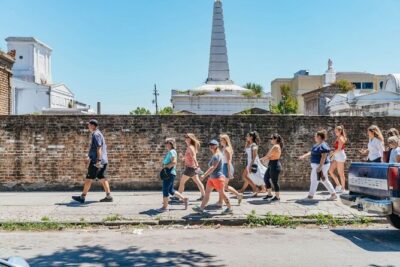 ★ 4.5New Orleans French Quarter, Voodoo and Culture Walking TourFrom $272,961 reviews
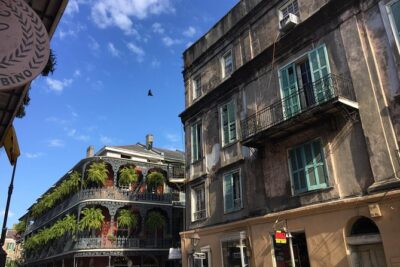 ★ 5.0French Quarter Historical Sights and Stories Walking TourFrom $352,724 reviews
 ★ 4.5Ghost and Vampire Walking Tour Of The French QuarterFrom $212,406 reviews
 ★ 4.5New Orleans City Tour: French Quarter, Garden District & CemeteryFrom $402,209 reviews
 ★ 4.7French Quarter Walking and Storytelling TourFrom $351,251 reviews
 ★ 5.0New Orleans French Quarter Food Tour: Cajun, Creole and CultureFrom $811,246 reviews
 ★ 5.0New Orleans French Quarter and More Carriage RideFrom $651,141 reviews
Browse the lists this tour appears in