

REVIEW · NEW ORLEANS BIKE TOURS
New Orleans: Scenic City Bike Tour
Live oak shade makes this ride memorable. You start in the historic core, then pedal into neighborhoods many first-time visitors skip, including leafy Esplanade Avenue and calmer reaches around City Park. It is a practical 3-hour way to learn why the city looks the way it does, with a guide who keeps the pace easy to follow.
I especially like the way the tour explains what you are actually seeing. You learn burial practices at St. Louis Cemetery No. 3, then connect that stop to the bigger story of how New Orleans formed and grew. In my book, that turns a photo stop into a real understanding.
My only heads-up is simple: it is a 3-hour bike ride with no food included. If you get cranky on an empty stomach, eat before you go, and wear proper footwear since sandals or flip flops are not allowed.
The Best Bits, the Parts That Actually Matter

- Small group, max 10 riders, so the guide can keep conversations going and the bike flow stays smooth
- French Quarter to Faubourg Marigny, giving you both the postcard sights and the quieter streets nearby
- St. Louis Cemetery No. 3, where you learn burial practices you will want to understand before you walk around
- Esplanade Avenue to City Park, including a long, shady pedal under live oaks
- Bayou St. John and the founding story, including how Native Americans and French settlers used the waterway
- Congo Square and Louis Armstrong Park, where the Creole culture thread comes into focus
Why This 3-Hour Bike Tour Fits New Orleans

New Orleans is a city where walking works, until it doesn’t. Distances add up fast, heat can linger, and you end up spending too much time moving between the same few sights. This tour solves that with a flat, leisurely route and a tight 3-hour window. You get movement, not burnout.
The second reason I like this format is the “small-group” size. With up to 10 participants, you are not stuck in a slow-moving conga line, and you can actually hear the guide at stops. That matters on a route that mixes famous landmarks with less-visited neighborhoods.
Finally, the tour is built around understanding, not just ticking boxes. You ride past Creole mansions, stop for cemetery context, and learn how the city expanded from what used to be bayou land. That is the sort of story that makes your next museum visit, dinner conversation, and photo attempt make more sense.
Meeting North Rampart, Then Finding Your Bike Legs
You meet at North Rampart Street in the French Quarter, between Toulouse and St. Peter, next to Arrow Cafe. It is an easy landmark to spot once you are in the area, and it keeps your start near the city’s most concentrated sights.
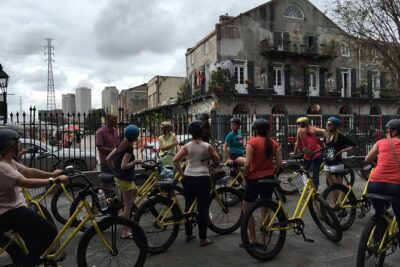
After you get fitted on your bike, you roll through the French Quarter first. This is smart. You learn the basics while the streets are still familiar, then later you move beyond the most obvious tourist boundaries. The transition from busy to calmer neighborhoods happens naturally as you pick up momentum.
You’ll also appreciate the practical basics baked into the experience. The tour includes bicycle use and one bottled water. There’s an optional helmet too, which is nice if you prefer your own feel of fit.
If you are tall, short, or in that awkward middle where bike sizing can be tricky, plan to arrive with a little patience for fitting. The age rule is also clear: participants must be over 13 and taller than 4’11”. If you are under 18, you need a legal guardian with you, and everyone signs a waiver.
French Quarter to Faubourg Marigny, Seeing the City Shift

The French Quarter is where most people start. But this tour does not stop there. It uses that early momentum to push outward into Faubourg Marigny, which helps you understand how the city changes as you move away from the densest blocks.
That matters because New Orleans feels different neighborhood to neighborhood. The architecture shifts, the street vibe changes, and the stories do too. By the time you are leaving the Quarter area, you are no longer just sightseeing. You are learning how people lived here, and how the city’s edges shaped the center.
From there, the ride turns more into a “stroll with wheels” rhythm. You can actually enjoy the scenery and absorb the guide’s explanations without white-knuckling the handlebars the whole time.
Esplanade Avenue and Esplanade Ridge, Live Oaks and Creole Details
One of the standout parts is the long stretch along Esplanade Avenue, including an extended ride under shade from regal live oaks. If you have ever visited in the wrong hour and felt the city cook you alive, you will love that this tour is designed for comfort and visibility.
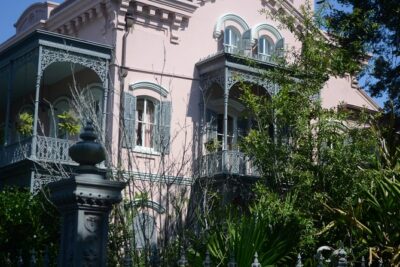
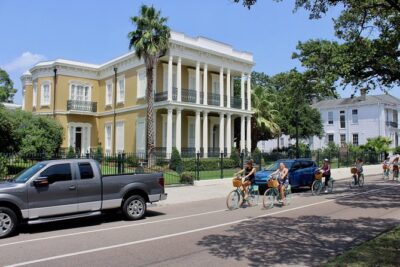
As you pedal, you see Creole mansions up close. The best thing about this stop is not the view alone, it is the way the guide connects the architecture to the people and culture behind it. You are not just spotting pretty facades. You are getting a sense of why those buildings show up where they do.
The route also includes Esplanade Ridge, where the tour’s “city expansion” theme starts to click. You learn how New Orleans expanded into what used to be bayou land. That transforms a geography fact into something you can picture while you ride.
And if you like the feeling of moving through a real neighborhood instead of hovering at a single attraction, this is where the tour wins. It is scenic, shaded, and educational without turning into a lecture marathon.
St. Louis Cemetery No. 3, Burial Practices Made Practical
This is one of the stops I’d call mandatory, even if you usually skip cemeteries. The tour includes a visit to St. Louis Cemetery No. 3, with a specific focus on burial practices. That matters, because cemeteries in New Orleans are not just resting places. They are cultural statements you can read if someone helps you interpret them.
You do not just walk around and guess. The guide explains what you are looking at in a way that fits the setting. You learn enough to make the art, structures, and layout feel like part of the city story instead of random stonework.
It also helps that the tour keeps the pace leisurely. Cemetery stops can feel rushed when the group is impatient. Here, the ride rhythm supports the stop, so you can take your time, ask a question, and actually process what you are seeing.
Two guide examples from past rides: Eric has a reputation for being friendly and enthusiastic, and Jeremy has added a personal touch to the cultural side of New Orleans, including how music and life connect to place. If either of them is your guide, you’re likely to get that blend of history and personality that keeps the cemetery visit from feeling heavy.
City Park and Bayou St. John, Where the Founding Story Shows Up

After you leave the cemetery, you head toward City Park, cruising past swampy vistas along the way. That “swampy” element is not just scenery. It is a visual reminder that the city’s environment shaped its growth.
Then comes Bayou St. John, a historic waterway used by Native Americans and French settlers alike. The tour does a good job tying that to New Orleans founding. You learn why the waterway mattered, so the bayou is not just a pretty route feature. It becomes part of the reason the city developed when and where it did.
This is also a nice contrast point. You get cemetery context, then you get a geography and founding context. Together, they help you stop viewing New Orleans as only a collection of landmarks and start seeing it as a city built on a living system of land and water.
If you like photos, you will like it here. Just remember, the goal is understanding as much as snapping shots. Let the guide’s explanation set the frame, then take your pictures.
Mid-City, the Lafitte Greenway, Louis Armstrong Park, and Congo Square
As the ride continues, the route keeps expanding your mental map. You pass through Mid-City, then along the Lafitte Greenway, and you end up at Louis Armstrong Park and Congo Square. Each stop adds another layer to the cultural thread of the tour.
The big idea is Creole culture. The experience is built to help you understand Creole culture in the way New Orleans actually lives it, not as a museum label. You see that through the places you ride by and the stops you pause at.
Congo Square is especially meaningful because it connects culture, community, and music. If your guide is Jeremy, you might get extra sparkle in that music connection since he is a musician himself. That personal angle can make the stop feel less like history on a plaque and more like something you can sense in the city.
Even if you already know the basics about New Orleans music, this part can still surprise you. The tour ties music and culture to specific locations you are physically riding to, so the connections feel real.
Bikes, Pace, and What to Wear (No Guesswork)

The route is described as flat and leisurely, so this is not a grind-it-out ride. It is designed for comfort and for hearing the guide. With a 3-hour duration, you should expect multiple short riding segments and a handful of stops, not long stretches of nonstop pedaling.
Still, do not treat it like an easy stroller walk. You are biking, and the city streets are full of real-world surfaces. The tour also sets a clear footwear rule: sandals or flip flops are not allowed. Closed-toe shoes are the safe choice.
Helmets are optional. That means you can ride without one if you normally do, but if it helps you feel secure, bring your preference. Also, keep an eye on the intoxication rule. The tour is not trying to be a party on wheels.
Finally, note who it suits: it is for participants over 13, and it is not suitable for children under 13. If you are traveling as a family and your kids meet the age and height rules, it can be a fun way to see more than the usual walking radius.
Price and Value, $55 for a Small-Group Cultural Ride

At $55 per person for a 3-hour tour, this sits in the “worth it if you care about context” category. You are not only paying for transportation. You are paying for someone to connect streets, architecture, and neighborhoods into one storyline you can actually use.
What makes it good value is the mix of included basics and the guided stops:
- Bicycle use is included
- An optional helmet is available
- One bottled water is provided
- The tour includes multiple named places, including French Quarter, St. Louis Cemetery No. 3, City Park, Bayou St. John, Louis Armstrong Park, and Congo Square
What keeps it from being a bargain without thought is the lack of food. Food is not included, so factor in a meal or snack plan before and after the ride. If you arrive hungry, you will feel the cost more than if you are fueled.
For solo travelers, this kind of small-group tour can be a smart way to get company and direction without hiring private transportation. For couples or friends, it is a classic “split the cost, share the learning” setup.
Should You Book This Scenic City Bike Tour?
I think you should book it if you want a low-stress way to see more neighborhoods and you like explanations that help you read the city. This is a great fit for first-timers who already plan to spend time in the French Quarter but want to go beyond it without spending your whole day in transit.
Skip it if you hate biking or you want food built into the experience. Also, if your travel group includes younger kids who do not meet the age and height rules, you will need a different plan.
If you do book, do one practical thing: plan to eat beforehand. Then you’ll have the energy to enjoy the shade, take in the cemetery context, and finish the ride with the culture story still fresh in your head.
FAQ
Where is the meeting point for the tour?
The tour meets on North Rampart Street in the French Quarter, between Toulouse and St. Peter, next to Arrow Cafe.
How long is the bike tour?
The tour lasts 3 hours.
How much does the tour cost?
The price is $55 per person.
What is included in the price?
The tour includes bicycle use, an optional helmet, and 1 bottled water.
Is food included?
No, food is not included.
Do you provide hotel pickup or drop-off?
No, hotel pickup and drop-off are not included.
What places does the tour stop at?
You cycle through and visit the French Quarter, Faubourg Marigny, Esplanade Avenue, St. Louis Cemetery No. 3, City Park, Bayou St. John, Mid-City, the Lafitte Greenway, Louis Armstrong Park, and Congo Square.
Are helmets required?
Helmets are optional.
What are the age and height rules?
Participants must be over 13 years old and taller than 4’11”. Participants under 18 must be accompanied by a legal guardian.
What footwear is allowed?
Sandals or flip flops are not allowed.
New Orleans Bike Tours, compared.
 ★ 5.0New Orleans French Quarter and Garden District Bike TourFrom $55410 reviews
 ★ 5.0New Orleans Creole Odyssey Small-Group Bike TourFrom $55268 reviews
 ★ 5.0Creole New Orleans Electric Bike Tour (ages 16 & up)From $89230 reviews
 ★ 5.0New Orleans History and Sightseeing Small-Group Bike TourFrom $55215 reviews
 ★ 5.0New Orleans Heart of the City Bicycle TourFrom $55202 reviews
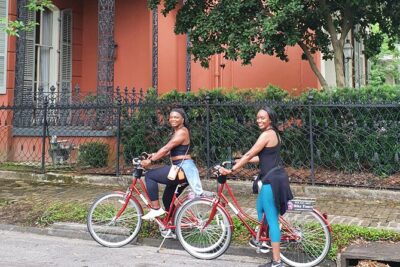 ★ 5.0New Orleans Garden District and Cemetery Bike TourFrom $55187 reviews
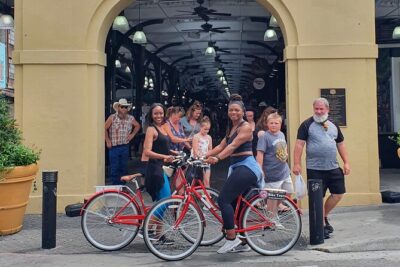 ★ 5.0New Orleans City Bike TourFrom $60162 reviews
 ★ 5.0The Original ‘Creole and Crescent’ Bike TourFrom $5567 reviews
Browse the lists this tour appears in