
The Garden District looks like another world. This guided walk mixes architectural styles with stories tied to New Orleans’ well-known names.
I particularly love how the route spotlights real, specific houses and why they were built that way, from Italianate to rare Gothic Revival. I also like the small-group feel, where you actually get time to ask questions and get straight answers from the guide.
One consideration: it is a walking tour, and the Lafayette Cemetery stop is currently handled as a discussion at the gate since the cemetery is closed to groups for maintenance.
Quick hits you should know
- Italianate start at Colonel Short’s Villa: a strong way to orient yourself in the neighborhood’s design language
- Briggs-Staub House Gothic Revival: a style you do not usually see here, making the detour feel earned
- Commander’s Palace as a landmark: historic dining institution since 1893, even though food is not included
- Manning House and Anne Rice links: New Orleans pop-culture meets local history without turning it into a gimmick
- Rosegate gardens and early chain-link fencing: a quieter stop with surprisingly practical horticulture detail
- Lafayette Cemetery gate discussion: you learn how the tombs work even if you cannot enter as a group
Why the Garden District feels different from the French Quarter
New Orleans has two speeds. One is loud, fast, and obvious. The other is slower, residential, and built on old streets where the architecture does the talking.
This tour is built for that second speed. You walk through the Garden District focusing on specific houses and styles, then connect those buildings to the people who lived there, owned them, or shaped the neighborhood. Even if you only know New Orleans from music, food, and festivals, you’ll come away with a clearer picture of how wealth, ambition, and design all braided together here.
More Garden District stories among the live oaks


The walk begins at Colonel Short’s Villa, an Italianate showpiece
The tour starts at Colonel Short’s Villa, and it sets the tone fast. This place is described as a masterpiece of Italianate architecture, and that matters because it gives you a visual reference point for what you’ll keep seeing as you move block to block.
What I like about opening here is that you can look, then listen. You get explanations that help you notice details instead of just admiring a pretty façade. Italianate architecture is not only about decoration, it’s about the message the owners wanted to send, which is easier to understand when the guide points out the elements early.
Practical note: since this is a walking tour, starting with a major landmark helps you get your bearings quickly.
Briggs-Staub House and rare Gothic Revival in the Garden District
Next up is the Briggs-Staub House. Here the focus shifts to Gothic Revival, and the tour calls it the only true example of that style in the Garden District.
That “only example” detail is a clue for how to enjoy the stop. Don’t treat it like another big house photo. Treat it like a one-of-a-kind design puzzle. When a neighborhood repeats similar styles, a rare variation becomes extra interesting, and the guide’s architectural notes help you spot what makes Gothic Revival different in the first place.
This is the kind of stop that rewards attention. If you like architecture, this is where your brain starts doing the fun work of comparing shapes, rooflines, and overall vibe as you walk.
Commander’s Palace stop: a historic restaurant without the food pressure
Then you hit Commander’s Palace Restaurant. The tour positions it as iconic, known for award-winning cuisine, and a community staple since 1893.
Since food and drinks are not included, you won’t be sitting down as part of the tour. Instead, you get the value of the landmark itself, plus context that makes the building and its reputation feel rooted in the neighborhood, not floating above it like a souvenir.
I like this approach because it keeps the tour moving. You get context, you see the setting, and you avoid the common problem where a walking tour turns into a half-day of waiting on meals.
If you want to eat, you can do that after. If you do not, the stop still makes sense.
Toby’s Corner: Greek Revival and the Garden District’s early days
After Commander’s Palace, you pass Toby’s Corner, described as the oldest house in the Garden District. The architecture here is Greek Revival, and that combo is a big part of why the stop works.
Oldest house plus a strong style cue means you can feel the neighborhood’s “before” era. Greek Revival architecture has its own visual language, and when you pair that with the idea of early days in the Garden District, the exterior stops being just decorative and starts being a timeline.
This is also one of those moments where the guide’s stories do real work. A house’s age is interesting, but it’s the historical context around who built, lived, and invested that makes the building matter.
You can also read our reviews of more historical tours in New Orleans





The Manning House: football fame inside a residential setting
One of the most recognizable names connected to the Garden District is Archie Manning, and this tour brings you to the Manning House. You also hear that it was home to the childhood years of his sons Peyton, Eli, and Cooper Manning.
The value here is the contrast. This is not a celebrity museum. It’s a normal residential address, seen from the sidewalk as part of a broader architecture-and-history walk. That keeps the story grounded and makes it easier to connect the name you know to the neighborhood the family lived in.
If you’re a football fan, this is the stop that will get your attention immediately. If you are not, the house still fits the theme, because the tour uses it to show how modern fame can sit inside long-standing real estate and design patterns.
Brevard-Mahat-Rice House: antebellum opulence with an Anne Rice connection
Next comes the Brevard-Mahat-Rice House, presented as a testament to the opulence of the antebellum South. Then the tour adds a modern twist: Anne Rice renovated it and used it as her primary residence for many years. It also notes that she set parts of her Witching Hour trilogy inside.
This is where the tour turns from “pretty houses” into “why these houses kept changing hands.” When you connect antebellum grandeur to a 20th-century literary figure, you’re really seeing continuity. The building stays, the story shifts.
I also like that this stop acknowledges both sides: the architectural weight of the home and the human layer of who brought new life to it later. It makes the whole neighborhood feel less like a single era frozen in time.
Rosegate gardens: quiet horticulture and the story of early chain-link fencing
Then you stroll past Rosegate, described as an enchanting gardens stop and a serene escape. The details here are not only aesthetic. The tour mentions Rosegate includes one of the first chain-link fence designs in the world.
That is the kind of detail you rarely hear on a standard Garden District walk. It also gives you a fresh way to interpret “historic.” Fences and garden boundaries are functional design, not just decoration, and they reflect changing technology and changing ideas about how people manage private space.
If you want a mental break from always scanning facades, this is likely your breather. Keep your eyes open for the garden layout too. Even from outside, you can often tell where the paths and planting choices want you to look.
Payne-Strachan House and Jefferson Davis’s final chapter
The tour finishes the residential stretch at the Payne-Strachan House. The key detail here is that it is the place where Jefferson Davis, the first and only President of the short-lived Confederate States of America, died.
This stop matters even if your interests are mostly architecture. The guide’s job is to link the building to a specific historical moment, and that makes the house feel anchored to more than style. It also helps you understand how the Garden District became a place where many different threads of American history got interwoven, even when those threads are uncomfortable.
It’s also a good reminder: the neighborhood’s beauty does not cancel out the context. The tour treats both as part of the same picture.
Lafayette Cemetery: what you learn when it is closed to groups
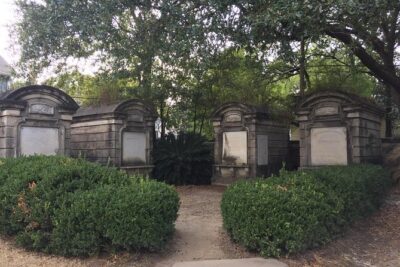
The tour concludes with Lafayette Cemetery. You’re told it’s one of New Orleans’ most famous cemeteries and that the focus is on the unique above-ground tombs.
Right now, the cemetery is closed to groups for maintenance. That means you do not treat it like a full walkthrough inside. Instead, you get the discussion at the gate, which is still useful because it explains what you’re seeing and why above-ground tombs are a signature of New Orleans.
If you’ve ever looked at photos of the tombs and wondered how they work or what the rules are, this is where the guide’s explanations pay off. Even without entry, you walk away with meaning, not just a view.
Price and timing: does $49 feel like value
At $49 per person for a 2-hour guided walking tour, the value mostly comes down to one thing: how well the guide uses the time.
The tour is not trying to be all-day entertainment. It is a tight circuit built around major architectural stops, plus landmark context at Commander’s Palace and a cemetery gate discussion. That kind of structure is usually what you want in New Orleans, where time gets stolen by traffic, lines, and the sheer number of things to see.
Also, the reviews I paid attention to emphasized that the guide was funny and had time for questions thanks to a smaller group size. That is a practical value point. More time with a guide means less guessing for you, more understanding of what you’re looking at while it’s still in front of you.
If you’re the type who likes to wander, you can technically try to DIY some of these streets. But if you want the architecture and resident stories explained in a way that makes the stops stick, this price can feel fair for what you get.
What to expect on the ground: pace, shoes, and photo rules
Plan for a steady walking pace. The tour is short, but it is still a neighborhood stroll with multiple stops, including an actual cemetery-related wrap-up.
Because you’ll be outdoors most of the time, wear comfortable shoes. The tour also has basic rules: no smoking and no flash photography. Food and drinks are not allowed in the vehicle, and the tour does not include food or drinks anyway.
If you like taking photos, bring a phone or camera that behaves without flash. You’ll still have plenty of exterior architecture shots, especially around the Italianate and Gothic Revival buildings.
Who this tour fits best, and who should think twice
This works best for adults and older kids who enjoy walking and architectural details. It’s not suitable for children under 8, which makes sense given the pace and the fact that many stops are exterior viewing points with discussion.
If you use a wheelchair, pay close attention. The activity information lists it as wheelchair accessible, but it is also marked as not suitable for people with mobility impairments and not suitable for wheelchair users. That contradiction is important. Before you book, you’ll want to confirm what the walking portion looks like for your situation.
Overall, I’d aim this tour at you if you:
- Enjoy architecture and want explanations you can actually use while standing in front of a building
- Want a break from New Orleans party energy and prefer a quieter, residential side of the city
- Like a smaller group where the guide can answer questions
Should you book Hidden History of New Orleans Garden District?
Book it if you want a focused, 2-hour Garden District walk built around real architectural styles and specific addresses, not just vague neighborhood vibes. The mix of Colonel Short’s Villa, the rare Gothic Revival at Briggs-Staub House, Commander’s Palace as a landmark, and the cemetery gate talk makes the tour feel like a complete story arc even without entering buildings or eating during the walk.
Skip it or ask more questions before booking if you need full wheelchair suitability or if you hate walking. Also, if you were hoping for a deep, inside-the-cemetery visit, the current maintenance closure means you should plan for the Lafayette Cemetery discussion at the gate instead.
FAQ
How long is the walking tour?
The tour lasts about 2 hours.
What does it cost?
It is priced at $49 per person.
Where do I meet the group?
The meeting point is the southwest corner of Prytania St. and Washington Ave., next to the white wall.
What are the main stops on the tour?
You’ll visit Colonel Short’s Villa, the Briggs-Staub House, and other Garden District homes, then continue to Commander’s Palace Restaurant, Toby’s Corner, the Manning House, the Brevard-Mahat-Rice House, Rosegate gardens, the Payne-Strachan House, and Lafayette Cemetery (discussion at the gate).
Is food or drinks included?
No. Food and drinks are not included.
Does the tour include Lafayette Cemetery entry?
Not right now. The cemetery is currently closed to groups for maintenance, so it’s handled as a discussion at the gate.
What language is the tour guide?
The tour is in English.
Is the tour suitable for children?
It is not suitable for children under 8.
Is it wheelchair accessible?
It is listed as wheelchair accessible, but it is also marked as not suitable for wheelchair users and for people with mobility impairments. You should check details before booking.
Are there rules about photos or smoking?
Smoking is not allowed, and flash photography is not allowed.
Is there a cancellation option?
Yes, free cancellation is available up to 24 hours in advance for a full refund.
More Historical Tours in New Orleans
More Tour Reviews in New Orleans






More Garden District Tours



More ways into New Orleans


Garden District Tours, compared.
 ★ 5.0New Orleans Garden District History Walking TourFrom $352,879 reviews
 ★ 4.5New Orleans City Tour: French Quarter, Garden District & CemeteryFrom $402,209 reviews
 ★ 5.0New Orleans Small-Group Garden District Walking TourFrom $351,384 reviews
 ★ 4.5New Orleans City and Cemetery Tour with Garden District StrollFrom $55766 reviews
 ★ 4.9Garden District Guided Walking TourFrom $35514 reviews
 ★ 5.0New Orleans Highlights of the Garden District Walking TourFrom $37492 reviews
 ★ 4.8Garden District TourFrom $28480 reviews
 ★ 5.0Garden District Home and History Walking TourFrom $26470 reviews
Browse the lists this tour appears in