REVIEW · NEW ORLEANS PLANTATION TOURS
Laura Creole Plantation Guided Tour
One hour from New Orleans, the past speaks. On a guided walk through Laura Plantation, you see a well-preserved Creole sugar estate and follow four generations of a French-descended family through furnished rooms, slave cabins, gardens, and fields. It is one of the few places where the story leans hard on surviving family records and memoirs, so the details feel anchored, not generic.
I especially like the way the tour covers both the owners’ world and the lives of enslaved people, with the hard parts discussed directly. Another win is the small group size (up to 28), which helps guides pace the tour for questions, like Amelia, who’s studied the period when the plantation was built, and guides like Lee, Cameron, and Lindie who make the culture and daily life come alive. The main drawback to plan for: a portion is outdoors and the route is a one-pass guided experience, so if you’re hoping for lots of free time inside the main house or a slow wander after, you may feel a bit rushed.
Key highlights worth circling

- One guided loop, focused stops: Maison Principale, gardens, and original 1840s slave cabins on a timed visit.
- Creole culture over 200 years: You’ll hear how French and Louisiana influences shaped life on the plantation long before and after the family’s era.
- Records-based storytelling: Family memoir material from Laura Locoul and additional documents found in French National Archives help ground what you’re told.
- Questions are encouraged: Guides often leave room for follow-ups, which is great if you want more day-to-day context.
- A serious, honest approach to slavery: The tour addresses slavery as it existed in French colonial and American Louisiana through the end of the 19th century.
- Easy drive from New Orleans: About an hour along the Great River Road, so you can still do other stops in the area afterward.
Laura Plantation: why this one-hour drive changes the way you see New Orleans

Laura Plantation sits in Vacherie, around an hour from New Orleans, along the Great River Road that follows the Mississippi. That drive matters. You get out of the city’s noise and into the flat, river-shaped rhythm that shaped how plantations worked, built, and supplied their sugar economy.
What I like about this site is that it’s not just a pretty property with vague narration. The plantation is included on the National Register of Historic Places and on the Louisiana African American Heritage Trail, and the tour leans on detailed surviving documents from the Duparc family line. You walk away with a clearer picture of Creole culture in Louisiana, not as a costume, but as a long-running social reality.
The tour duration is about 1 hour 10 minutes, so it’s not a half-day commitment. Yet it covers enough ground that you can realistically pair it with other nearby plantation visits on the same trip. If you like history but also like to keep your day flexible, this format fits.
More plantation visits from New Orleans, with the history kept in view
What your guided loop actually covers (and how to use that time)

Your visit is a guided tour of the main house, the slave quarters, and the grounds, including gardens and sugar-field areas when the route allows. It’s designed as a structured walk, so you follow your guide from one area to the next rather than picking rooms and spending hours drifting.
Here is the practical flow you should expect:
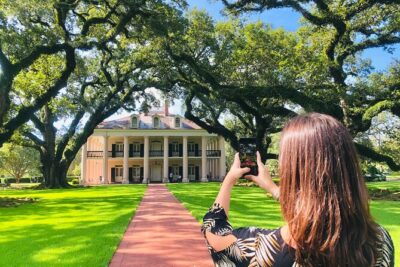
- Start with the Maison Principale, the 24,000-square-foot (7,315-square-meter) main house that’s furnished and organized for how life functioned during the plantation era.
- Continue through gardens and out to the broader estate setting, so the architecture and labor spaces don’t feel like separate facts.
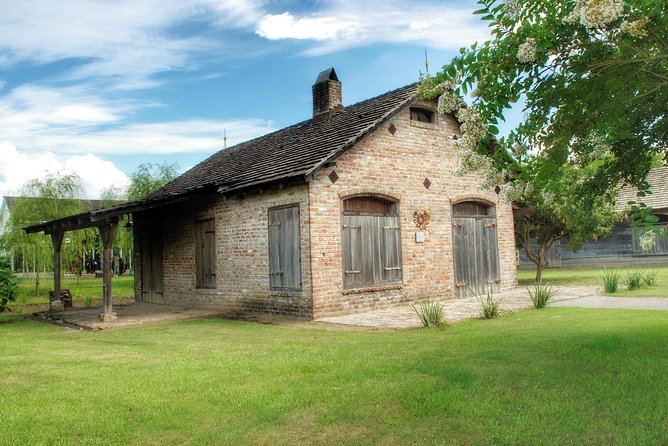
- End with time at the original 1840s slave cabins and the surrounding slave-quarters area, where the tour’s most difficult history is confronted directly.
Because this is a guided experience with a set route, it helps to come ready to ask questions. If you care most about enslaved people’s day-to-day routines, bring that up early. One review noted an expectation for more daily-life detail, and the tour team has said they are working to include more stories and experiences of the enslaved. In practice, that means your questions can steer the level of detail you hear.
Also, the tour happens in all weather. A portion is outdoors, so you should dress like you plan to walk outside for at least part of the visit. I’d plan on comfortable shoes first, and then think about rain gear or layers depending on the season.
Maison Principale: architecture, family story, and why records matter
The main house is the centerpiece, and it’s easy to see why. It’s large, and it’s preserved well enough that you get a sense of what people built and how they lived inside a sugar-wealth world.
But the real value is how the tour ties the house to paperwork and memory. The plantation’s story is connected to the French-descended Duparc family, who founded the plantation in 1804. You also hear about the role of Laura Locoul, a fourth-generation family member whose memoir helps shape what the tour discusses today. On top of that, the tour references documents located in French National Archives, which helps explain why some details are specific rather than guessed.
If you’re the kind of person who reads placards in museums and still feels like the story is thin, this is a good place to recalibrate. The guide can talk about room function, household organization, and the way power worked inside that home, and you can connect those ideas to what you see later in the slave cabins. The contrast is a core part of the impact.
One practical note for mobility: only the ground floor of the main house is ADA accessible. Plan your expectations around that. You can still have a full experience, but don’t assume every interior space is step-free.
Slave cabins and the hard history: how the tour frames cruelty without letting it blur

This is where Laura Plantation demands your attention. The tour addresses slavery as it existed in French colonial and American Louisiana through the end of the 19th century, and it does so while keeping the focus on actual people and actual spaces.
In the slave-quarters area, you’re not just seeing buildings. You’re being asked to connect the physical layout to the realities of labor and control. The guides are expected to explain the lives of enslaved people in the 19th-century house and slave cabins, alongside stories of free people connected to the estate.
What I find useful for my own understanding is that the tour does not try to soften the story into romance. The whole point is that Creole culture and plantation society coexisted with slavery, and the tour holds both truths in view. That balance is also why many people rate the experience highly, especially when guides like Cameron and Joseph are praised for conveying what it was like for both owners and enslaved people.
A fair caution: one review said the tour was informative but didn’t match their expectation for deeper day-to-day detail about enslaved life. If you want that level of specificity, you should come with questions like how work cycles were described, how family life was discussed, and what the guide can point to in the records. If the guide answers clearly, you’ll get a richer experience than someone who just passively listens.
Gardens, sugar fields, and Creole culture you can see, not just hear
Laura Plantation is more than the house and cabins. The gardens and surrounding grounds help you visualize the estate as a working system, not an abandoned set.
The tour highlights that Creole culture thrived in Louisiana for more than 200 years. You’ll hear how influences shaped social life, household identity, and the culture that grew from French connections and local Louisiana realities. This matters because New Orleans visitors often expect Creole history to be only food, music, or language. Here, you get a fuller view that includes how plantation power and culture were tied together.
Gardens also give you a different kind of pause. Indoors, the story can feel heavy and constant. Outdoors, you can let the details settle, look closely at the grounds, and then return to the history with a clearer mental map. If you tend to rush through outdoor stops, slow down here. The site is preserved and the design details are worth your time.
Also, do not assume you only get the guided narration. After the tour, you can continue exploring independently around the estate area. Some people like stopping by the store and small museum spaces for extra context, so if you’re the type who wants to keep reading after the walk, build in time for that.
You can also read our reviews of more guided tours in New Orleans
Price and value: what $32.06 buys in the real world

At $32.06 per person, this tour is priced like an experience that expects you to drive in and spend money on-site rather than rely on a complicated transport package. That can feel slightly awkward if you’re used to tours that include hotel pickup. But it also keeps the experience simple.
Here’s the value argument that makes sense for most visitors:
- You get a local guide and a structured walk through the main house and original slave cabins.
- The setting is about an hour from New Orleans, so the price covers access to a site that takes real planning to reach.
- The tour is around 1 hour 10 minutes, which means you get a meaningful history stop without wiping out a whole day.
The hidden cost to keep in mind is transportation. The tour listing does not include hotel pickup or drop-off. Laura Plantation partners with operators for guest transportation if you do not self-drive, but pricing can vary by operator. One review mentioned that transportation costs added up to more than the tour ticket itself. If you’re deciding between self-driving and hiring a ride, compare total door-to-door cost first. You might be able to save real money by doing the drive on your own.
Guides make the difference, and you’ll notice it fast

Most people rate this tour very highly, and a big reason is the guides. Names showing up in recent experiences include Amelia, Lee, Cameron, Joseph, Pam, Lindie, and Caroline. What ties many of these positive comments together is clarity, pacing, and how well the guide connects culture, architecture, and slavery to the physical places you’re walking through.
In practice, the best approach is to treat the guide like your biggest resource. Ask for clarification when something feels too broad. If a topic comes up like Creole identity, sugar work, or the family’s role over generations, follow up with a question.
Also, keep an eye on pacing. One less happy review described a guide moving quickly and not leaving much time for looking around or understanding small details in the moment. That doesn’t mean every tour runs that way, but it does mean you should communicate if you need slower time. If there’s a lot you want to photograph, ask early about when you’ll have room for it.
Planning for the day: shoes, weather, and the one-pass feeling
This tour happens in all weather, and it includes outdoor segments. So plan for walking, not just standing. Good walking shoes are recommended, and I agree. The ground and estate paths can be uneven, and you will get the most from it if your feet stay comfortable.
Dress appropriately. If it’s hot, you’ll want breathable layers. If rain is likely, bring something you can handle without slowing the group too much. The tour team expects outdoor time, and the experience won’t pause because the weather got annoying.
Timing matters too. The tour ends back at the starting point, and it’s structured. That’s part of why it’s so efficient, but it also means you shouldn’t expect to pop back inside at your leisure. If you love wandering, add extra time after the guided portion for independent exploration.
Who should book Laura Plantation, and who might want a different stop
I’d strongly consider booking this tour if you want:
- A Creole-focused plantation visit that explains how that culture developed over centuries.
- An approach that addresses slavery directly, not as a footnote.
- A guided format that gives you a clear, structured story in a little over an hour.
It may be less perfect if you want:
- A long, self-paced museum style visit with lots of quiet time inside every room.
- A tour where every moment is dedicated to the most detailed day-to-day routines of enslaved people, with no room for other topics.
The good news is you can often fix that mismatch with your questions. The guide can often spend a little more time on what you care about if you ask in plain terms.
Should you book it? My practical take
If you can make the drive from New Orleans and you’re willing to walk outdoors for part of the route, I think Laura Plantation is worth your ticket. The biggest selling point is the way the tour connects preserved spaces with surviving records, so the story feels grounded in names, places, and generations rather than a generic overview.
For the best experience, come with two priorities: ask about the everyday realities you want to understand, and spend time looking at the differences between the main house and the slave cabins. If you do that, you’ll get more than a tour. You’ll leave with a clearer mental model of Creole society in Louisiana, and how power, culture, and slavery sat together on this landscape.
FAQ
How long is the Laura Plantation guided tour?
The guided tour lasts about 1 hour 10 minutes.
Is the tour offered in English?
Yes. The tour is offered in English (and also available in French).
Where does the tour meet, and do I need a car?
You meet at 2247 LA-18, Vacherie, LA 70090. There is no hotel pickup or drop-off, so you will need to self-drive or use a partner transportation option if you cannot drive.
Is the tour mostly indoors?
A portion of the tour takes place outdoors, so plan for outdoor walking.
Is the main house wheelchair accessible?
Only the ground floor of the main house is ADA accessible.
What if I need to cancel?
You can cancel for a full refund up to 24 hours before the experience’s start time. If you cancel less than 24 hours before, the amount paid is not refunded. The tour also operates in all weather conditions, and if it is canceled due to poor weather, you’ll be offered a different date or a full refund.
More Tours in New Orleans
More Tour Reviews in New Orleans
More Plantation Tours from New Orleans
More ways into New Orleans
New Orleans Plantation Tours, compared.
★ 5.0Swamp Boat Ride and Oak Alley Plantation Tour from New OrleansFrom $1313,303 reviews
★ 4.5Oak Alley Plantation Tour with Transportation from New OrleansFrom $891,747 reviews
★ 4.5Whitney Plantation Tour with Transportation from New OrleansFrom $891,351 reviews
★ 4.5Airboat and Plantations Tour with Gourmet Lunch from New OrleansFrom $2791,246 reviews
★ 4.7Bayou Swamp Tour and Oak Alley Plantation TourFrom $1251,147 reviews
★ 4.7Oak Alley Plantation & Airboat Swamp Combo TourFrom $160906 reviews
★ 4.5Oak Alley Plantation and Large Airboat Swamp Tour from New OrleansFrom $160712 reviews
★ 4.7Whitney Plantation Tour with TransportationFrom $89619 reviews
Browse the lists this tour appears in