REVIEW · NEW ORLEANS CITY TOURS
New Orleans Hop-On Hop-Off Unlimited Sightseeing Package
New Orleans has a way of grabbing you fast. This pass helps you place the city fast, then wander at your own pace with live narration and two guided walks. You get a hop-on hop-off bus route plus built-in time on foot, so your first days feel organized instead of random.
What I like most is the mix of live guides and flexible touring. When you ride, you are not stuck with canned audio, and the bus narration is often where the best practical tips show up. Second, the package includes two guided walking tours, which makes stops like Jackson Square and the Garden District more than just a photo op.
One caution: efficiency depends on crowds and traffic. You can still have a great day, but if a bus is full, delayed, or rerouted due to events or construction, you may end up waiting longer than you planned.
Key Points You Should Know Before You Go

- Live-guided bus narration means you can ask questions on the spot, not just listen and hope.
- Two guided walks are included, French Quarter and Garden District, so you get both orientation and street-level details.
- The bus loop runs about 90 minutes, with buses typically every 25 to 30 minutes, which helps you plan hopping.
- St. Louis Cemetery No. 1 and the French Quarter core are covered early, so you can schedule must-sees before your schedule gets tight.
- Rain planning is built in with a poncho, since weather can change quickly in New Orleans.
Is the 3-Day New Orleans Pass Worth $54?

For $54 per person (all taxes included), this package is designed for people who want the city mapped out in a low-stress way. The value comes from stacking three things: unlimited hop-on hop-off bus access for multiple days, two included guided walking tours, and live-guided commentary on the bus.
If you are trying to see a lot without doing the math every day, this is a strong deal. You pay once, then you decide what gets your time. That matters in New Orleans, where attractions are spread out, and walking from one neighborhood to the next can add up quickly.
It also helps that the pass is pitched as family-friendly. That does not mean it is only for families, but it does signal the tour structure is built around manageable chunks, not long, complicated excursions.
The main thing to keep in mind is that hop-on hop-off value is all about how you use it. If you ride once only, sit through a single loop, then stop using the bus, the cost can feel steep for one day. If you plan one full ride for orientation and then hop off for the things you care about, it usually feels like a smart shortcut.
More New Orleans city tours for the bigger picture
How the Hop-On Hop-Off Bus Works (Hours, Stops, Timing)
The buses typically run from 9:30 AM to 5:30 PM. Expect scheduling to shift on holidays and major events. The route includes 19 stops, and a full loop takes about 90 minutes if you do not hop off.
In practical terms, buses usually arrive every 25 to 30 minutes. That is frequent enough for most sightseeing styles, but New Orleans traffic can stretch travel time. If you are traveling with tight timing, build in buffer, especially midday.
Here is a useful mindset: treat the bus like your moving base. You can use it to reposition yourself, then walk the short distances you want. Then, when you are ready, you hop back on. That approach matches how the included walking tours work, too.
You also have a mobile ticket. You do not need to redeem it at a specific window in advance. You can show your voucher to the guide or agent at a hop-on hop-off stop. That keeps things simple when plans shift.
And yes, the bus experience is English-only narration. If that is not a problem for you, the live format is where the value often shows up, because you can ask follow-up questions about what you are seeing right then.
French Quarter Morning: Jackson Square, Cathedral, and the Easy Start

You start at the French Quarter core, and that is a smart move. Stop 1 anchors near Jackson Square and the St. Louis Cathedral, right by one of the most photo-friendly corners in town. The nearby City Sightseeing ticket office is also there, so you have a clear reference point if you need it.
Cafe du Monde is in the immediate zone as well. Even if you do not plan a sit-down breakfast, this stop makes it easy to grab a quick bite and keep moving.
The included French Quarter walking tour meets at 700 Decatur Street, at the City Sightseeing ticket office across the street from Jackson Square. That placement matters. It means you can do the walk without needing a second transit plan or a complicated meetup location.
What you should expect from this walking tour is street-level context focused on the French Quarter core. Jackson Square is the obvious center, but the tour route is built to help you understand what you are looking at and why it matters historically and architecturally. The practical bonus is that the guide tends to point out what is worth your time later, so you do not burn your limited daylight on places that are less relevant to your interests.
One more practical note: Jackson Square can get crowded. If you like photos without chaos, do this walk earlier in your day, and aim to time your return to the area around meal breaks.
French Market and Royal Street Energy: A Short Trip With Big Payoff

Stop 2 takes you to the French Market Shopping District. This is the kind of area where you can browse quickly, snack, and still feel like you are in the heart of the Quarter without committing to a long detour.
Then you head toward stop 3 at 2200 Royal St, which is a great transition point toward the entertainment side of town. This area ties into Frenchmen Street music clubs, plus nearby stops like Crescent Park. You are also in the zone for events and venues, including JAMNOLA and spots like Bywater Brew Pub.
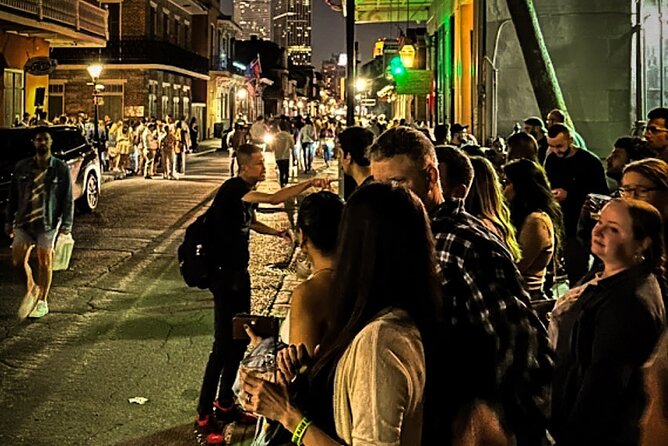
Here is how I would use this stop: treat it as your daytime planning hub, then save some energy for evening. Frenchmen Street is more about atmosphere and live music than a checklist, and having the bus position you nearby makes it easier to decide on the fly.
If you are traveling with kids, this section helps because you can hop off, check out the vibe, then hop back on if the attention span fades. The route gives you that option without forcing a long walk across neighborhoods.
Cemetery and Church Stops: St. Augustine and St. Louis Cemetery No. 1

Stop 4 covers St. Augustine Church and the Tomb of the Unknown Slave. This is one of those locations that can change how you experience the Quarter. Even if you are not the type who loves tour scripts, the stop itself tends to anchor the conversation around New Orleans history, memory, and the layers you see in the built environment.
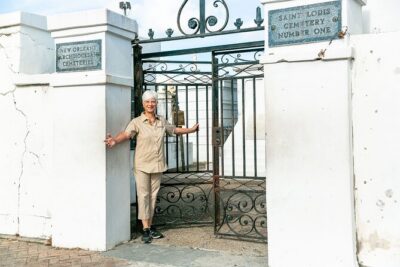
Stop 5 is at 501 Basin Street, covering St. Louis Cemetery No. 1. This is a major stop on any first-timer plan because cemeteries are central to New Orleans culture. From the practical side, the area includes a Welcome Center with travel counselors, restrooms, a gift shop, and even a coffee shop. That means if you are touring all day, you have places to reset without losing your entire rhythm.
Also at St. Louis Cemetery No. 1, there are walking tours offered daily. This is a big deal for you because the bus stop gives you the option: you can just observe, or you can add a guided cemetery visit if you want more structure.
If you are going to do the Garden District walking tour later, you will not meet there. But the cemetery stop still matters because it puts you in the part of town where you can break up the day: a guided walk in the morning, a cemetery stop mid-afternoon, then back on the bus for the next neighborhood shift.
One caution: cemetery areas can involve uneven sidewalks. Wear comfortable shoes and plan for some walking.
Canal Street to Bourbon: The Straight Shot Through the Quarter’s Main Streets

Stop 6 is at 500 Canal Street, a high-visibility hub that connects you to Bourbon Street, Royal Street, and Chartres Street. This is a useful stop because it keeps you near big shopping streets and the Quarter’s busiest energy.
From a value standpoint, it helps you avoid expensive backtracking. If you see something you want on Royal Street, you can hop off, shop, and hop back on later without trying to navigate every side street in a single sweep.
Stop 7 moves you toward Harrah’s Casino, plus the American Italian Cultural Museum and Italian Piazza. This is not just about gambling. It is also a cultural and architectural stop that helps broaden your picture of the city beyond the Quarter’s most famous scenes.
Stop 8 brings you near the stadium and event zone area: the Hyatt Regency Hotel, Holiday Inn Superdome, Walk-On’s, and Copper Vine. This part of the route is handy when you are staying near those big landmarks or when you want access to views and venues without needing multiple short rides.
Stop 9 is around Gallier Hall, Cafe at the Square, and St. Patrick’s Church of 1840. That church stop gives you something calmer and more historic feeling than the main-street action, even if you only spend a short time there.
Stop 10 is where the city’s museum weight hits. You reach the Ogden Museum of Southern Art, the Contemporary Arts Center, the Confederate Civil War Museum, and the National WWII Museum at Solomon Victory Theater. If you care about museums, this area is your best one-stop concentration. It is also a natural point to take a longer indoor break if the weather turns.
I will say this plainly: museums can take longer than you expect. If you are on the clock, plan to prioritize one major museum and use the others as optional “when we have time” stops.
Magazine Street and the Garden District Walking Tour Meetpoint

Stop 11 goes straight to Magazine Street, where shopping and dining spread out in a way that feels more like a neighborhood than a theme park. The bus stops keep you close to the action without requiring you to commit to one long stretch.
Stop 12 stays on Magazine Street and adds the included Garden District Walking Tour option. The guided tour departs from the corner of Washington Avenue and Magazine Street, at 2727 Magazine Street, and that is conveniently tied to Hop-On Hop-Off Stop #12.
That pairing is smart. Walking tours work best when you can arrive without a scramble. With this meetpoint, you can use the bus to reposition, then walk with a guide in the Garden District without having to figure out parking, taxis, or complicated directions.
What you should expect here is a neighborhood walk with guided context. The Garden District is a place where architecture and streetscape matter, so the walking format helps you notice details you would otherwise skip.
One tip I like for tours like this: do not try to over-schedule the day. If you stack museum plus shopping plus a guided walk back-to-back, you will feel rushed. Build your day so the guided walk is a centerpiece, not a quick add-on.
St. Charles Avenue Streetcar Line, Elms Mansion, and the Pontchartrain Area

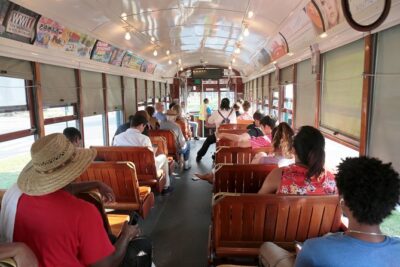
Stop 14 adds Fresh Market Bakery, the St. Charles Avenue Streetcar Line, Superior Grill, and the Elms Mansion area. This is where you can shift from Quarter mode into “uptown” New Orleans.
Stop 15 is near New Orleans and Company, and again along the St. Charles Avenue Streetcar Line. It also connects you to the Pontchartrain Hotel zone.
This is valuable because streetcar access can be a travel shortcut if you decide you want a different way to move. Even if you do not ride the streetcar, being close to it gives you an easy plan B.
Also, St. Charles Avenue feels different from the Quarter. If you want your trip to have contrast, this segment helps you get it.
Mardi Gras World Footsteps and the Hurricane Katrina Sculpture Stop
Stop 16 covers the Ernest M. Morial Convention Center, the Hurricane Katrina Sculpture, and Mardi Gras World with about 10 minutes walking between nearby points.
This is a powerful pairing. You are not just seeing a fun-themed site. You are also placed near a memorial element connected to Katrina, which helps round out your understanding of the city as more than entertainment.
If you have limited time, I would treat this as a “choose your priority” stop. Mardi Gras World can be a family hit, while the Katrina sculpture area offers a solemn stop for those who want to reflect. Both are worth considering, but trying to do everything at once can flatten the experience.
Riverwalk, Julia Street Galleries, and the Outlet Collection
Stop 17 is around The Outlet Collection at Riverwalk and Julia Street Shops and Galleries. This area gives you another change of scenery: you get closer to the riverfront vibe and a more gallery and shopping feel.
It is also a convenient catch-all stop when you need something that is not another museum. If you want air-conditioning breaks, snack options, or a place to browse without committing to a timed attraction, this part of the route helps.
Vue Orleans and Family-Friendly Options: Paddlewheeler Creole Queen and Audubon
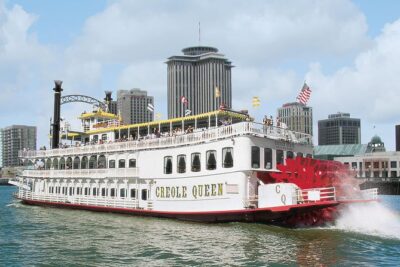
Stop 18 is at Vue Orleans, with links to Paddlewheeler Creole Queen, Vue Orleans, and the Audubon Aquarium & Insectarium.
This is the stop I would aim for if you are traveling with kids or you want indoor time. An aquarium area is easy to pair with a bus day because it is straightforward: hop off, spend a couple hours, then hop back on when you are ready.
Even if you skip the aquarium, being near the river and cruise options can make your final day feel like a complete loop, not just a set of neighborhood hops.
Live Guide Quality, App Timing, and the Realities of Waiting
A big reason people rate this pass highly is the live narration, and the guide names you might encounter show up often in the experience. I see examples like Logan, Celeste, Deidre, Ron, Chris, and Sam tied to bus narration and walking tours, with additional names like Helen, Johnathan, Paige, Lida, and Gsry appearing as guides too.
That matters because the difference between a good day and a frustrating one is often information quality. When guides give clear directions, tell you what is worth your time, and keep things grounded in what you can actually do nearby, the pass feels worth it.
The app is another key piece. Many people find arrival times helpful, but you should know New Orleans traffic can shift things. If the route is rerouted due to construction, or if data is temporarily off, you might need to rely on common sense and careful stop-finding.
Maps can also be outdated, and some stops can feel harder to locate than you expect when you are scanning streets. My advice is simple: use the app, stand at the right sidewalk spot, and give yourself extra minutes in the beginning of each day.
One more reality check: if the bus is full, you cannot always count on getting on at your chosen moment. That is when planning matters. If you are doing a must-see with a strict start time, do not schedule it as your first hop of the day. Start flexible, then tighten later.
Smart Ways to Use the Pass Over 3 Days
Here is how I would run your plan to get the most value out of a 3-day window.
First day: ride the full route once. Sit up top if you like wider views. Use the bus to get oriented. Then pick 3 to 5 stops that match your interests.
Day two: go deep in one zone. For many people, that means French Quarter core early, then a cemetery stop, and then back to shopping streets like Royal or Magazine.
Day three: switch to streetcar and museum mode. St. Charles Avenue and the WWII museum area are good anchors. Finish near the riverfront if you want an easy wrap-up.
Also, try not to over-stack guided experiences. The walking tours are included, so plan them as centerpiece events. The rest of the day becomes flexible bus hopping.
Poncho tip: if rain hits, take the poncho seriously. Wet shoes and soaked clothing can turn a short walk into a miserable hour. This tour includes poncho support, so you can keep moving without losing the day.
So, Should You Book This One?
I would book this if you want a practical orientation plan with flexibility and included guided walking tours. The $54 price makes sense when you use the bus multiple times over the 3-day period, especially if you want to reduce the guesswork of where to go next.
You might skip or rethink if your travel style is ultra schedule-driven. If you need near-perfect timing at every hop, you are more likely to feel the impact of traffic, reroutes, or crowded buses.
Families often do well here because the route hits major landmarks and gives you options. First-timers also benefit because the stop order puts you close to core attractions early, then opens up museums, streetcar areas, and riverfront time.
If your goal is to feel the neighborhoods first, then choose what to spend your deeper time on, this pass is a solid way to do it.
More Tour Reviews in New Orleans
More New Orleans City Tours
More ways into New Orleans
New Orleans City Tours, compared.
★ 4.5New Orleans City Sightseeing Hop-On Hop-Off Bus TourFrom $514,943 reviews

★ 5.0New Orleans Sightseeing City TourFrom $403,038 reviews
★ 4.5City Tour of New Orleans with PickupFrom $452,407 reviews
★ 4.5New Orleans City Tour: French Quarter, Garden District & CemeteryFrom $402,209 reviews
★ 4.8Sightseeing Bus TourFrom $471,565 reviews
★ 4.5City Sightseeing New Orleans HOHO Bus Tour & Bookable ExtrasFrom $511,077 reviews
★ 5.0New Orleans Small-Group City Tour by Van1,077 reviews
★ 4.7French Quarter Sightseeing Carriage RideFrom $65644 reviews
Browse the lists this tour appears in