

REVIEW · NEW ORLEANS JAZZ TOURS
The Soul of New Orleans: Jazz History Private Tour
Jazz has street-corner clues.
This private tour is a smart way to connect the sounds of New Orleans to the actual places where the story grew, with stops that map jazz from Congo Square to Frenchmen Street. I like the private guide format, because you get real attention instead of sharing answers. I also like the local hangout tips, the kind that help you spend your night hearing music, not chasing rumors. One thing to think about, no matter how great the guide is, is that you start at a set meeting spot and walk for about 2.5 hours, so plan for comfortable shoes and your own way there.
You’ll cover major landmarks and also the nearby side streets where the meaning gets better. Along the route you’ll hear about Creole culture and voodoo, plus why places like Preservation Hall and the Louis Armstrong Park area matter to the bigger jazz timeline. The guide I’ve seen praised most for this kind of tour, like Holley, tends to mix history with down-to-earth city advice.
Because the tour ends on Frenchmen Street, it naturally sets you up for the next step: finding a show after your walk. Just remember you’re there for context, not a sit-down concert the whole time, so if you want music from minute one, have a plan for the after-tour hours.
Key things to know before you go
- Private focus: Only your group, so you can ask questions as you walk.
- Jazz roots to live music, in one path: From Congo Square to Frenchmen Street.
- Creole and voodoo context included: You don’t just hear dates and names.
- Stops are mostly “look and learn”: Many admissions are listed as free for the stops.
- Practical evening payoff: You finish where good listening is easiest to find.
- Bring walking shoes: The pace fits a moderate fitness level.
Entering the jazz map from Congo Square to Frenchmen Street

This is a themed, history-forward walk that stays mostly in classic New Orleans zones where the story makes sense. You start near the French Quarter at a hotel meeting point, then move through meaningful landmarks in a logical order, ending on Frenchmen Street where the city turns into a nightlife circuit.
The tour runs about 2 hours 30 minutes, with short time windows at each stop. That’s a good format for first-time visitors because it keeps you moving while still letting the guide explain what to notice. It also works well for people who like structure, you get a plan for where to go and why, without feeling like you’re stuck inside a classroom.
Most stops are listed with admission as free, which is nice. The tradeoff is that you’re not guaranteed long indoor time at every location. You’ll be looking, listening, and learning on the street, then using your guide’s tips to make your own choices for meals and music after.
More New Orleans jazz walks and live-music nights


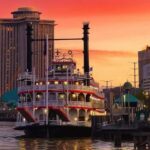
Stop 1 and 2: Congo Square and Saint Ann Street, where culture and myth meet

Your first stop is Congo Square near the Louis Armstrong Park area. This is one of those places you can’t really “speed through,” because the whole point is to stand where the roots of jazz are connected to lived community life. The guide helps you see it as a starting point, not just a landmark photo.
Next is Saint Ann Street, with voodoo themes and a focus on Creole culture. The walk takes you to the Home of the Voodoo Queen, described as a key location for understanding local beliefs and how they shaped cultural identity. For many first timers, this is the moment the tour gets more human. Instead of treating voodoo as a rumor you’ll hear about later, you get a guided explanation that helps you connect the spiritual and cultural history to the city around you.
A simple practical benefit here: if you’re worried about getting the wrong impression from tourist noise, a guide can help you sort what’s respectful context from what’s just staged performance.
Stop 3: Louis Armstrong Park and Rampart Street side stories
After the voodoo and Creole stop, you move into the Louis Armstrong Park area, with a quick look around and a mention of Rampart Street. This is where the tour’s “look closer” style really helps. The street is known for its famous sights, but the guide also points you toward less obvious details.
One example given is a regular-looking laundromat that was once a recording studio for household-name stars. That’s the kind of connection jazz lovers want and most self-guided wandering won’t catch. It teaches you a way to travel smarter in New Orleans: pay attention to ordinary doors and storefronts, because the city’s music story has always been woven into daily life.
If you like history that feels practical and local, this portion is a win. If you prefer big museum-style exhibits, you might wish for more indoor time here. Still, the tradeoff is that the walk keeps your momentum and sets you up for the next music-focused stops.
Stop 4: Tennessee Williams’ House, a playwright who loved music
You’ll also stop at Tennessee Williams’ House, tied to the playwright who was both legendary and, as the tour frames it, devoted to music. This is a good breather in the route because it reminds you jazz in New Orleans didn’t exist in a bubble. Artists, writers, and performers all fed off the same creative energy and shared the same streets.
What I like about including this kind of stop is how it widens your lens. Even if jazz is the main theme, you get a sense of why people kept showing up in this city to create, not just to watch. The guide’s job here is to make the connection clear without turning it into an academic lecture.
You’ll get about 15 minutes, so treat it as a quick reset point. If you’re tired, this is still a meaningful stop. If you’re buzzing, it helps you keep that energy while moving forward.
Stop 5: St. Mark’s United Methodist Church and the St Pierre Hotel
A few blocks from the church, the route points you toward the St Pierre Hotel. The tour specifically highlights that the St Pierre Hotel was home to what was described as the world’s first jazz museum.
That matters because it tells you jazz history in New Orleans has been valued and interpreted locally, not only by outsiders and later generations. Even if you’re not a “museum person,” the idea is useful: it suggests New Orleans has always known the importance of its music, and it built places to remember and teach it.
The church itself is part of the stop, then you’re guided toward seeing inside the St Pierre Hotel. Expect a short window, so focus on what the guide points out rather than trying to read every label. If your travel style is photo-first, I’d also make room for a moment of just looking and listening, because the meaning here is in what the city preserved.
You can also read our reviews of more private tours in New Orleans
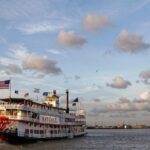

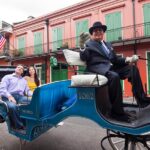


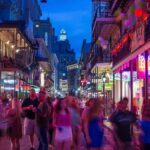
Stop 6: Place de Henriette Delille and Preservation Hall’s nonstop schedule

From there, the tour heads to Place de Henriette Delille, and then to Preservation Hall. The key detail given is that Preservation Hall presents intimate, acoustic New Orleans jazz concerts over 350 nights a year, featuring ensembles from a current collective of 50+ local master practitioners.
That single paragraph of information gives you a lot of value. It tells you Preservation Hall isn’t a novelty stop. It’s an engine for ongoing live music and local continuity. When you walk in with that context, you’ll understand why people chase the sound there and why locals treat it as a core venue, not an occasional attraction.
In about 15 minutes, you won’t see a full performance, but you can still learn how to use the venue during your own evening. The guide’s tips at this stage can help you decide when to attend, what to look for, and how to balance dinner and music timing.
Stop 7 and 8: Jackson Square, then Palm Court Jazz Café
Next up is Jackson Square, a historic park in the French Quarter, designated a National Historic Landmark in 1960 for its central role in the city’s history. This stop gives you a civic anchor. You’re not only tracking jazz as entertainment, you’re also seeing how the French Quarter layout and landmark spaces supported the movement of people, ideas, and performers.
Then the route moves close by to Palm Court Jazz Café, described as one of the city’s finest music venues. This is another “use it later” stop. Even if you don’t plan to spend the whole evening there, it helps to know where the more established listening rooms are, so you can make better choices when the night gets chaotic.
Practical tip: at this point in the tour, I like to ask your guide what kind of vibe you should aim for if you want to avoid long lines or bad timing. You can’t control everything in New Orleans, but you can control your strategy.
Stop 9 and 10: Louisiana Jazz Museum, then Frenchmen Street for real listening
Before you hit Frenchmen Street, there’s a stop at the Louisiana Jazz Museum, where you can find fascinating collections inside. This is the bridge between “history” and “now.” You’ve already walked through landmarks with stories, but here you get a chance to connect the artifacts and memories to the music you’ll hear in a few minutes.
Then comes the final segment: Frenchmen Street. The tour frames it as a stroll where the guide shares tips on the best music venues and how to make the most of them. This is where the private guide pays off in the biggest way. Frenchmen Street is famous, which means you can also waste time if you pick the wrong room or the wrong moment. With guidance, you can target what matches your taste and your evening schedule.
You’ll also browse the Louisiana Music Factory, described as having shelves packed with albums across the ages. This is a great way to bring the sound home in a practical way, because it helps you identify what you heard on the street and take something real back with you.
Ending here also makes logistics easier for your night. You don’t have to figure out how to “start” your jazz evening from scratch. The tour gives you the map, then you follow your own instincts.
Price and value: why $111.20 for a private 2.5 hour walk can make sense
The price is $111.20 per person for a 2 hours 30 minutes private tour. That sounds steep if you’re thinking like a budget tourist. But private tours in New Orleans are often the best value when you want more than landmarks, you want decision-making help.
Here, you’re paying for a guide who can translate jazz origins and local culture into practical, real-world direction: where to go, what to notice, and how to avoid dead ends. The route is built around multiple stops, many of them with free admission listed for the locations visited. Even without counting any paid attractions, the tour is doing something useful: it converts famous names into an intelligent walking plan.
If you’re traveling as a couple or with a small group, the private format often feels like the best way to get a “local brain” for a night. If you’re traveling solo and prefer unguided time, you could do this as a self-guided walk and spend less. But you’d likely spend extra time figuring out which venues are worth your evening and which are just noise.
So I’d treat this tour as a value purchase for your first day or first full evening. It sets you up to choose concerts smarter for the rest of your stay.
What “private guide” really means on this route
On paper, private just means you don’t share your guide with strangers. In practice, it changes how good the tour feels.
Because the schedule is stop-based with short windows, a group with shared questions can easily fall behind the timing. A private group keeps the conversation flexible. You can ask, for example, about Creole culture and voodoo in a respectful way while you’re standing near the specific locations that connect to the story. You can also pivot and ask about food or the best type of music venue for your interests, since your guide has the full arc of the walk in mind.
The praise you’ll see for this kind of tour tends to focus on the guide’s love of music and the way that shows in explanations. The other big win is that the guide doesn’t only give history. They also help you make choices, which is what most travelers actually want when they land in a city with dozens of options.
Pacing, timing, and what to do before you meet
This tour is listed as near public transportation, and it’s scheduled for a moderate physical fitness level. Since the stops are short, you’ll feel the walking, but it’s not presented as an extreme endurance route. Still, I’d plan your day around it. Don’t schedule it as a “drop by quickly” activity right after a long travel day.
For clothing, comfortable walking shoes are the obvious one. Beyond that, I’d keep a small layer in your bag, because New Orleans weather can shift during a daytime walk. Bring water too, especially if you’re doing French Quarter walking on top of your tour.
Also, consider how you’ll handle dinner and music. Since you end on Frenchmen Street, I like to keep my evening open enough to follow your guide’s venue suggestions. That makes the tour feel like the start of your night instead of an unrelated daytime detour.
Should you book The Soul of New Orleans jazz history private tour?
Book it if you want a guided way to connect jazz origins to real places, and you like the idea of ending on Frenchmen Street with a ready-made plan for your evening. This is especially worth it if you care about context, Creole culture, and voodoo themes, not only the big jazz names.
Skip it if you’re already comfortable building your own jazz itinerary and you prefer long independent exploring with no structured stops. Also consider your budget, because at $111.20 per person, it’s a decision, not a casual add-on.
If you’re visiting for a first trip and want your time to count, this private walk is a strong way to get your bearings fast, then turn those facts into live music choices right after.
FAQ
How long is the Soul of New Orleans Jazz History private tour?
It runs about 2 hours 30 minutes.
What is the meeting point for the tour?
The start is at Best Western Plus French Quarter Courtyard Hotel, 920 N Rampart St, New Orleans, LA 70116, USA.
Where does the tour end?
The tour ends on Frenchmen Street.
Is this a private tour?
Yes. It’s a private tour, and only your group participates.
How much does it cost per person?
The price is $111.20 per person.
Is hotel pick-up or drop-off included?
No. Hotel pick-up and drop-off are not included.
Do I need to pay for admissions during the stops?
Admissions are listed as free for the stops included on the itinerary.
Do I get a ticket on my phone?
Yes. The tour offers a mobile ticket.
Can I cancel for free?
Yes, free cancellation is available. You can cancel up to 24 hours in advance for a full refund.
More Tours in New Orleans


More Tour Reviews in New Orleans
More New Orleans Jazz Tours
More ways into New Orleans


New Orleans Jazz Tours, compared.
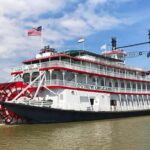
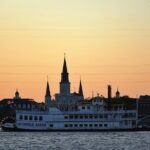
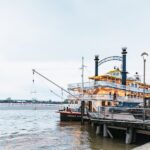
 ★ 4.0New Orleans Steamboat Natchez Jazz Cruise with Dinner OptionFrom $587,533 reviews
 ★ 4.5New Orleans Steamboat Natchez Jazz CruiseFrom $435,334 reviews
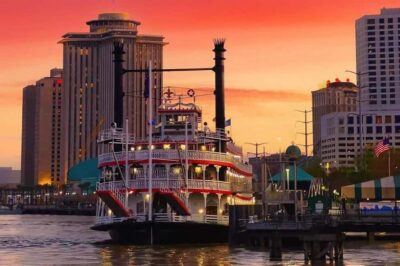 ★ 4.3Evening Steamboat Jazz Cruise + Optional DinnerFrom $584,548 reviews
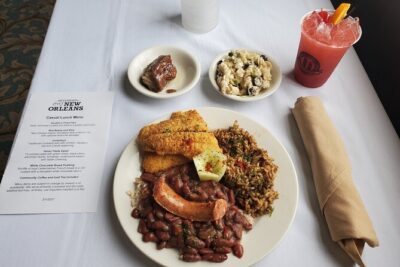
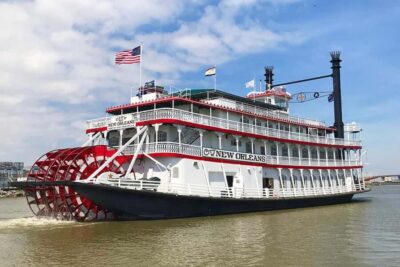 ★ 4.3Daytime Steamboat Jazz Cruise + Optional LunchFrom $434,164 reviews
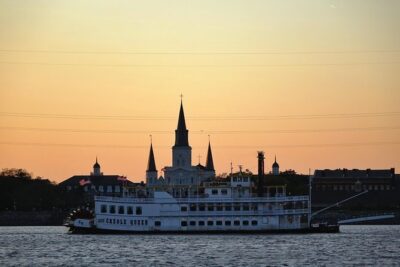 ★ 4.0Paddlewheeler Creole Queen Jazz Dinner Cruise in New OrleansFrom $1071,469 reviews
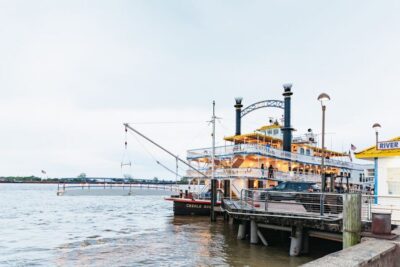 ★ 4.4Evening Jazz Boat Cruise with Optional DinnerFrom $601,024 reviews
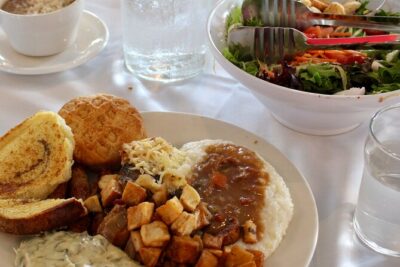 ★ 4.0Sunday Jazz Brunch Cruise in New OrleansFrom $43889 reviews
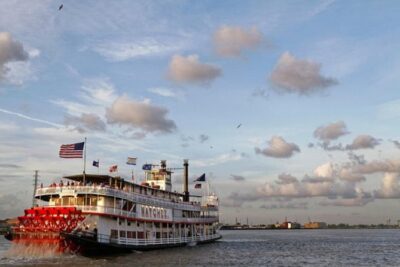 ★ 4.5VIP Jazz Dinner Cruise with Private Tour and Open Bar OptionFrom $190838 reviews
Browse the lists this tour appears in