

REVIEW · TOURS
The Badly Behaved Women Who Made New Orleans Tour
Sex, sweat, and street smarts in the French Quarter. This 2-hour walking tour is built for people who want the truth behind New Orleans vice and red light districts, with stops tied to real places like the Ursulines convent and Armstrong Park. I especially like how the route uses actual landmarks and plain talk, not just spooky vibes, and the pacing stays easy enough to keep up even in summer.
One thing to consider: the stories are not shy. You hear about coercion, forced control of women, and public punishment, plus brothel history, so this is best for you if you can handle adult, uncomfortable topics without tuning out.
With a small group size capped at 15 and a mobile ticket, it’s an easy way to add a focused New Orleans walking experience to a packed day. If you like architecture notes, character-driven storytelling, and a quick sit-down break, you’ll likely appreciate how this tour is paced.
Key things to know before you go

- A 2-hour walk with a humane pace. Plan for a steady, not rushed, route.
- You see what you’re learning about. Each stop is tied to a real location in the French Quarter area.
- Adult themes and hard history. Expect stories about sex work, trafficking, and public punishment.
- Built-in heat relief. There’s a short break at Lafitte’s Blacksmith Shop Bar.
- Marie Laveau gets the spotlight. You focus on her birthplace, not a tourist shop.
- Storyville’s shadow still shows up. Louis Armstrong Park gives you shade and a photo-friendly view.
Why this New Orleans vice walk is worth the $35

At $35 per person for about two hours, you’re paying for interpretation, not just sightseeing. In this price range, many tours feel like a quick parade of landmarks. This one aims for something more specific: the story of how New Orleans built, policed, and profited from sexual commerce, then changed its approach while the city kept the same characters and habits.
I like that it’s not pretending everything was glamorous. You learn the vice system, but you also get the darker side, including how power worked and who paid the price. That tone matters, because it keeps the tour from turning into cheap sensationalism.
You’ll also find practical value in the way the tour uses breaks and real meeting points. The route starts on Chartres Street near Ursulines Avenue and ends at Louis Armstrong Park, so you’re not stuck wandering in circles trying to connect everything yourself.
Keep the day moving with these tours around New Orleans.


The route, in plain terms, from Chartres to Armstrong Park
The tour runs from Chartres Street & Ursulines Avenue starting at 2:00 pm. It finishes at Louis Armstrong Park, at 701 N Rampart St. That end point is useful, because it’s a natural place to regroup, take photos, and keep your day moving without backtracking.
This is also a small-group tour, with a maximum of 15 people. That matters more than you’d think. You get enough time to hear the story at each stop, without the constant stop-start effect you see on bigger group walks.
It’s offered in English, and you’ll use a mobile ticket. If you’re traveling with a service animal, they’re allowed. The tour also runs near public transportation, which helps if you don’t want to fight parking in the French Quarter.
Start here: the Ursulines convent stop and the shock of power
The opening stop centers on the convent of the Ursulines nuns, described as the oldest building in the French Quarter, with construction beginning in 1727. You also get architectural and setting context, which helps you see the place as more than a postcard.
The tour’s biggest early moment is also the hardest. You hear how the church and King Louis XV are connected to sex-trafficking control in the colony, and how the nuns were used to manage women through brutal punishment. The message is direct, and you do not get to float past it.
If you’re the type of traveler who wants to understand how institutions shaped behavior, this stop will hit hard in a way that feels honest. If you’re expecting a playful romp about scandal, this is where the tone flips and stays serious.
Quick tip
Wear shoes you can handle on uneven streets. Even with a two-hour window, you’ll spend enough time on foot that comfort helps you focus on the talk instead of your feet.
Lafitte’s Blacksmith Shop Bar: smuggling history plus a heat break

Next comes Lafitte’s Blacksmith Shop Bar, a landmark often tied to the idea that it’s one of the oldest buildings in North America that housed a bar. The point of the stop is not just the building, it’s what it represented, including its role as a smuggling front.
What I really like here is that it’s practical. You get about a 10-minute stop, and you can cool down in the heat while the guide keeps the story moving. Admission is noted as free for this part, so you’re not hit with surprise entry fees mid-walk.
There’s also a nice balance in the way this works. The tour doesn’t stay in the worst moments nonstop. It mixes hard stories with short breathing room and a change of pace, which makes it easier to stay attentive.



Marie Laveau’s birthplace: voodoo leadership and the money trail

The tour’s voodoo segment focuses on Marie Laveau. You won’t just stop at a generic storefront. Instead, the tour goes to the real birthplace, then ties her story to what she earned and how she built influence.
A line you’ll hear on this stop frames Marie Laveau not only as a spiritual leader, but as someone who made real money and worked the systems around her. That is a smart approach, because it keeps the conversation from turning into pure mythology.
Who this stop is for
If you like character-driven storytelling, this is one of the most memorable pieces. It also helps if you’re already curious about New Orleans culture beyond the obvious museum stops.
Louis Armstrong Park: Storyville in the open air

From there, you move toward Louis Armstrong Park, with a segment that runs about 25 minutes. This is where the tour connects past and present in a way that feels grounded.
You learn that the decadent palaces tied to Storyville on Basin Street were replaced by the Iberville Projects, then you’re set up with an area that overlooks where Storyville used to be. The tour uses the space well, including seating and shade so you can rest and take photos.
For a two-hour tour, the seating time matters. It gives your brain a chance to sort the earlier heavy material into something you can remember. Instead of being stuck walking the whole time, you get a pause with context attached.
French Market, the Golden Lantern, and the Southern Decadence story

Two more parts of the tour broaden the focus from single figures to the larger vice ecosystem.
First is French Market, highlighted for its reputation as a dangerous place in earlier years. You get to see it as a real commercial hub, not just a photo spot. That context helps you understand why vice took hold where it did: crowds, commerce, and plenty of people who could profit from secrets.
Then there’s the story connected to Southern Decadence at the Golden Lantern. Even if you know the name already, hearing it placed inside New Orleans vice history gives it a clearer meaning. This is the tour’s way of showing how traditions and celebrations can connect to the same social machinery that supported red light districts.
If you want New Orleans culture in one layer, you might only see the party side. This tour gives you another layer, the one about why the city’s rule-benders keep finding their own permission slips.
May Baily’s Place and what “legal” really meant

The tour also includes May Baily’s Place, noted as the first legal brothel in New Orleans. This stop is important because it changes your frame. It’s not just about what people did, it’s about what the city allowed, managed, and monetized.
I like that the tour doesn’t treat legalization as a tidy moral ending. Instead, it places the brothel inside a world of control and rules. You finish this kind of tour thinking harder about systems, not only individuals.
Because this topic is inherently adult, I suggest you go in with a clear expectation. If you’re there for history and human behavior, you’ll get a lot out of it. If you’re hoping for something light, you might feel like the tone is too intense.
Guides, pace, and the small-group feel that makes it work
The guides are a big part of why this experience earns such strong ratings. You’ll see praise for guides who are fun, friendly, and serious about details at the same time. One guide mentioned by name, Josh, is noted as being lively and adding architectural notes and extra New Orleans context while still staying on topic.
Another guide mentioned, Tracy, is associated with a smooth pace and added city tidbits that don’t feel random. The consistent theme is timing. This tour is designed so you don’t feel rushed, even though it covers a lot of intense material.
With a max of 15 people, the guide can also adjust on the fly if the group needs a moment. That helps on a walking tour in the French Quarter, where slow sidewalks, photo stops, and street heat can otherwise throw off your attention.
What to expect, and how to decide if it fits you
This is not a neutral stroll. You’ll hear the story of vice districts, red light history, and the women connected to that world, framed through real locations. You also get the contrast between celebration and cruelty, power and punishment.
This tour is a good fit if you:
- Like story-based walking tours that use specific locations
- Want New Orleans culture with fewer soft edges
- Enjoy architecture and street-level context
- Can handle adult themes without feeling uncomfortable in a bad way
You might rethink it if you:
- Prefer lighter history themes
- Want to avoid stories about forced control and public punishment
- Need a strictly family-friendly experience
If your goal is to understand how New Orleans worked, socially and politically, this route gives you a strong starting lens.
Should you book The Badly Behaved Women Who Made New Orleans Tour?
I think you should book it if you want a sharper, more honest view of the French Quarter than the usual ghost-and-gumbo version. The $35 price makes sense for a two-hour guided walk that points you to multiple real places, includes shaded seating time, and keeps the pacing friendly.
It’s also a smart add-on if you’re already seeing French Quarter highlights and you want to balance them with the side of New Orleans that people often skip. Just make sure you’re ready for adult subject matter and hard stories, especially in the opening Ursulines convent segment.
If that tone works for you, this tour will leave you with more than names. It gives you a map in your head for how Storyville, Southern Decadence, and even modern-day landmarks tie back to the city’s vice history.
FAQ
How long is the Badly Behaved Women Who Made New Orleans Tour?
It runs for about 2 hours on average.
What is the price per person?
The tour costs $35.00 per person.
Where does the tour start and end?
It starts at Chartres Street & Ursulines Avenue and ends at Louis Armstrong Park on 701 N Rampart St.
Is the tour offered in English?
Yes, it is offered in English.
Are alcoholic beverages included?
No. Alcoholic beverages are not included, though the tour suggests historic cocktail stops and includes a tour break.
What is the maximum group size?
The tour has a maximum of 15 travelers.
Is there a mobile ticket?
Yes, the tour offers a mobile ticket.
Can I cancel for a full refund?
Yes. Free cancellation is available, and you can cancel up to 24 hours in advance for a full refund.
More Tours in New Orleans


More Tour Reviews in New Orleans
More ways into New Orleans


Tours, compared.
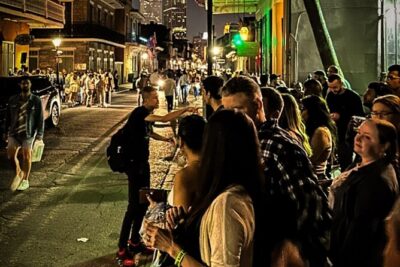 ★ 4.5New Orleans Premier Ghost, Voodoo and Vampire Walking TourFrom $2712,856 reviews
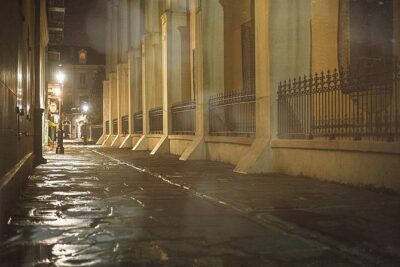 ★ 5.0Adults-Only New Orleans Ghost, Crime, Voodoo, and Vampire TourFrom $376,545 reviews
 ★ 5.0New Orleans Food Walking Tour of the French Quarter with Small-Group OptionFrom $756,118 reviews
 ★ 5.0New Orleans Swamp and Bayou Boat Tour with TransportationFrom $705,399 reviews
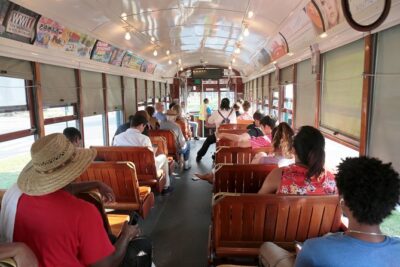 ★ 4.5New Orleans City Sightseeing Hop-On Hop-Off Bus TourFrom $514,943 reviews
 ★ 4.5St. Louis Cemetery No. 1 Official Walking TourFrom $253,941 reviews
 ★ 5.0Swamp Boat Ride and Oak Alley Plantation Tour from New OrleansFrom $1313,303 reviews
 ★ 5.0New Orleans Adults-Only Ghost, Voodoo and Vampire TourFrom $293,291 reviews