

REVIEW · CITY TOURS
New Orleans: Traditional City and Estate Tour
New Orleans pulls you in fast. This tour connects the French Quarter feel with a real walk through St. Louis Cemetery #3, then carries you out to the City Park gardens. I like the way it mixes classic landmarks with enough stops to keep it from turning into a drive-by.
One thing to keep in mind: depending on timing and crowds, you may spend more time seated than you hoped. If you want lots of photo time from the sidewalks, plan for that, especially in the busiest stretches.
Key Highlights You Actually Get

- French Market start for a quick hit of local food culture before you head into the neighborhoods
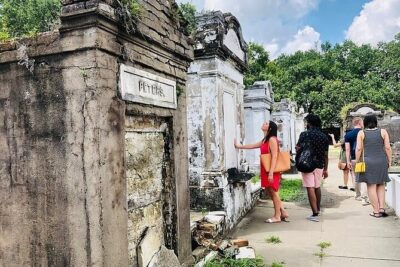
- St. Louis Cemetery #3 walk with above-ground graves, plus clear context for why that’s the norm in New Orleans
- Esplanade Ave mansion route to see the grand streetscape that shapes how the city developed
- Besthoff Sculpture Gardens, 1 full hour in City Park, with live oaks and two lagoons as the backdrop
- Lake Pontchartrain levee and causeway viewing that gives you the “how the city survives” story
- Uptown streetcar and university area along St. Charles Ave, Carrollton, Tulane, and Loyola
A 4-Hour Route That Feels Like Two Trips in One

This is a traditional New Orleans combo tour, built around a simple idea. You get downtown texture first, then you move uptown toward the grand homes and parkland that many people miss when they only chase bars.
The day is short enough to fit your schedule, but not so short that you just bounce between photo stops. At $96 per person for about four hours, the value really depends on how much you want a guided route that stitches together distant points without you figuring out logistics on your own.
What helps is the built-in comfort and audio. Hotel pickup, a quality audio system so you can hear clearly, and umbrellas if rain shows up all reduce friction. And one review specifically praised how the vehicle stayed small enough to move around narrow busy areas, even near Bourbon Street.
You can also read our reviews of more city tours in New Orleans



French Market to Old U.S. Mint, a Quick Start That Makes the City Make Sense
The tour kicks off around the French Market, which is a smart first move. It sets a food and craft tone immediately, so you’re not just learning dates and dates of rulers, you’re seeing how the city trades and eats today.
Next comes a stop around the old U.S. Mint area. Even if you only catch glimpses while moving through, it anchors you to the idea that New Orleans has always been more than music and balconies. It also helps you understand why certain districts feel built for commerce and movement.
This early portion is also where the guide’s pacing matters most. You’ll want to listen closely because you’re still fresh and adjusting to what the guide is going to connect later, like how the French Quarter layout changes when you head toward the plantation-era neighborhoods and civic park spaces.
Esplanade Ave Mansions: How the Walk, Not Just the View, Sells the Story

After the first downtown cluster, the route swings toward the mansions along Esplanade Ave. This is where the tour’s “traditional city and estate” promise becomes real.
You’re not just looking at pretty houses. You’re being walked through the street-level details that make the architecture feel lived-in, even now. Esplanade is a great corridor for this kind of story because the scale of the homes and the rhythm of the streets give you an instant sense of social distance and wealth patterns from long ago.
If you’re the type who likes to compare neighborhoods side-by-side, this stop hits well. You’ll get the contrast between the old Quarter energy and the more stately uptown setting, and you’ll start to recognize how the city’s layout nudges people into different lifestyles.
St. Louis Cemetery #3: Above-Ground Graves and the Why Behind the Quirks

Then you walk into St. Louis Cemetery #3, and this stop is the heart of the tour for many people. One reason it stands out is that New Orleans burials are commonly above ground, because the city sits below sea level.
That single fact changes how you look at everything in the cemetery. It’s not just a spooky set piece, it’s a practical solution that grew into a unique cultural tradition. The guide’s job here is to translate the local logic, and this tour is set up to do that with a guided walk instead of a quick drive-by.
Also, the cemetery is a strong “pause” moment in a 4-hour plan. You step away from traffic sounds and get time to slow down, look closely, and absorb the way the city’s history leaves physical marks.
One caution: cemeteries can feel personal and quiet, so if you’re expecting a lot of loud commentary or fast photo stops, adjust your expectations. This part works best when you’re willing to be a little still.
Bayou St. John and City Park: Live Oaks, Old Waterways, and a Breather

Between downtown and City Park, you’ll ride along Bayou St. John and see houses from the late 1700s. Even when your view is brief from the road, the guide’s explanation helps you connect the “old” part of New Orleans to the actual geography.
Then the tour brings you into City Park, where you’ll spot an antique carousel and centuries-old live oaks. That’s more than decoration. City Park is one of the reasons New Orleans feels different from other big southern cities, because it offers shade, time to wander, and a kind of cool calm you rarely get in the Quarter.
This section is also a practical reset. After cemetery walking and mansion streets, City Park gives you a new tempo. You’ll feel the temperature change under the trees, and you get a chance to refocus your senses before the sculpture gardens.





Besthoff Sculpture Gardens: The One-Hour Stop That’s Actually Worth Planning For

The tour’s marquee nature stop is the Besthoff Sculpture Gardens at City Park, with a full hour set aside to explore. This is the part I’d tell you not to rush.
The gardens are described as an 8-acre space with walking paths and water features, and the vibe is strongly shaped by centuries-old live oaks around two lagoons. That matters because the gardens are not just “see sculptures, then leave.” The layout encourages you to move slowly, notice angles, and enjoy the contrast between manmade forms and old growth shade.
I also appreciate that this is scheduled for a full hour. Many short tours treat gardens like a quick photo window. Here, you’re given enough time to step away from the exact path, stop for a moment, and take in how the water and light affect the sculptures.
If your travel style is photos plus atmosphere, this hour gives you the best payoff on the whole route. You’ll likely finish thinking, I should have spent more time standing still here.
Lake Pontchartrain and Levees: The Practical Side of New Orleans
Next the tour shifts toward the Lake Pontchartrain shoreline, where the levee system is explained. This is one of those New Orleans facts that people hear, then forget, until someone ties it to your actual route.
You’ll also see the Lake Pontchartrain Causeway, described as the longest of all causeway bridges. That’s a great visual because it reminds you that New Orleans is engineered as much as it is celebrated.
This portion is valuable because it balances the more emotional stops like cemeteries and mansions. It gives you a clearer picture of how the city keeps living where water pressure and elevation would otherwise cause constant problems.
Even if you’re not a “history” person, this is a story you’ll remember because it connects to infrastructure you can literally see.
Uptown Around Carrollton, Tulane and Loyola, and the St. Charles Streetcar Line

From the lakeshore story, the route heads back uptown through Carrollton, and the area around Tulane and Loyola Universities. This is where you get a sense of New Orleans as a working city with schools, students, and daily rhythm, not just a museum district.
Then you’ll follow St. Charles Avenue, famous for grand colonial mansions, and you’ll also see the 160-year-old streetcar line. The streetcar line is a core part of the city’s identity, and seeing it in motion or at least in context helps you understand how neighborhoods became connected.
If you like urban planning and street life, this section tends to feel extra satisfying. You can look at the architecture, then look at the route people use to move through it.
Finally, the tour returns downtown around the Superdome and through the business district before heading back to your hotel. That last loop is more helpful than it sounds because it stitches the ends together, so your mental map locks in quickly.
Price and Logistics: Is $96 Good Value for This Mix?
At $96 per person for about four hours, you’re paying for a guided route that combines walking, cemetery time, and a one-hour garden visit, plus hotel pickup and audio. That’s not bargain pricing, but it’s also not priced like a private car tour.
Here’s where the value math makes sense. If you were to plan this solo, you’d spend time mapping rides between distant areas, then spend time figuring out where to fit in City Park properly. This tour removes that stress and gives you a sequence that flows logically across the city.
The comfort add-ons matter too. Umbrellas provided mean you won’t scramble if rain hits. The quality audio helps you hear the guide without constant strain, and that makes the explanations more useful, especially in quieter spaces like the cemetery and garden areas.
The main tradeoff is how “walking heavy” you want your day to feel. One review felt the tour stayed too much in the bus and didn’t give enough sidewalk time for French Quarter and Garden District photos. That doesn’t mean you’ll have that exact experience every time, but you should consider it if you hate sitting for long stretches.
Also note the limit on luggage or large bags. If you’re traveling light, great. If you’ve got big bags, you may want to check how you’ll handle them before the pickup.
Best For Who, and Who Might Want a Different Style
This tour is a strong fit if you want an organized route that covers both the famous stops and the “how the city works” parts. I especially think it suits first-timers who already understand they want to see the Quarter, but also want cemeteries, City Park, and uptown streets without piecing it together themselves.
It’s also a good choice for repeat visitors. One review praised the fact that the guide helped them learn more and enjoy a different side of the city, and that’s usually what you get when a tour goes beyond the obvious.
If you’re the kind of traveler who wants long, free-form stroll time in the French Quarter and then long, independent time in the Garden District, you might find the pacing too structured. In that case, treat this as a guided overview, not a fully open wander day. Ask the guide where you’ll have the best sidewalk minutes, then plan your camera breaks around that.
Should You Book It?
If you want a single 4-hour plan that pairs French Quarter flavor with St. Louis Cemetery #3 and a real Besthoff Sculpture Gardens hour, this tour is an easy yes. The combination of hotel pickup, clear audio, and umbrellas makes it low-stress, and the route includes some “infrastructure and geography” context that many tours skip.
If your top priority is maximizing time walking and photographing on the street, go in with eyes open about possible vehicle time. For many people, the guided structure is the point. For others, it’s the drawback.
If that tradeoff sounds acceptable, book it and spend your energy on the stops where you’ll get out and look closely, especially the cemetery and sculpture gardens. That’s where the tour does its best work.
FAQ
How long is the tour?
The tour lasts 4 hours.
Does the tour include hotel pickup?
Yes, hotel pick up is included.
What stops are included during the tour?
The tour includes stops such as the French Market, old U.S. Mint, St. Louis Cemetery #3, City Park with the Besthoff Sculpture Gardens (a 1-hour tour), and views tied to the Lake Pontchartrain shoreline and causeway, plus the Carrollton/Tulane/Loyola area and St. Charles Avenue.
Are food and drinks included?
No. Food and beverages are not included, though there may be opportunities to buy snacks and drinks at gift shops.
What is the meeting and language setup?
The tour is in English. Foreign language tour guides and escorts for French and Spanish are available for an additional cost upon request.
What should I bring or avoid?
Luggage or large bags are not allowed.
What is the cancellation window?
You can cancel up to 3 days in advance for a full refund. It is non-refundable within 72 hours of the tour departure.
More City Tours in New Orleans



More Tours in New Orleans


More Tour Reviews in New Orleans
More ways into New Orleans


City Tours, compared.
 ★ 4.5New Orleans City Sightseeing Hop-On Hop-Off Bus TourFrom $514,943 reviews
 ★ 5.0New Orleans Sightseeing City TourFrom $403,038 reviews
 ★ 4.5City Tour of New Orleans with PickupFrom $452,407 reviews
 ★ 4.5New Orleans City Tour: French Quarter, Garden District & CemeteryFrom $402,209 reviews
 ★ 4.5New Orleans City and Cemetery 2-Hour Bus TourFrom $541,967 reviews
 ★ 4.5City Sightseeing New Orleans HOHO Bus Tour & Bookable ExtrasFrom $511,077 reviews
 ★ 5.0New Orleans Small-Group City Tour by Van1,077 reviews
 ★ 4.5New Orleans City and Cemetery Tour with Garden District StrollFrom $55766 reviews
Browse the lists this tour appears in