

REVIEW · NEW ORLEANS JAZZ TOURS
New Orleans Music Walking Tour
New Orleans music has a paper trail. This 2-hour Music Walking Tour strings together the places where sound history happened, from Congo Square and West African traditions to the French Quarter’s living music culture. I love that it turns landmarks into a story you can follow, not a list you forget.
The biggest standout is the human touch, with David bringing the stops to life and using tools like iPad sound clips and video snippets to help ideas stick. You’ll also get a practical finale at Preservation Hall, but one thing to plan for is that the Preservation Hall admission is not included in the $25 price.
Key highlights worth showing up for
- Congo Square, Bamboula context: see how West African religious music traditions shaped what came next
- J&M Studios stop: a direct tie to the rock n roll origin story
- Storyville sound and place: recorded early jazz connections plus a replica parlour
- Basin Street Blues origin: a focused explanation at Basin St. Station
- Preservation Hall finale: a smart wrap-up at the legendary Traditional Jazz venue
A 2-hour route that connects the dots from Congo Square to jazz

This walk is built for people who want the big picture without needing a music degree. You start with roots music and end at one of the city’s most famous jazz rooms, with the route designed to make the evolution feel logical. I like that the tour is paced as a story, so each stop answers the next question in your head: Where did this style come from, and why does this neighborhood sound like it does?
The tour’s length also matters. Two hours is long enough to get real context, but short enough that you can still enjoy the rest of your day in New Orleans. It’s also the kind of format that works well if you’re arriving with “I love the music, I just need the background” energy.
Group size is capped at a maximum of 14, and that smaller ceiling helps the guide keep things moving and answer questions. The tour is in English, and you’ll want a moderate physical fitness level since it is a walking experience around central areas of the French Quarter.
More New Orleans jazz walks and live-music nights



Meeting at Rampart Treehouse, ending at Preservation Hall

Your tour starts at Rampart Treehouse, 740 N Rampart St, New Orleans, LA 70116 at 2:00 pm, and it ends at Preservation Hall, 726 St Peter, New Orleans, LA 70116. That endpoint is a real advantage because you’re not just learning in the street, you’re finishing at a place built for listening.
The tour uses a mobile ticket, which is convenient if you’d rather keep your phone ready than fumble with paper. It also runs near public transportation, so you can fit it into a day that includes other sights, like a cemetery stop or a meal in the Quarter.
One more practical point: you’re in Central New Orleans streets most of the time, so good weather matters. This activity requires good weather, and if it gets canceled for poor weather, you’ll be offered a different date or a full refund.
Finally, keep in mind the tour is designed for a Trad Jazz endcap. That’s great if you want to close with music, and it’s also why you should expect your Preservation Hall cost to come on top of the $25 tour price.
Congo Square and Louis Armstrong Park: West African roots and how styles multiply
Congo Square is where the story gets grounded. You’ll learn about the West African influence on New Orleans music through the Bamboula, and you’ll connect that thread to what later becomes recognizable as New Orleans sound. This is not just trivia. It helps you understand why New Orleans music has always been both spiritual and social, with rhythm doing a lot of the storytelling.
From there you head to Louis Armstrong Park, where the guide lays out how many New Orleans music styles can orbit the same city blocks. The key idea here is variety inside one tradition, from opera connections to second line energy, and back again toward opera. It’s a useful reminder that New Orleans music culture is not one lane. It changes depending on neighborhood, community, and who is performing.
Stop pacing is short at each location, so you’ll get focused explanations without long waits. The benefit is that you can keep your attention on the narrative. The tradeoff is you won’t have time to fully explore each place like you would on your own.
Still, if your goal is to build a foundation fast, these first two stops do the heavy lifting. They get you the “why” before you get swept into the “what.”
Basin St. Station and Storyville: songs, scandal, and recorded jazz origins
At Basin St. Station, the tour zeroes in on music history you can almost hear in your head. You’ll learn about many New Orleans music elements and the origins of the song Basin Street Blues. That’s a smart stop if you already know the tune and want the background that turns it from entertainment into a cultural artifact.
Then the tour heads into Storyville District territory, where the focus becomes the early days of Jazz and the way the red light district shaped musical life. You’ll learn about and hear recorded music from that era, using sound to make the past less abstract. Even if jazz history can feel like a wall of names, the recorded element helps you stay anchored. You’re not only reading the timeline, you’re hearing why the timeline matters.
The Storyville stops are also valuable because they show a side of New Orleans that is honest about how communities formed around music. That can feel uncomfortable for some people, but the tour keeps it historical and explanatory, not sensational.
The only consideration here is that this part of the route is very theme-driven. If you’re hoping for big scenic views on every corner, you may find yourself mentally switched on, listening for meaning rather than just taking photos.
May Bailey’s Place and the Tango Belt: a replica that helps you visualize sound

One of the clever moments comes at May Bailey’s Place. You’ll enter a replica of a Storyville parlour, and that change of pace helps your brain map history onto a physical setting. It’s easier to understand how early jazz and social life fit together when you can picture the room layout and the kind of entertainment that would have happened inside.
After that, the tour moves through areas tied to the Tango Belt and French Opera House. These are the kind of New Orleans details that usually stay hidden unless you have a guide who knows what to look for. The point is not just to collect place names, it’s to show how different music cultures overlapped in the city, and how that overlap fed the New Orleans sound.
The tour’s strength is that it keeps connecting the dots. You might start the day thinking, “Okay, jazz is jazz.” By the time you’re thinking about Tango Belt influences and French Opera links, you realize New Orleans music is a network of traditions trading rhythms and melodies.
You’ll want to keep your posture ready for a comfortable walk. The stops are brief, so if you like to linger and read every plaque, you’ll likely want to do extra solo time after the tour.
You can also read our reviews of more walking tours in New Orleans






Bourbon Street’s French Opera to R&B thread, then a big Preservation Hall landing

On Bourbon Street, the tour focuses on the French Opera and R&B traditions on New Orleans’ most famous street. This is where the story turns from roots and early scenes to something you can still feel in the modern city. It’s also a good reality check: the Quarter is loud, crowded at times, and full of competing sounds. The guide helps you keep your attention on what’s historically meaningful in the noise.
From there, you end at Preservation Hall. This is the finish line for the tour narrative, where the past, present, and future of New Orleans music all meet in one famous room. The timing is tight enough that you’ll still have energy to enjoy the venue, but you’re also not left stranded outside without a plan.
One important practical note: Preservation Hall admission is not included in the tour. So treat the tour as the foundation, then plan your entry into the hall separately. If you’re budget-conscious, it helps to set that expectation upfront so the day stays fun instead of math-heavy.
In the best-case scenario, you leave with a clear map in your head: West African rhythms inform early styles, Storyville and recorded sound show how culture evolved, and then the Quarter’s modern traditions carry those threads forward.
David as your guide: how the tour stays fun, even when New Orleans gets loud

The tour’s reputation really hinges on the guide experience, and David comes up again and again. The style is energetic and animated, with a clear passion for music and history. What I like most is that the delivery is not a lecture. It’s interactive in a natural way, with questions that help tailor the walk to your interests.
David also uses an iPad to share sound bites and video snippets. That matters because it turns abstract history into something you can remember later when you hear a similar rhythm in a club or on a recording.
There’s also a real-world New Orleans factor: street life does what it wants. On days with events happening in the area, David stays on track and keeps the group moving. That’s exactly what you want from a tour guide, especially when you’re on a fixed schedule.
One extra detail that can happen on slower days is a small side moment, like stepping into an art gallery and even trying piano during a pause. That is not something to assume every time, but it fits the overall vibe: the tour can be flexible, while still delivering the core stops.
Price and value: is $25 a good deal for this kind of music orientation?

For $25 per person, this tour is strong value if you want context without spending hours researching on your own. Many New Orleans tours charge more just to point at buildings. This one uses the route to explain how styles connect, and it spends time on specific themes like Bamboula influence, Basin Street Blues origins, and Storyville-era recorded jazz.
Also, most stops are free in terms of admission tickets, which keeps the tour itself from turning into a constant add-on. The one notable exception is Preservation Hall, where the admission ticket is not included, so you should expect a separate cost if you want to step inside.
The two-hour format is part of the value story too. You get a structured overview fast, then you can choose how to spend the rest of your day, whether that means more jazz, more browsing, or a quieter dinner after the crowds.
This tour is also a good pick for first timers. If you’re worried you’ll miss the meaning behind the city’s music reputation, this is a way to get your bearings fast, using the city’s own landmarks as your lesson plan.
Should you book this New Orleans Music Walking Tour?

Book it if you want a focused New Orleans music orientation and you enjoy learning through place-based storytelling. This works especially well as one of your earlier activities, because it gives you a foundation that makes everything else in the city easier to understand.
Skip or adjust your expectations if you want lots of free time at each stop for slow exploration, or if you’re sensitive to the Storyville theme. Also factor in that Preservation Hall admission is extra, and the tour depends on good weather.
If you like guided context, small groups, and a guide who uses music examples to make history stick, you’ll likely find this a satisfying, money-smart way to start your trip.
FAQ
Where does the New Orleans Music Walking Tour start and end?
The tour starts at Rampart Treehouse, 740 N Rampart St, New Orleans, LA 70116, and it ends at Preservation Hall, 726 St Peter, New Orleans, LA 70116.
What time does the tour begin?
The start time listed is 2:00 pm.
How long is the tour?
The duration is approximately 2 hours.
How much does the tour cost?
It costs $25.00 per person.
Is the tour offered in English?
Yes, the tour is offered in English.
What does the tour include, and what ticket is not included?
Most stops have admission ticket free entries. Preservation Hall is the one place where the admission ticket is not included.
How big is the group?
The tour has a maximum of 14 travelers.
Is the tour suitable for people with moderate physical fitness?
Yes, travelers should have a moderate physical fitness level.
Are service animals allowed?
Yes, service animals are allowed.
What happens if the weather is poor or the tour is canceled?
This experience requires good weather. If it is canceled due to poor weather, you will be offered a different date or a full refund.
What is the cancellation window for a full refund?
You can cancel up to 24 hours in advance for a full refund. Within 24 hours of the experience start time, the amount paid is not refunded.
More Tours in New Orleans



More Tour Reviews in New Orleans
More New Orleans Jazz Tours


More ways into New Orleans


New Orleans Jazz Tours, compared.
 ★ 4.0New Orleans Steamboat Natchez Jazz Cruise with Dinner OptionFrom $587,533 reviews
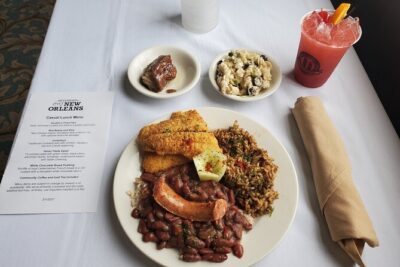 ★ 4.5New Orleans Steamboat Natchez Jazz CruiseFrom $435,334 reviews
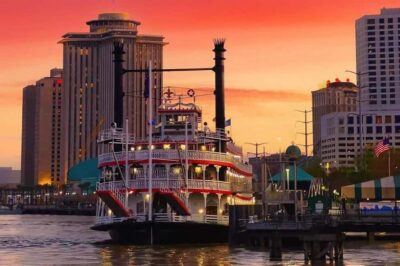 ★ 4.3Evening Steamboat Jazz Cruise + Optional DinnerFrom $584,548 reviews
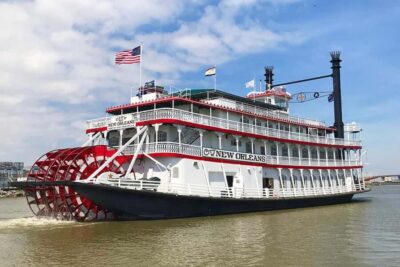 ★ 4.3Daytime Steamboat Jazz Cruise + Optional LunchFrom $434,164 reviews
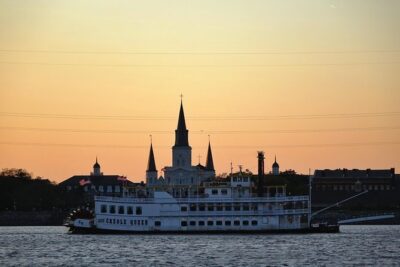 ★ 4.0Paddlewheeler Creole Queen Jazz Dinner Cruise in New OrleansFrom $1071,469 reviews
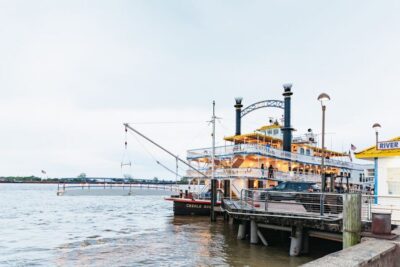 ★ 4.4Evening Jazz Boat Cruise with Optional DinnerFrom $601,024 reviews
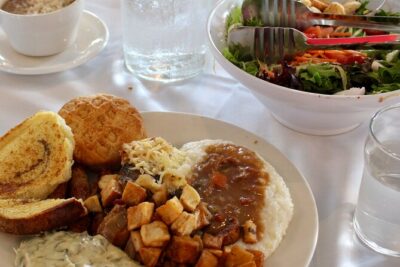 ★ 4.0Sunday Jazz Brunch Cruise in New OrleansFrom $43889 reviews
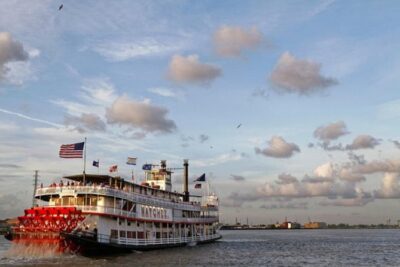 ★ 4.5VIP Jazz Dinner Cruise with Private Tour and Open Bar OptionFrom $190838 reviews
Browse the lists this tour appears in