

REVIEW · TOURS
New Orleans Music Tour
New Orleans music starts before the first note. This small-group tour ties together Congo Square, Louis Armstrong Park, and the streets where jazz, rock, and bounce grew from real people and real history, including slavery. I love how your guide turns big names like Louis Armstrong and Fats Domino into a clear map you can actually walk, and I love the on-the-ground feel at street level, with live music popping up along the route. One thing to keep in mind, the schedule is tight, so several stops are intentionally short, meaning you will not linger like you would on your own.
For me, the best part is the way the guide connects places to sounds you already know, then shows you where the links started. I also like that you end at Preservation Hall, right when people are often lining up for the evening show, so the tour naturally tips you into staying out for live music. If it is hot, rainy, or both, come prepared, because this is an outdoor walk with very little “sit and wait” time.
Key Points You Should Know Before You Go

- Congo Square is presented as a key origin point for music in the Americas, tied to West African ritual and community gathering
- Louis Armstrong Park sets the tone with Congo Square history and the idea of New Orleans as a music engine
- J&M Studios gets real focus, with the tour linking the New Orleans sound to artists and rock ’n roll
- Storyville leftovers on Basin Street give you context for how early jazz spread from a specific street ecosystem
- May Bailey’s Place brings you to the Tango Belt and the Old French Opera House site
- The end at Preservation Hall lands you near the energy of an actual show
Two Hours, Real Walking, And A Plan That Makes Sense

This is a 2-hour guided walk through downtown New Orleans focused on music origins, the artists who made the sound famous, and the neighborhoods that shaped it. The group stays small, with a maximum of 20 travelers, so you are not stuck listening from the back of a crowd.
The stops are short on purpose. You get around 20 to 30 minutes per area, then you move on while the story is still fresh in your head. That matters, because the tour is built like a musical line, not a museum circuit. If you want to park and stare for an hour, this will feel fast. But if you like learning while walking and then checking out places later, the pacing works.
Keep the day moving with these tours around New Orleans.
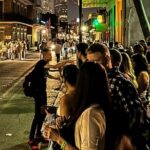


Louis Armstrong Park, Congo Square, And The Music Roots People Forget
Your tour starts at Rampart Treehouse on N Rampart Street and kicks off at Louis Armstrong Park. This area is a perfect opening because it hits two themes at once. You get the music mythology, but you also get a grounded explanation of how communities and forced migration shaped what became popular music.
From here, the guide points you toward Congo Square, explained as historic grounds where African slave gatherings took place. The tour also frames Congo Square as the only place in North America tied to pure West African religious ritual and musical traditions being performed. That can sound like a big claim, but the point is clear once you are standing there: the music story is not only about instruments and entertainers. It is also about ceremony, culture, and survival.
I especially like that you do not treat slavery as a side note. The tour directly connects how slavery shaped music in New Orleans, then connects that to the broader influence the world later heard.
J&M Studios: The New Orleans Sound, The Artists, And Rock ’n Roll

One of the strongest moments in the early part of the tour is the stop where you view the building connected to Cosimo Matassa’s J&M Studios. This is where the tour really earns its keep for me, because it turns a name you might have heard into an actual place you can picture.
You hear how J&M Studios helped create what people call the New Orleans sound. And then the guide names the artists tied to that legacy. The tour highlights Professor Longhair, Dave Bartholomew, Fats Domino, Guitar Slim, Shirley & Lee, Lloyd Price, Ernie K-Doe, Allen Toussaint, and Clarence Frogman Henry, plus visits from Little Richard, Ray Charles, and Jerry Lee Lewis.
That list matters because it shows how local music culture became national, then global. It also sets up the tour’s bigger argument: rock ’n roll has real roots here. If you are the kind of person who likes to connect genres instead of keeping them in separate boxes, you will get a lot out of this portion.
Basin Street Station And The Storyville Reality Check

Next comes Basin Street Station, followed by a stroll down Basin Street where you can see remains of Storyville. This is the red-light district tied to turn-of-the-century New Orleans, and the tour uses it to explain a specific ecosystem for early jazz.
The guide points out Frank Early’s My Place Saloon as a key reference point, including the detail that the song Pretty Baby was written there. You also hear about the kind of music that moved through the parlors, with names like King Oliver, Buddy Bolden, Jelly Roll Morton, and Sidney Bechet.
This stop works best when you listen for the “why,” not only the “who.” Storyville is not just trivia. It is a reminder that music scenes form where people gather, earn money, and socialize, even when the neighborhood story is messy.
May Bailey’s Place, The Tango Belt, And The Opera House Link

Then you head through the Tango Belt to May Bailey’s Place, plus a look at the site of the Old French Opera House. This is a good mid-tour shift. After the Storyville section, the tour changes the focus from nightlife’s jazz gravity to how other cultural spaces, including performance venues, shaped the city’s music ecosystem.
The Tango Belt portion is useful because it broadens the mental map beyond one neighborhood. You start to see New Orleans as a web of music-adjacent spaces, not a single street or a single sound.


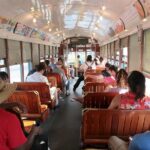
Preservation Hall Finish: Bounce Music And Street Musicians In Action

The tour ends at Preservation Hall on St Peter Street. The tour positions this place as representing the past, present, and future of New Orleans music, and it is a strong finish because it feels like you are walking into the current day, not just the archives.
You also get a stop where the guide talks about the origins of New Orleans Bounce music. Then you look at some of the city’s beloved street musicians in action, which is a practical way to understand how the city’s music keeps moving forward.
There is also an excellent “timing by accident” advantage here. The tour notes that people are already lining up for the 5 PM show at Preservation Hall. So even if you are only here for the tour, you end in a location that makes it easy to keep the music going without making a separate plan.
Guides Make Or Break This Tour, And The Reviews Point To Why

The tour is led by a guide, and the difference between a good tour and a great one is usually the guide’s storytelling rhythm. In the experiences I read about, the names that kept showing up were guides like David Higgins, Eva, Margie, Anna, and Rob.
David Higgins is repeatedly described as extremely knowledgeable about how New Orleans musicians impacted music nationally, and one review adds that he is a musician himself and came up in a musical family. That kind of background often shows up as clearer connections between the place you are standing in and the sounds you grew up with.
Eva is praised for warm, friendly passion for music and history, while Margie earns strong praise for being exceptional and highly informative. If you get one of these guides, you are likely to get a more animated, question-friendly walk rather than a lecture with occasional stops.
One caution I will mention plainly: a couple of experiences complained the pacing felt off, with too much time in one area and not enough usable music examples during that time. That is not common in every review, but it is worth factoring in your expectations. You should come in ready for walking and stories, not expecting a constant live performance at every corner.
Price And Value: $25 For A 2-Hour Music Map

At $25 per person for about 2 hours, this tour is priced like a smart “starter course” for New Orleans music. You are paying for a guided route plus access to a paid element at Congo Square, while many other stops are listed as free to enter.
Value here is less about stuffing your day with attractions and more about getting a framework. You leave with a mental map of where the biggest music milestones connect: Congo Square, J&M Studios, Storyville sites, and the end at Preservation Hall. Then, when you wander afterward on your own, you are not just looking at streets, you are reading them.
Also, the tour includes visits that point to where current street music is happening. In a city where music can be spontaneous and everywhere, a guide helps you spot what matters and where the “real now” fits into the “where it started.”
What To Bring So The Tour Feels Good, Not Miserable
The tour is outdoors and involves walking between multiple stops. Use the included advice and pack for comfort:
- Comfortable shoes (you will want real traction)
- Water
- Sunscreen, hat, and rain or sun protection
Weather is a factor, because the tour notes it requires good weather. That is a big deal in New Orleans. Plan to dress in layers, and if the forecast looks rough, keep an eye on your day.
Most people can participate, and the tour also states service animals are allowed. It is also near public transportation, which helps if you want to pair it with other plans.
Who This New Orleans Music Tour Is Best For
This tour fits you best if you:
- Want a walkable map of New Orleans music origins, not just a list of famous musicians
- Like history that stays connected to places you can still see
- Enjoy an engaging guide who uses stories to connect culture and music
- Plan to spend time around the French Quarter and want an easy way to understand the neighborhoods
It may not fit as well if you:
- Hate walking for any length of time
- Want long stops with lots of time inside venues
- Are expecting a fully live, nonstop music performance during the entire route
Should You Book This Tour?
If your goal is to understand why New Orleans music sounds the way it does, and where it came from, this is an easy yes. The route connects the foundational sites, the key studio story, and the modern street-music feel at the end. At $25, it is a strong way to get oriented fast.
My advice: book it if you want context you can use later while wandering. Choose an afternoon start like the provided 2 PM start time so you can end with Preservation Hall energy and keep your evening open. If you are very sensitive to pacing, go in knowing the stops are short by design, and treat the tour like a guided set list, not a slow jam.
FAQ
What is the price for the New Orleans Music Tour?
The tour costs $25.00 per person.
How long is the tour?
It lasts about 2 hours.
Where does the tour start and end?
It starts at Rampart Treehouse, 740 N Rampart St, New Orleans, LA 70116, and ends at Preservation Hall, 726 St Peter, New Orleans, LA 70116.
What time does the tour begin?
The start time is 2:00 pm.
What is included in the tour?
The tour includes a tour guide, visits to music-related landmarks, and a look at current street music and where the hottest live acts are.
Is Congo Square admission included?
Yes. Congo Square is listed with admission ticket included.
How big is the group?
The tour has a maximum of 20 travelers.
What language is the tour offered in?
The tour is offered in English.
What should I bring?
Bring comfortable shoes, water, sunscreen, a hat, and rain or sun protection.
What is the cancellation policy?
Free cancellation is available. You can cancel up to 24 hours in advance for a full refund. If you cancel less than 24 hours before the experience starts, the amount paid is not refunded. The experience also requires good weather, and if it is canceled due to poor weather, you will be offered a different date or a full refund.
More Tours in New Orleans


More Tour Reviews in New Orleans
More ways into New Orleans


Tours, compared.
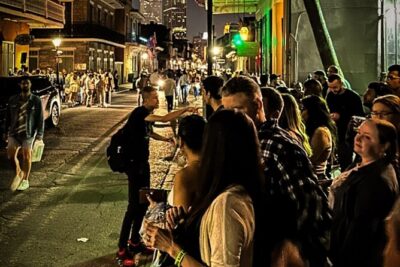 ★ 4.5New Orleans Premier Ghost, Voodoo and Vampire Walking TourFrom $2712,856 reviews
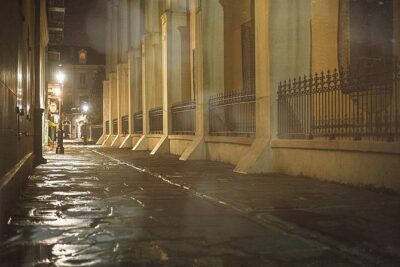 ★ 5.0Adults-Only New Orleans Ghost, Crime, Voodoo, and Vampire TourFrom $376,545 reviews
 ★ 5.0New Orleans Food Walking Tour of the French Quarter with Small-Group OptionFrom $756,118 reviews
 ★ 5.0New Orleans Swamp and Bayou Boat Tour with TransportationFrom $705,399 reviews
 ★ 4.5New Orleans City Sightseeing Hop-On Hop-Off Bus TourFrom $514,943 reviews
 ★ 4.5St. Louis Cemetery No. 1 Official Walking TourFrom $253,941 reviews
 ★ 5.0Swamp Boat Ride and Oak Alley Plantation Tour from New OrleansFrom $1313,303 reviews
 ★ 5.0New Orleans Adults-Only Ghost, Voodoo and Vampire TourFrom $293,291 reviews