

REVIEW · TOURS
New Orleans Music Tour
Jazz starts with a graveyard. This 2-hour, music-led walking tour is one of the quickest ways to understand how New Orleans became New Orleans, with St. Louis Cemetery No. 1 and Congo Square at the heart of the story. I like that the tour links landmarks to real names and real songs, not just vague “jazz history.” One thing to consider: this is mostly narration and site viewing, so if you’re hunting for nonstop live performances at every stop, you may feel a little let down.
What makes it work well is the pacing and small group size, with a maximum of 15 people and a live local guide. You’ll walk between key neighborhoods, keep moving through the afternoon, and end back at the meeting point. The mobile ticket keeps it simple, and the fact that the listed stop admissions are free helps you focus on the experience instead of logistics.
For $25, it’s a smart value play. You get a tight overview that can set you up for the rest of your day in town, especially if this is your first time exploring New Orleans music roots. Just dress for the weather, because this is an outdoor-and-on-foot kind of tour.
Key Highlights Worth Prioritizing

- St. Louis Cemetery No. 1, including the Musicians Tomb connected to the Barbarin Family
- Storyville remains, with music history tied to Frank Early’s My Place Saloon
- Louis Armstrong Park and Basin Street area, anchored by Congo Square’s African ritual roots
- Congo Square as a music wellspring, plus a visit into the J&M Studios building
- New Orleans Sound plus Bounce Music origins, with lots of connections to famous names
- Small groups (max 15) that make it easier to ask questions and keep a steady flow
Why This $25 Music Walk Is Such Good Value

At $25 per person for about 2 hours, you’re buying something that can save you time later. Instead of spending your day hopping between random plaques, you get a guided storyline that connects people, places, and sounds into one route.
The other value booster is the stop format. The itinerary highlights major sites, and the listed admissions for stops are free, so you’re not paying surprise fees mid-walk. Since food and drinks are not included, you can plan your own snack break nearby, on your schedule.
This tour also does a great job of functioning like an orientation course. It helps you understand why certain neighborhoods became music “fuel,” so later, when you see a street musician or hear a song on the radio, you’re not just listening. You’re recognizing the lineage.
Keep the day moving with these tours around New Orleans.


Price, Time, and Group Size, What That Means for You
This is a 2:00 pm tour that runs about 2 hours and returns to the same meeting spot. That timing matters because New Orleans afternoons can shift fast, and your comfort will depend on the weather that day.
The maximum group size of 15 is a big deal. In a larger crowd, you’d lose the thread, and questions would become a slow shuffle. Here, the format is set up so your guide can keep the story moving without constantly restarting.
Also, you’re looking at a walking tour. That sounds basic, but in New Orleans, walking means uneven sidewalks and long stretches outdoors. If you’re sensitive to cold, heat, or rain, you’ll get more enjoyment by planning layers and comfortable shoes.
Your Starting Line at 806 N Rampart Street
You meet at 806 N Rampart St, New Orleans, LA 70116, and the tour ends back at the meeting point. This is convenient because you can anchor your afternoon around one address instead of playing transit Tetris.
You’ll use a mobile ticket. If your phone battery is unreliable, bring a backup battery. It’s a small thing, but it keeps you from arriving stressed, and in New Orleans, stress is a waste of your energy.
The tour is in English, and it’s described as suitable for most travelers. If you have mobility limitations, you’ll want to think carefully about how comfortable you are with walking for around two hours, since no transport is included.
Stop 1: St. Louis Cemetery No. 1 and the Barbarin Family Musicians Tomb

The tour kicks off at St. Louis Cemetery No. 1, where you stroll through the Tango Belt and head toward the New Orleans Musicians Tomb. This is where the story gets real fast, because it’s not just about famous legends. It’s about how communities honored working musicians.
A key detail here is the Barbarin Family connection. The family donated the use of the Musicians Tomb for free burial for musicians. If you like your music history grounded in human lives, this stop does that job.
You’ll also hear about Lloyd Washington of the Ink Spots, with the first burial taking place on October 23, 2004. That detail helps you understand how music heritage stays tied to the present, not locked in the past like a museum exhibit.
What I like about this stop: it changes the vibe from entertainment to legacy. You walk away with a clearer sense of how New Orleans treats musicians as community members, not just performers.
Stop 2: Storyville District Remains, Frank Early, and Early Jazz Names

From the cemetery, you move toward the Storyville District. This area is described as the fabled turn-of-the-century red light district, but the tour’s angle is what’s more useful for you today: the music that took shape around it.
You’ll check out remains tied to Frank Early’s My Place Saloon, the place where Pretty Baby was written. That’s a concrete bridge between an actual New Orleans setting and a pop cultural outcome you may already recognize.
And the guide links the story to major early jazz figures, including King Oliver, Buddy Bolden, Jelly Roll Morton, and Sidney Bechet. The point isn’t that every great artist “came from Storyville,” but that the district was part of the environment where jazz could grow into something new.
Possible consideration: parts of this stop are about seeing remains, not a full set of intact buildings. That means the guide’s storytelling carries more weight here than visual wow-factor. If you like listening to the why behind the what, you’ll do great.



Stop 3: Louis Armstrong Park, Basin Street Station, and Why Congo Square Matters

After Storyville, you’ll check out the Basin Street Station area and then head into Louis Armstrong Park. The tour connects this stretch to Congo Square, framing it as a crossroads for music and gathering.
Congo Square is described as the site of African slave gatherings, and it’s presented as the only place in North America where pure West African religious ritual and musical traditions were performed. That line is the tour’s big thesis statement for roots: New Orleans music didn’t just borrow rhythms. It carried living practice.
This stop is powerful because it reframes the origin story. Instead of treating jazz as something that appeared fully formed, you see how music traditions were kept, shared, and adapted in a specific social setting.
What to expect on your feet: this portion is still part of the walking route, so you’ll want to keep your attention up. The payoff is in how the guide ties the geography to the cultural “why.”
Stop 4: Congo Square to J&M Studios, Plus Bounce Music Origins

Congo Square is where the tour says the wellspring of New Orleans music began, and it ties the location to major festival history, including the first New Orleans Jazz and Heritage Festival in 1970. You’ll also hear about the Municipal Auditorium.
Then you transition into a different kind of space by entering the building that housed J&M Studios. This is where the tour shifts from gathering and tradition to production and sound.
J&M Studios is described as a creator of the New Orleans Sound, and the list of names connected to this building is a serious roll call: Professor Longhair, Dave Bartholomew, Fats Domino, Guitar Slim, Shirley and Lee, Lloyd Price, Ernie K-Doe, Allen Toussaint, and Clarence “Frogman” Henry. It also references visitors including Little Richard, Ray Charles, and Jerry Lee Lewis.
If you’re a music fan, this is where your brain starts matching eras and styles. It’s not just history, it’s context. You get a feel for how the New Orleans sound got shaped by local artists, and how it pulled in bigger star power without losing its identity.
The tour also covers the origins of New Orleans Bounce Music and points you to the world of street musicians carrying the flame today. That’s a smart way to land the plane, because it links back to what you can hear on the street even after the walk ends.
A practical heads-up: you’re not getting a seated concert experience here. This is a walking history route with stops that may include interior time, but it’s still story-first. If your dream scenario is live music happening continuously, plan to find that elsewhere during your trip.
The Guide Makes or Breaks the Experience

The tour is led by a local guide, and the quality of that storytelling shows up in the details. In the best moments, the guide brings the music history alive through humor, high-energy delivery, and connections that connect music to politics, religion, and even architecture.
One name that comes up often is David. People describe him as extremely knowledgeable and a fun character who turns facts into a flowing narrative. You should treat this as a strong signal that the tour can be a standout if you get the right guide day-of.
That said, there can be variability in how the pacing feels. Some guests have noted the tour felt shorter than expected, and others have said the number of stops didn’t match what they thought they booked. So if you’re the type who likes a very strict, checklist-style itinerary, you’ll want to approach this as a guided walk where the story drives the route.
Small-group size helps. With fewer people, it’s easier for a guide to adjust when someone asks a good question or when weather changes the flow.
What to Bring, What to Wear, and How to Stay Comfortable
This tour is outdoors and on foot for roughly two hours, starting at 2:00 pm. Reviews mention cold, damp, windy weather on some days, so a warm layer can matter even when the sun is out. Other feedback points to summer scheduling feeling too hot, so a breathable layer and water planning are wise.
Wear comfortable shoes with grip. New Orleans sidewalks can be uneven and slightly slick in wet weather. If your feet feel good, the tour feels fun. If not, you’ll spend the whole time counting steps.
Since food and drinks are not included, plan a snack or a drink before you start, especially if you tend to get hungry mid-afternoon. You can keep the tour focused instead of distracted by your stomach.
And keep your phone charged. You’ll have a mobile ticket, and you may want maps or quick photo notes along the way.
Who This Tour Is Best For
This is best for music lovers who want the origin story behind what they hear in New Orleans. If you’re curious about jazz roots, African traditions, Storyville’s role in the neighborhood ecosystem, and how studios shaped a signature sound, you’ll feel the tour clicking into place.
It’s also a great fit for first-timers who need a guided orientation that doesn’t feel like a generic highlights bus ride. The route covers core meaning behind several neighborhoods, so you’ll get more from the city after this.
Families can enjoy it too, especially if your group likes history storytelling. One of the nice things about this kind of tour is that your guide can often tailor interactions to the group, making it easier for kids to stay engaged. Just don’t expect a formal classroom pace.
If you primarily want live music performances on demand, this may not be the tour type you want. The experience is heavily about narrative and sites, not a guaranteed soundtrack on every block.
Should You Book This New Orleans Music Tour?
Book it if you want a focused, $25-priced path through New Orleans music origins, from cemetery legacy to Congo Square roots to the J&M Studios connection. This tour is especially smart when you’re short on time and want your first jazz and rhythm overview to be coherent, not scattered.
Skip it or adjust your expectations if you’re looking for nonstop live music during the walk or if you need every stop to match a strict itinerary template. Also consider your comfort level with walking in heat or wind, because the whole format is movement outdoors.
If you want an easy way to understand why New Orleans music feels like it has a pulse, this is a solid choice. It gives you names to remember, places to place on a map, and a story you can carry with you long after you leave the last stop.
FAQ
How long is the New Orleans Music Tour?
The tour is about 2 hours.
What time does the tour start, and where does it meet?
It starts at 2:00 pm and meets at 806 N Rampart St, New Orleans, LA 70116, USA.
How much does the tour cost?
The price is $25.00 per person.
Is food or drink included?
No, food and drinks are not included.
What language is the tour offered in?
The tour is offered in English.
Is there a group size limit?
Yes, the tour has a maximum of 15 travelers.
What is included in the price?
A local guide is included.
What is the cancellation policy?
You can cancel for a full refund if you cancel up to 24 hours in advance of the experience start time.
More Tours in New Orleans


More Tour Reviews in New Orleans
More ways into New Orleans


Tours, compared.
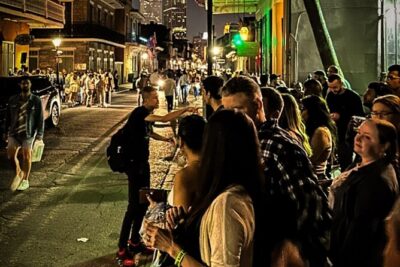 ★ 4.5New Orleans Premier Ghost, Voodoo and Vampire Walking TourFrom $2712,856 reviews
 ★ 5.0Adults-Only New Orleans Ghost, Crime, Voodoo, and Vampire TourFrom $376,545 reviews
 ★ 5.0New Orleans Food Walking Tour of the French Quarter with Small-Group OptionFrom $756,118 reviews
 ★ 5.0New Orleans Swamp and Bayou Boat Tour with TransportationFrom $705,399 reviews
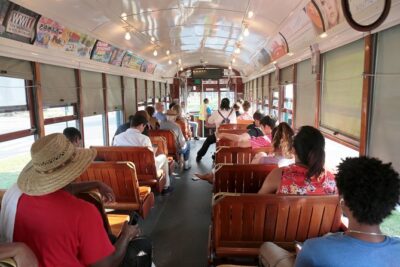 ★ 4.5New Orleans City Sightseeing Hop-On Hop-Off Bus TourFrom $514,943 reviews
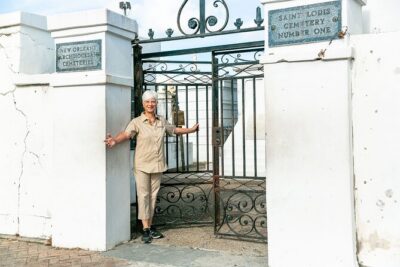 ★ 4.5St. Louis Cemetery No. 1 Official Walking TourFrom $253,941 reviews
 ★ 5.0Swamp Boat Ride and Oak Alley Plantation Tour from New OrleansFrom $1313,303 reviews
 ★ 5.0New Orleans Adults-Only Ghost, Voodoo and Vampire TourFrom $293,291 reviews