
REVIEW · HISTORICAL TOURS
New Orleans Music Heritage Tour
Music in New Orleans is street level. This guided walk threads together blues, jazz, and gospel across neighborhoods like the Marigny, French Quarter, and Treme, with sound samples pulled right into the streets. Led by local record producer Keith, it turns landmarks into songs you can almost hear in your head.
I love the way Keith connects names, places, and eras, including the long through-line of New Orleans brass band culture in stops around the French Quarter. I also like the practical audio touch, Bluetooth music clips that match what you’re looking at as you go.
One thing to plan for is that it’s an outdoor walking tour with adult-focused storytelling, so it’s best for people who want to stroll steadily and don’t mind a bit of uncensored talk. Also, since it depends on good weather, rain can change plans.
Key points to know before you book
- Small group feel, with a cap of 28 people (and it can be more intimate on some days)
- Bluetooth audio that plays alongside the walk, matching artists and locations
- Local record-store tie-in at Louisiana Music Factory, where Keith’s favorite spot sells related music
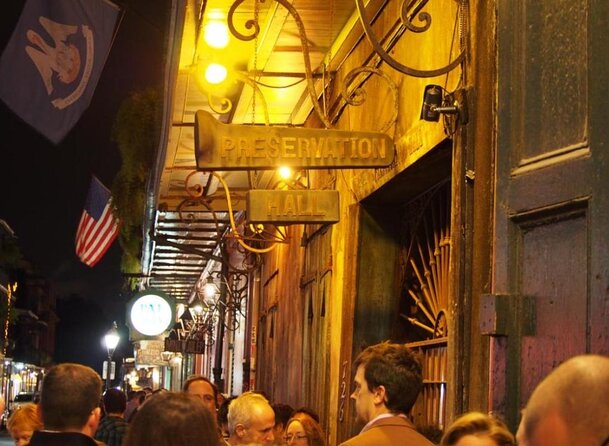
- Landmark-to-studio route, from Preservation Hall to J&M Studios and other historic recording sites
- Historic African-American roots stops, including Louis Armstrong Park and Congo Square
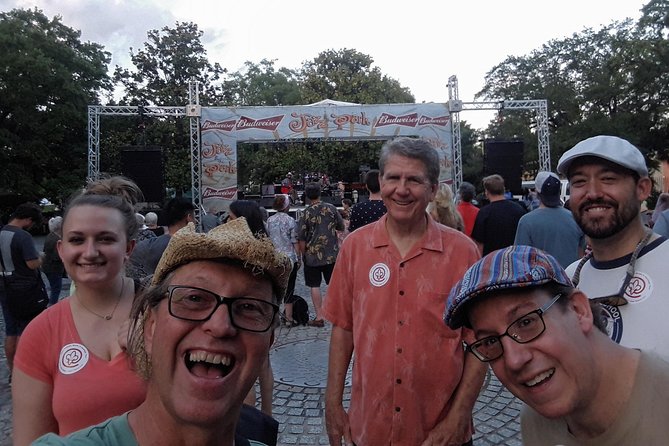
- Photo moments and playlist, with the guide taking pics during the tour (and sharing a playlist in some cases)
Music-heritage walking, without the museum vibe
New Orleans has plenty of tours that talk at you. This one works differently. It treats the city like an instrument, and the streets like the tracklist.
You’ll spend about two hours walking between key music-and-people stops, with a guide who frames what you’re seeing in the context of how the city made its sound. That matters because New Orleans music is not just about famous artists, it’s about the neighborhoods, the venues, and the social mix that shaped who got heard. When the tour pairs a location with a short song clip, you start getting it fast, even if you’re new to jazz, blues, gospel, or rock and roll.
Value-wise, $30 for a guided, audio-supported walk is a fair price, especially if you’re the type who likes to learn while moving. You’re paying for the route, the storytelling, and the little audio “time machine” effect, not just directions.
You can also read our reviews of more historical tours in New Orleans



Starting at Louisiana Music Factory on Frenchmen Street
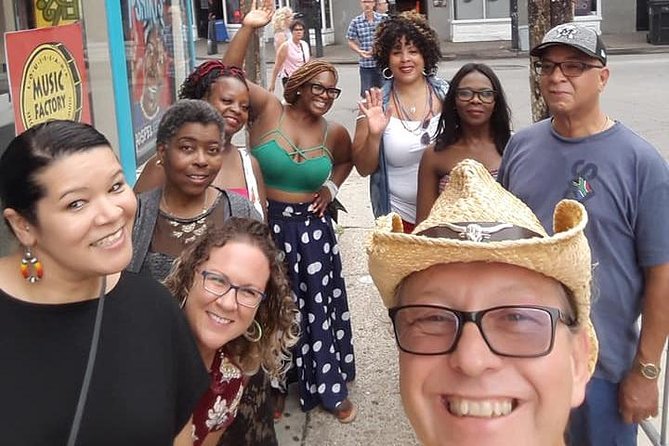
The tour begins at Louisiana Music Factory, 421 Frenchmen St. Frenchmen Street is famous for its music scene, and this is a strong place to start because it keeps things grounded in the present. You’re not only looking backward at old photos, you’re stepping into the sound that still lives here.
Louisiana Music Factory is also Keith’s favorite record store. That’s more than a fun detail. It means when the tour mentions artists, songs, and styles you might want to revisit, there’s a practical place to go right after the walk. If you buy music on trips, or if you like building a playlist that matches what you saw, this is a smart add-on.
The start timing is designed to get you moving quickly. You meet your guide, get oriented, and then the walk turns into an audio-and-stories route covering multiple neighborhoods, not one tiny section of the Quarter.
Marigny to Treme to the French Quarter, with Keith as your soundtrack guide
The heart of the tour is the guided walking route through the Marigny, French Quarter, and Treme, with Keith telling you the “why” behind the “what.” You’ll also get audio support, with Bluetooth playback to add song clips at locations tied to the themes of the walk.
Here’s what makes this section work for you: New Orleans music didn’t evolve in a vacuum. Different communities shaped the sound at different times, and the tour uses the walking route to show those shifts. You’re basically watching geography explain music.
A few details that help the stories land:
- You’re covering about 300 years of New Orleans music and heritage, so you’re not stuck in one era.
- The route uses short stops and quick context, so you’re learning without spending hours sitting still.
- Keith’s style is part performance, part street history, and the reviews consistently highlight that he keeps it funny and entertaining while staying on topic.
This is also where some flexibility shows up. On a couple occasions, you might get extra quick detours or breaks in the French Quarter area, including the chance to grab coffee or a restroom stop halfway through (handy on a warm day). If you’re traveling with teens, this sort of pacing tends to hold attention better than a long, slow lecture.
French Quarter stops: Danny Parker, brass bands, and the studio trail
As you head deeper into the French Quarter area, the tour leans into specific figures and specific places. A standout is the stop around the boyhood home of Danny Parker, plus the story of Blue Lu and how brass band heritage ties into their legacy. That’s the kind of detail you can’t really pick up from walking alone, because it requires context about what was happening culturally.
From there, you’ll move through a sequence of notable Quarter landmarks and music-related sites. Expect stops that include:
- Place de Armes
- Preservation Jazz Hall
- A stroll down Bourbon Street connected to classic New Orleans performers
- A stop tied to Mister New Orleans
- J&M Studios, described as the Home of Rock N Roll
This studio and venue angle is one of the most practical parts of the tour. Seeing recording sites and heritage venues gives you a new way to read the Quarter. Instead of treating it as nightlife scenery, you start noticing the actual machinery of music-making: where songs were tracked, where sounds got amplified, and how the city’s energy fed artists.
One note for your expectations: Bourbon Street can feel loud and chaotic. The tour doesn’t pretend it’s quiet or formal. It uses that reality to connect the music to the atmosphere, including stories about how jazz and blues used to roll through the night air.
Preservation Hall, Louis Armstrong Park, and Congo Square roots
After the Quarter, the pace shifts to a more grounded, roots-focused section. A key stop is Preservation Hall, a place shaped by people who wanted their music preserved and protected. You’ll be able to visit the gift shop and take a photo during the stop.
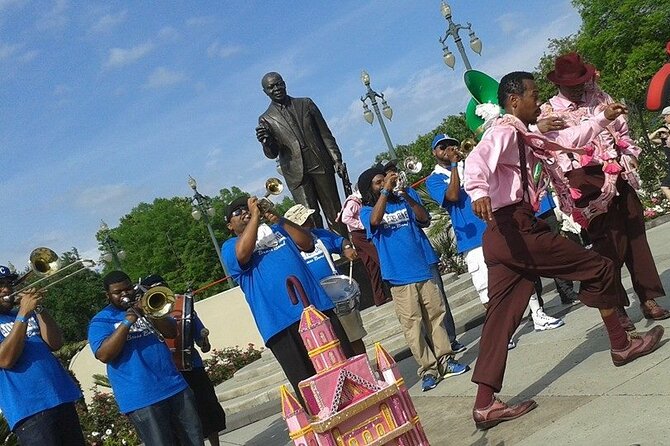
Then you’ll move on to Louis Armstrong Park. The tour points out the Louis Armstrong statue, and it ties the location back to the impact of the Treme, which is described as America’s first African-American neighborhood. That’s a powerful way to connect a landmark statue to living culture, not just a famous name.
From there, the walk includes a stop at Congo Square. Even when the stop is brief, it helps you understand why certain spaces in New Orleans matter beyond their physical beauty. Congo Square is part of the story of how music and community traditions took root and traveled forward.
If you’re the type who likes “place meaning,” this section is worth your attention. It keeps the tour from becoming just an entertainment stroll, and it adds emotional weight to what you’re learning.






How Bluetooth audio changes the walk on the street
The tour’s audio method is genuinely useful. You use Bluetooth capability to hear clips that match the artists and locations along the way, so you’re not relying only on your memory.
For you, that means two things:
1) You get a stronger mental connection between what you see and what you hear. Instead of reading about a style later, you experience a hint of it immediately.
2) The tour becomes easier to follow even if you don’t know a lot of jazz history coming in.
A small practical advantage: if you’re tired after a long walk day, audio-supported stops can make the moments feel shorter. You’re still walking, but the learning is organized around what’s playing at that exact spot.
And since the guide takes photos during the route in some cases, you often end up with both memories and something useful to keep the music theme going after you leave.
Price and value: $30 for a story-and-sound route
Let’s talk money plainly. At $30 per person, you’re paying for:
- A guided walking route
- Storytelling tied to specific music sites across several neighborhoods
- Bluetooth-supported music clips during the walk
- Access to multiple heritage landmarks, including studios and Preservation Hall
For many visitors, the value comes from the “pairing.” If you love New Orleans music, you’ll probably spend more than $30 just trying to figure out what to see and why. This tour gives you that structure and then adds the soundtrack.
Group size is capped at 28, and that often helps the guide keep interaction more personal. Reviews also describe days when the group was just a couple people, which turns the walk into almost a private lesson. If you’re traveling solo and want a way to meet the city through music, that’s a strong reason to consider booking early.
Practical tips: shoes, pace, and weather matter
This is a walking tour with multiple neighborhoods. You’ll want comfortable shoes you trust for sidewalks and short stretches between stops.
It’s also an outdoor experience that requires good weather. That doesn’t mean you should panic about rain every day, but it does mean you should watch the forecast and be ready for schedule changes if conditions are bad.
One more practical consideration: the tour style is aimed at adults. There’s mention of language and content not being kid-appropriate, and it’s also a lot of walking. If you’re bringing younger teens, I’d treat this as a family-friendly music outing only if everyone is comfortable with the adult tone.
Finally, the route ends near St. Louis Cathedral, behind the cathedral area, where street musicians often play. That’s a nice way to close the loop, because you finish with live sound in the same spirit as what you heard during the guided walk.
Should you book the New Orleans Music Heritage Tour?
If your trip includes only one music-focused walking experience, I’d put this near the top of your list. The biggest reasons are the combination of Bluetooth music clips, the guide’s story-first approach, and the route that connects neighborhood culture to specific sites like Preservation Hall, Louis Armstrong Park, Congo Square, and J&M Studios.
Book it if:
- You love jazz, blues, gospel, or rock and roll and want context with your sightseeing
- You like tours where you walk, listen, and learn in short bursts
- You want a route that feels local, not just generic landmark hopping
Skip it or plan carefully if:
- You’re not up for a steady outdoor walk
- You want something quiet and kid-focused, since the tone can be adult
- You’re visiting during a stretch where weather could change quickly, since the tour depends on good conditions
Overall, this is a strong value at $30 for a 2-hour guided route that helps you hear New Orleans before you even think about souvenirs.
FAQ
How long is the New Orleans Music Heritage Tour?
It runs for about 2 hours.
Where does the tour start and where does it end?
It starts at Louisiana Music Factory, 421 Frenchmen St, New Orleans, LA 70116, and it ends at 712 Royal St, New Orleans, LA 70116.
What kind of music does the tour include?
Along the way, you’ll listen to clips tied to New Orleans blues, jazz, and gospel.
Does the tour use any audio or music playback?
Yes. The tour offers Bluetooth speaker capability so music accompaniment can play during the walk.
What language is the tour offered in?
The tour is offered in English.
Is the tour suitable for children?
Children must be accompanied by an adult.
What is the cancellation policy?
You can cancel for a full refund up to 24 hours in advance. If you cancel less than 24 hours before the start time, the amount paid is not refunded. The tour also requires good weather, and if it’s canceled due to poor weather, you’ll be offered a different date or a full refund.
More Historical Tours in New Orleans


More Tours in New Orleans


More Tour Reviews in New Orleans
More ways into New Orleans


Historical Tours, compared.
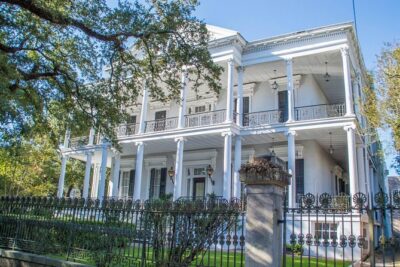 ★ 5.0New Orleans Garden District History Walking TourFrom $352,879 reviews
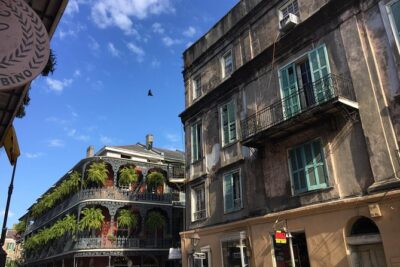 ★ 5.0French Quarter Historical Sights and Stories Walking TourFrom $352,724 reviews
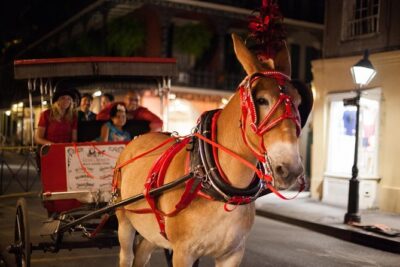 ★ 4.5New Orleans Small-Group Haunted History Carriage TourFrom $652,289 reviews
 ★ 4.5New Orleans Haunted History Ghost TourFrom $302,084 reviews
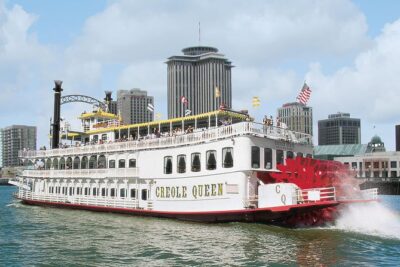 ★ 4.5Paddlewheeler Creole Queen Historic Mississippi River CruiseFrom $471,948 reviews
 ★ 5.0New Orleans Food and History Walking TourFrom $851,544 reviews
 ★ 4.3Creole Queen History Cruise with Optional LunchFrom $471,112 reviews
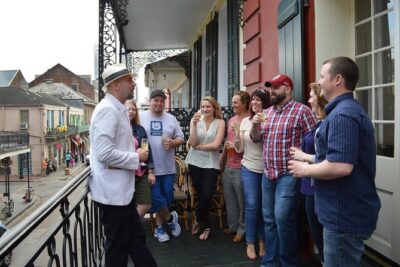 ★ 5.0New Orleans Cocktail and Food History TourFrom $160819 reviews
Browse the lists this tour appears in