

REVIEW · HISTORICAL TOURS
New Orleans Creole History and Culture Ride
Creole culture, minus the Bourbon chaos. This 3-hour New Orleans Creole history and culture ride threads through neighborhoods like Faubourg Marigny and Bywater, with story stops that make the city feel human instead of museum-like.
I loved two things most: the small group size, and the easy pace that keeps the ride relaxing while the guide connects the dots. My guide, Danny, was especially good at making conversation feel natural, and he even remembered all 12 of our names without turning it into a gimmick.
One thing to plan for: the drink stop is real, but alcohol is not included. It is a great pause, just don’t assume your tour price covers the tab.
Quick takes before you go

- Small group ride (max 10) so you actually get answers, not just background noise
- Danny’s storytelling style keeps history conversational, and he remembers names
- Practice-friendly start at Washington Square Park if you need a warm-up lap
- Faubourg Marigny and Bywater show Creole life beyond the postcard grid
- Finish at Marie’s Bar and Kitchen for local recommendations and a no-rush question window
Entering New Orleans from the Elysian Fields starting gate

This ride starts at 634 Elysian Fields Ave and kicks off at 10:00 am. You get a mobile ticket, and the plan is simple: use the bike, take in the neighborhoods, and end back where you started.
The tour keeps the group size tight, with a maximum of 10 travelers, which matters more than people think. In a city like New Orleans, a smaller group means you stop when it makes sense, you can ask questions without shouting, and you have more time at each point of interest.
For practical comfort, you get the basics: a bicycle, bottled water, and a basket for carrying small items. That basket is handy for things like a small camera bag, a light layer, or your phone if you do not want it strapped to you the whole time.
You can also read our reviews of more historical tours in New Orleans
Washington Square Park, where you get your bearings fast
Your first stop is Washington Square Park, a park with roots in the early 1800s and a canopy of Louisiana oak trees. It sits right next to Frenchmen Street, which means you get instant context for how music is part of everyday life here.
This is also where the tour helps you settle in. If it has been a while since you rode a bike, you can do a quick practice lap, adjust your comfort, and get used to the pace before the neighborhood riding starts in earnest.
You also get the orientation that makes the rest of the tour click. Instead of memorizing dates, you learn the background themes that explain why certain neighborhoods look and feel the way they do, and why Creole culture shows up in day-to-day details like food, music, and community space.
Faubourg Marigny, the quiet streets that still feel old
From Washington Square Park, the ride moves into Faubourg Marigny, described as one of the oldest “suburbs” surrounding the French Quarter. If you want New Orleans that feels lived-in rather than staged, this is where you start getting that.
Here, the focus is on the streets themselves: older architecture, a slower rhythm, and a neighborhood vibe that tries to hold onto what makes it itself. The ride is intentionally unhurried, so you can actually look at what is in front of you instead of only watching for traffic.
Marigny also ties directly to Creole life through the practical stuff, not just slogans. The story points you toward how music and cooking are part of the neighborhood identity, shaped by generations of people who call this area home. It is a local area where you get the sense that the culture is not an act, it is a daily habit.
One smart way to experience this stop is to ask yourself a simple question while riding: what feels different about this from the famous tourist routes? The tour nudges you toward that comparison, and it helps you understand why Creole culture is not only in buildings, it is in people and routines.
Bywater Historic District, where history meets the river edge

Next comes Bywater Historic District, and this is one of the stops that adds real weight to the ride. You see a spot tied to the Plessy vs Ferguson case, which is described as a nation-changing moment. Even if you already know the broad outline, it lands differently when you are standing in the context of the neighborhood where life goes on around the historical markers.
The tour also points out the levee wall and the Mississippi River. This is not a random photo stop. It frames the city as a place built with constant attention to water, risk, and resilience. You start to understand why geography matters here, and why changes over time show up as both physical infrastructure and community experience.
Along the way, you will also spot examples of local art and places connected to the neighborhood’s music life. This is a key value of the ride: it does not treat culture as something frozen in time. It shows how creativity keeps moving, even as the city changes.
Bywater can feel like New Orleans doing two things at once, holding onto the past while writing new chapters. The tour embraces that. You are not asked to pick one side, you get to see both.
Marie’s Bar and Kitchen, a social finish with real local advice
The ride ends with a break at Marie’s Bar and Kitchen. This is a neighborhood tavern that dates to the 1930s, and it is a perfect final stop because it turns the tour into a conversation instead of a lecture.
You can relax at the outdoor tables along the street, and this is the moment where you can ask anything still on your mind. The guide also has music schedules handy, plus food recommendations, so you leave with a practical list for what to do next after the tour.
This stop is not just downtime. It is where the tour becomes useful for your actual trip. In New Orleans, recommendations matter because the city runs on local taste. A good guide helps you spend your evenings more like a resident and less like a checklist.
Two cautions: drinks are not included, and the bar stop is still the bar, so if you are traveling with kids, the tour may stop somewhere different. If you want a soft landing, this is still one of the easiest parts of the tour, just plan around the fact that food and alcohol are your call, not part of the package.




Price and pacing, what $55 really buys you

At $55 per person for about 3 hours, this is not a bargain ride, but it is also not an inflated “famous name” price. You are paying for three things that add up in New Orleans.
First, you get a bike plus bottled water and a basket. That removes friction. Second, you get a guide who focuses on Creole culture in ways that connect neighborhoods, not just individual sites. Third, you get the small group size, which keeps the experience personal and calm.
The easy pace is worth calling out because it is tied to the whole feel of the tour. You should not expect a high-energy workout. You should expect a steady flow with stops that give you time to absorb the stories and ask questions.
Also, this is exactly the kind of tour that helps you avoid the “only Bourbon Street” trap. If your days are already full of crowds, this ride gives you a different New Orleans angle, one built around community and daily culture.
How to make the most of the bike ride (without overthinking it)

If you want this tour to land well, show up ready to move and ready to talk. Wear comfortable clothes for a couple of hours outdoors, and bring a light layer if the morning feels cooler than expected.
You will spend most of your time looking at neighborhoods, so think about how you want to capture the experience. If you plan to photograph, decide in advance whether you want to stop for shots or if you prefer the guide’s rhythm. The point is to avoid turning the tour into you sprinting ahead.
And since Marie’s Bar is a real finish, consider whether you want to buy a drink there. The tour does not include alcohol, but it does include the atmosphere and the opportunity to get advice on where to go next.
Who should book this ride, and who might prefer something else
This tour is a strong match if you want an authentic-feeling New Orleans that goes beyond the obvious attractions. You also get real value if you like cultural context, because the guide connects Creole life to what you are seeing on the street.
It also fits travelers who want a break from constant walking. You get a guided bike loop through parks and neighborhoods, with the option to do a practice lap at the start if you need it.
You might choose a different tour if you want mostly “big landmark” viewing with minimal riding. This experience is about neighborhoods and culture, not a rapid hit of famous sights. And if cycling is not comfortable for you, you may find the bike format limiting, even though most travelers can participate and the tour is designed to keep things manageable.
Should you book the New Orleans Creole History and Culture Ride?
I would book this if you care about Creole culture and want to understand how it shaped everyday New Orleans, not just how it sounds in theory. The combination of small group size, a guide who actually connects with people, and a route through Marigny and Bywater makes the time feel well used.
It is especially worth it if you want a calmer day. This ride is basically built for travelers who feel like they have had enough of the loud, tourist-heavy scene and want the city at a more human scale.
If you do book it, go in with one mindset: ask questions. The most memorable moments here are the ones where the guide explains why a neighborhood feels the way it does, and where you can turn the stories into plans for the rest of your trip.
FAQ
How much does the New Orleans Creole History and Culture Ride cost?
It costs $55.00 per person.
How long is the tour?
The ride lasts about 3 hours.
What time does the tour start?
It starts at 10:00 am.
Where does the tour start, and does it end there too?
It starts at 634 Elysian Fields Ave, New Orleans, LA 70116, USA, and it ends back at the meeting point.
What’s included with the tour price?
The tour includes use of a bicycle, bottled water, and a basket for carrying small bags.
What is the maximum group size?
The tour has a maximum of 10 travelers.
What language is the tour offered in?
The tour is offered in English.
Is the bar drink included?
No. The tour includes a drink stop, but alcoholic beverages are not included in the price.
Are service animals allowed?
Yes, service animals are allowed.
What happens if the weather is bad?
This experience requires good weather. If it is canceled due to poor weather, you will be offered a different date or a full refund.
Can I cancel for a full refund?
Yes. You can cancel up to 24 hours in advance of the experience for a full refund.
More Historical Tours in New Orleans

More Tour Reviews in New Orleans

More ways into New Orleans


Historical Tours, compared.
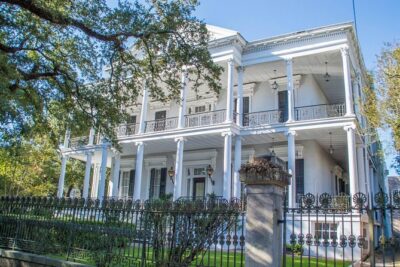 ★ 5.0New Orleans Garden District History Walking TourFrom $352,879 reviews
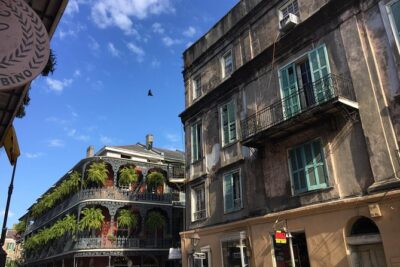 ★ 5.0French Quarter Historical Sights and Stories Walking TourFrom $352,724 reviews
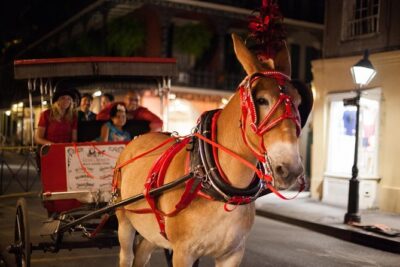 ★ 4.5New Orleans Small-Group Haunted History Carriage TourFrom $652,289 reviews
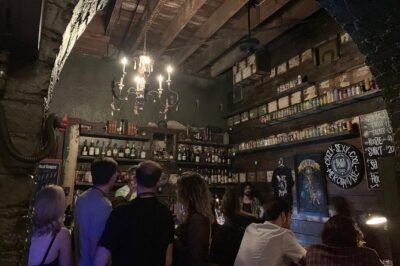 ★ 4.5New Orleans Haunted History Ghost TourFrom $302,084 reviews
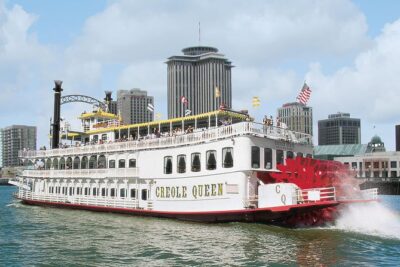 ★ 4.5Paddlewheeler Creole Queen Historic Mississippi River CruiseFrom $471,948 reviews
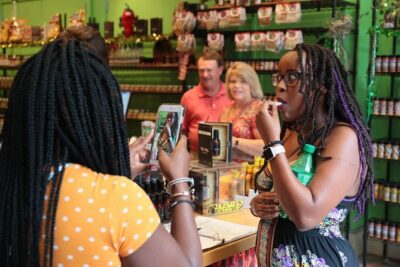 ★ 5.0New Orleans Food and History Walking TourFrom $851,544 reviews
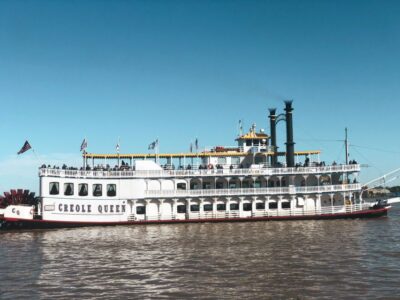 ★ 4.3Creole Queen History Cruise with Optional LunchFrom $471,112 reviews
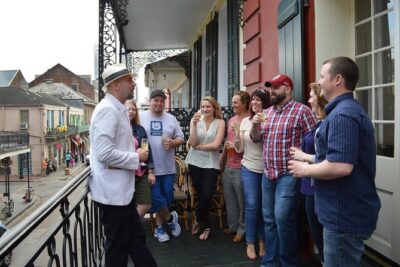 ★ 5.0New Orleans Cocktail and Food History TourFrom $160819 reviews
Browse the lists this tour appears in