

REVIEW · TOURS
New Orleans Citywide Driving Tour
New Orleans hits different from the road. This private citywide driving tour connects major districts with a licensed local guide and smart stops for photo ops, cemeteries, and museums. I love the small-group setup (up to 4) because it makes the conversation feel personal, and I love that you can choose your start time and adjust your route. One consideration is that it is mostly a drive, so if you want lots of walking time or deep dives into one attraction, this format may feel a bit short.
You start near the French Quarter, then wind through neighborhoods that show New Orleans in contrasts: grand uptown avenues, the university corridor, and areas shaped by Hurricane Katrina. The guide also brings in the human stuff, famous people, and the big city ideas that explain why the blocks look the way they do. A practical drawback: traffic and weather can shift the exact timing, since the tour length can vary from 2 to 3 hours.
What I think you’ll appreciate most is the flexibility. You can ask for refreshment breaks, extra photo time, or a closer look at something you care about, without turning the day into a stressful scavenger hunt. And if your guide is Dominick, the bar is high, he has deep local roots and even worked as a city planner, so the perspective goes beyond trivia.
Key highlights at a glance

- Private drive with a licensed guide who can answer questions in real time
- Hotel pickup and drop-off plus an easy meeting point at 701 Chartres St
- City Park, lakefront, cemeteries, and major uptown sights in one half-day span
- Post-Katrina context tied directly to the neighborhoods you’re passing
- Campus and city identity stops, including Tulane and Loyola areas
- Big-city landmarks and institutions, from the World War II Museum area to the Superdome and port
Why a private driving tour works so well in New Orleans

New Orleans is famous for being walkable, but it is also spread out in a way that can eat your time. This tour’s core value is that it compresses a lot of geography into a manageable 2 to 3 hours. Instead of bouncing between far-flung stops with taxis or rideshare apps, you get a private minivan or mini bus and someone else handles the route.
I also like how the guide approach is built for questions. You get live commentary plus an open discussion board style Q&A, so you can ask about architecture, local history, or what a neighborhood is really like today. That matters because New Orleans is full of contradictions, and the answers are not always obvious from a street corner.
One more thing, you can set your own pace within the tour. Want more time for photos or a cemetery stop? You can usually work that in. Want shorter stops and more driving to see more places? You can steer it that way.
Keep the day moving with these tours around New Orleans.



Getting rolling from 701 Chartres St, then letting the city choose your route
The tour starts and ends at the meeting point on Chartres Street, 701 Chartres St. If you have hotel pickup, you’ll be picked up and dropped off, and if not, you’ll meet at a designated pickup spot. Either way, it is designed to keep the logistics simple so you can focus on the sights.
The timing flexibility is a real perk. There are several morning and afternoon start times, and the tour can vary in length based on weather, traffic, and your requests. In a city where a surprise downpour can change everything, having this built into the plan is practical.
Also, the tour uses a mobile ticket. For most people, that means less paperwork on arrival and an easier check-in day.
City Park and the Katrina landing point, with context you can actually use
The drive kicks off toward New Orleans City Park, but it is not just a scenic stop. The guide sets the scene with a basic city history first, which helps you understand why certain districts look the way they do and why the city grew where it did.
Then you head into the parts of the city shaped by major events, including a cemetery area and the storm surge in Hurricane Katrina, which made landfall here. That kind of information is powerful because it is tied directly to what you’re seeing outside the window, not just read from a sign.
This is one of the tour moments where you get value beyond sightseeing photos. If you have never connected the dots between the city’s layout and what happened during Katrina, this gives you that framework quickly. It also gives you a respectful way to move through areas that carry a lot of memory.
A practical note: cemeteries and memorial places can have rules and variable visiting times. Since the tour is designed for short, flexible stops, you should plan to spend just enough time to get oriented, then decide what you want to extend later on your own.
Uptown swagger: St Charles Avenue, the lakefront, and how neighborhoods talk to each other

After the early city orientation, you swing through major uptown corridors like St. Charles Avenue and toward the lakefront areas. These are the streets that give people their first impression of New Orleans, and the guide helps you read the clues in the architecture and the urban design.
St. Charles Avenue is more than a postcard street. It tells you how power, wealth, and civic identity showed up in building styles and grand landscaping. When you see it as part of a route that also includes neighborhoods with deep working-class roots, the contrasts start to make sense fast.
You also pass through areas like Marigny and along Esplanade Avenue, which help bridge the story between the French Quarter area and the uptown identity. The route gives you a quick education in how neighborhoods feel different even when they’re relatively close on a map.
If you like to understand cities visually, you’ll enjoy the pacing here. The guide is using the drive time to interpret, so you’re not just stuck behind a windshield.
The University Section and Garden District stop that turns architecture into conversation

One of the smartest sections of the route is the focus on education and the people connected to it. The guide talks about Tulane and Loyola, and also the citywide university culture, which helps explain why certain streets, businesses, and day-to-day life look the way they do.
Then you move through the Garden District, where you can see how New Orleans elegance and old money aesthetics shaped the blocks. This area works well on a drive-and-stop tour because you get enough time to notice details, but not so much time that you lose the thread of the larger city story.
I like this part because it gives you a New Orleans that feels current, not only historical. Universities affect housing, traffic patterns, nightlife, and local economies, so the guide’s framing helps you understand the city as living and changing.
Potential drawback: if you are the type who wants to spend an hour inside one museum, this route may feel like it is more about looking and listening than lingering. You will get direction for what to extend later, though.



Sugar, the 1884 World’s Fair, and plantations, explained in plain street-level terms
As the tour moves through the city, the guide covers big historic themes that usually get mentioned in New Orleans conversations but rarely tied to specific streets. You’ll hear about the invention of granulation of sugar and how that connects to the plantation economy. You’ll also hear about the 1884 World’s Fair and how it fits into the broader story of Louisiana and national ambition.
This is the kind of topic that can become dry if it is just facts. In a good guided drive, though, it turns into a way to interpret what you’re seeing and why the city has certain institutions and symbols. If you like history that explains present-day neighborhoods, this section is a keeper.
And yes, plantations can be uncomfortable subject matter. The value here is that the guide is framing it within the city’s development and the shifts that shaped who arrived, who held power, and what that meant in built space.
French roots versus newcomers after the Louisiana Purchase

New Orleans is basically a story of arrivals layered over time. This tour includes discussion of the development of the City of Lafayette and the struggles between the French and newcomers from the northeast after the Louisiana Purchase. That framing gives you a better sense of why some parts of town lean into one identity while others show a different influence.
If you are trying to understand why the city’s culture feels both French and American at the same time, this is useful. It is not abstract. You see the change in street feel, building style, and civic landmarks as you move.
The guide also talks about the developing American Sector of the city. That is one of those phrases that sounds like a textbook line, but it starts to feel real when the tour connects it to the districts you are actually driving through.
World War II Museum area, art district, Lafayette Square, and the Superdome
Later in the drive, you get a cluster of major civic and cultural references. You’ll pass through the World War II Museum area, the art district, and Lafayette Square, then move on toward large-scale landmarks like the Superdome and the port.
What I like about this part is the range. You go from intimate neighborhood detail to the kind of infrastructure that shows how New Orleans functions at the city level. You also get a sense of how visitors experience the city, because these are the points that define the skyline and the larger public memory.
This section can also help you plan your next steps. If you realize you want to go deeper into the museum area, your guide can point you in a direction for what to prioritize during your remaining time in town. Just remember that entrance fees for museums are not included.
A small consideration: because these are busy areas, timing can be impacted by traffic, crowds, and road conditions. The tour is built to adjust, but the city will still be the city.
What you actually get for $595 per group up to 4
Let’s talk value, because $595 sounds big until you translate it into what you’re buying. You are paying for a private guide, private vehicle transport, hotel pickup and drop-off, and a route designed to hit major districts within a short window.
For up to four people, that can work out well compared to piecing together separate taxi or rideshare rides plus paying for multiple paid walking tours. It also buys something harder to price: a guide who can tailor your stops. If you have only half a day and want the big contrasts covered, this is one of the more efficient ways to do it.
Is it worth it if you only care about one neighborhood? Probably not. This tour works best when you want broad coverage and context. If your goal is one museum or one cemetery for hours, you’ll likely get more satisfaction doing a focused self-guided day.
My rule of thumb: if you are short on time and want structure without sacrificing flexibility, this private drive earns its keep.
Who this tour suits best, and who should skip it
This experience is a strong match for first-time visitors who want to get oriented fast. It’s also great for people who like their history connected to place, not just dates and names. If you want a guide who can answer questions and shape the day around your interests, you’ll likely feel in control.
It can be less ideal for travelers who want lots of time out of the vehicle. Since it’s a drive-heavy format, you might feel rushed at each stop unless you specifically request longer time at the places you care about.
Also, if you are sensitive to weather, remember the tour operates in all weather conditions. You’ll want to dress for rain or heat depending on the season and bring layers.
One more fit note: because pickup is part of the package and the group is kept to just your party, it is especially convenient if you are traveling with a small family group or a couple of friends.
Should you book this New Orleans citywide driving tour?
I’d book it if you want the city’s major districts covered in a single half-day, with a guide who can explain why the contrasts matter. The standout advantage is the private guide conversation, and the evidence of guide quality is strong, with Dominick highlighted for his planning background and long-time local perspective.
You might skip it if you have lots of time to explore on foot and you already know your route. Also, if you are primarily seeking one specific attraction, you could do better with a focused museum or walking tour where you can spend longer inside.
If your goal is to get your bearings fast, learn the key stories behind the neighborhoods, and still have energy left for the rest of your trip, this is an efficient, thoughtful way to start.
FAQ
How long is the New Orleans citywide driving tour?
It runs about 2 to 3 hours. The exact length can vary based on weather, traffic, and any stops or requests you make during the tour.
What does it cost, and how many people are in a group?
The price is $595.00 per group, up to 4 people.
Do you offer hotel pickup and drop-off?
Yes. You’ll get hotel pickup and drop-off, plus pickup and drop-off from designated meeting points.
Are admissions to museums or other stops included?
Entrance fees for museums and other attractions are not included. Food and drinks are also not included, and admissions to any unplanned attractions are not included.
Is the tour suitable for people with limited mobility or service animals?
Service animals are allowed. For visitors with mobility limitations and/or a service animal, the info says you should discuss this with the provider before booking.
Can I cancel for a full refund?
Yes, cancellation is free. You can cancel up to 24 hours in advance for a full refund, and changes within 24 hours of the start time are not accepted.
More Tours in New Orleans


More Tour Reviews in New Orleans
More ways into New Orleans


Tours, compared.
 ★ 4.5New Orleans Premier Ghost, Voodoo and Vampire Walking TourFrom $2712,856 reviews
 ★ 5.0Adults-Only New Orleans Ghost, Crime, Voodoo, and Vampire TourFrom $376,545 reviews
 ★ 5.0New Orleans Food Walking Tour of the French Quarter with Small-Group OptionFrom $756,118 reviews
 ★ 5.0New Orleans Swamp and Bayou Boat Tour with TransportationFrom $705,399 reviews
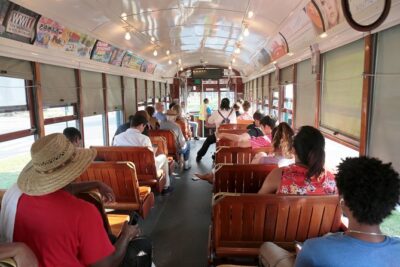 ★ 4.5New Orleans City Sightseeing Hop-On Hop-Off Bus TourFrom $514,943 reviews
 ★ 4.5St. Louis Cemetery No. 1 Official Walking TourFrom $253,941 reviews
 ★ 5.0Swamp Boat Ride and Oak Alley Plantation Tour from New OrleansFrom $1313,303 reviews
 ★ 5.0New Orleans Adults-Only Ghost, Voodoo and Vampire TourFrom $293,291 reviews