

REVIEW · HISTORICAL TOURS
Jewish History Tour of New Orleans
A short walk can change how you see a city. This Jewish History Tour of New Orleans strings together six powerful stops that connect faith, survival, and culture in real places, including the Agam Holocaust Memorial. I especially like the way the route mixes big landmarks with specific, story-driven details, and I love the small-group feel that keeps questions from getting lost. The only drawback to plan around is walking, and there is no air-conditioned vehicle, so you’ll want good shoes and weather patience.
You’ll start near the Canal and finish by St. Louis Cathedral, so the whole thing fits naturally inside a French Quarter day. It’s priced at $40 per person for about two hours with a licensed local guide, and that feels fair because you’re paying for interpretation, not just sightseeing. Plus, the tour is offered in English and capped at 14 people, which helps the guide keep a steady pace without rushing you.
If your goal is to understand how Jewish New Orleans shows up in surprising corners, this is a smart pick. I also think it works for both first-timers and locals, since the route is full of angles most people miss. Just note it runs on good-weather days, so check the forecast before committing.
Key highlights worth marking on your mental map

- Agam Holocaust Memorial at Woldenberg Riverfront Park, with context that makes the art land.
- Madame John’s Legacy, a historic building tied to a Jewish philanthropist.
- Royal Street pirate stories, including some Jewish-connected legends.
- Preservation Hall from the sidewalk, focused on how Jewish preservationists helped protect the music.
- Judah Benjamin and Civil War era context at the final stop near Omni Royal Orleans.
Why This Jewish History Tour Works in Two Hours

This tour is built like a good playlist, short tracks that still add up to something meaningful. In about two hours, you go from riverfront remembrance to French Quarter streets, without turning the day into a slog. The trick is the pacing: each stop is brief enough to keep momentum, but long enough for the guide to explain why the place matters.
I like that the stories aren’t just names on a wall. You hear how people acted under pressure, including how communities preserved culture, and how New Orleans dealt with darker shadows like inquisition threats. That makes the history feel practical, not abstract.
Also, the group size of up to 14 people changes the tone. With fewer people, you get a better chance at asking follow-ups, and the guide can steer you through the route without losing the slow walkers.
You can also read our reviews of more historical tours in New Orleans



The Walk Route, Start at PJ’s Coffee, End by St. Louis Cathedral
You meet at PJ’s Coffee, 333 Canal St, New Orleans, and the tour starts at 10:00 am. You’ll end near St. Louis Cathedral at 615 Pere Antoine Alley, so you finish right where many people want to be for photos, shade breaks, and onward sightseeing.
Because the route stays in the French Quarter area, you can usually treat it like an easy add-on rather than a separate logistics project. If you’re staying in the Quarter, you can often reach the start point on foot, and you won’t feel like you’re sprinting across town.
A practical tip: plan your water, because the tour has no air-conditioned ride and it’s still a walking tour. If it’s hot or humid, bring a hat and accept that you’re going to sweat a little. That’s the only “cost” here besides the $40 price tag.
Woldenberg Riverfront Park and the Agam Holocaust Memorial

The tour kicks off along the river at Woldenberg Riverfront Park, where you’ll see the Holocaust Memorial and the statue of Malcolm Woldenburg. This stop sets the emotional baseline early, before the route gets into street-level stories.
What makes the memorial moment hit is how the guide frames it. In the best versions of this tour, the interpretation helps you notice the artist’s choices and understand how the work can be read from different angles. I also love that you don’t just look and move on, you get a short explanation that makes your own viewing more intentional.
One caution: this is an outdoor setting. If the weather is windy or harsh, you might feel it more here than at indoor stops. If you’re sensitive to cold or heat, bring a layer that you can actually carry.
Still, I think it’s worth arriving ready to slow down for a bit. The rest of the tour becomes easier to follow when you’ve already anchored the day to remembrance and resilience.
Jackson Square, Early Colony Days, and the Inquisition Shadow

Next you head to Jackson Square for an intro to early New Orleans history. The guide discusses the colony’s early days and the threat of the inquisition. That’s a heavy subject, and it lands well because Jackson Square is right in the middle of the city’s most classic postcard ground.
The value here is perspective. You start seeing Jewish life not as a standalone chapter, but as part of the broader political and religious pressure that shaped who could live safely and openly. Even in a short stop, the guide ties the topic to the reality of fear and control.
Time-wise, this is only around 15 minutes, so don’t expect a lecture. Think of it as an orientation stop that gives you a lens for later moments, especially the philanthropy, the preservation of culture, and the way certain people navigated public life.
If you want the most out of this part, look around the square and note how open and public it is. It’s easier to understand why threats like this mattered when you can see the open space where people gather.
Madame John’s Legacy and Jewish Philanthropy in Brick and Stone
Madame John’s Legacy is a short stop, but it’s a great example of how this tour uses the built environment as a storytelling device. You’ll stand by an old building tied to a Jewish philanthropist, and the guide explains why that connection is important.
I like this stop because it breaks the common pattern of “history equals museum.” Here, the history is still in the street. The building isn’t a costume. It’s part of the fabric of the Quarter, which makes the story feel immediate.
The potential drawback is that, depending on what’s happening around the building, you may have limited visibility. Street corners in the French Quarter can be busy, and you’re learning the story through brief windows of standing space.
Still, this is exactly the kind of stop that changes how you walk around New Orleans after the tour. Once you’ve heard how philanthropy shaped communities, you’ll notice more than you would have before.





Royal Street Pirates, Including Jewish-Connected Legends

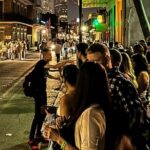
From Dumaine to Pirate Alley on Royal Street, the guide shares pirate stories, including some with Jewish connections. It’s one of the most fun segments of the route because the setting is lively and the subject matter feels like local legend.
I love how the guide handles this: the tone stays story-forward, but you still get historical grounding for why these figures matter. You’re not just told that “some pirates were Jewish,” you’re guided through how New Orleans’s mix of people and trade routes created room for unusual paths.
This is also a good reminder that Jewish history in New Orleans is not only about tragedy and remembrance. It includes public life, commerce, and the messy real-world decisions that shaped a port city.
One thing to keep in mind: this segment is in the middle of a walking and shopping corridor. If you’re sensitive to crowds, you might want to pick a moment when you can see the guide clearly and step aside when needed. The stop is brief, around 10 minutes, so you should be ready to listen and move.
Preservation Hall and How Jewish Preservationists Protected the Music

Right in front of Preservation Hall, you’ll hear about how music was saved by Jewish preservationists. This stop is short, but it’s a big idea wrapped in a simple location: the sidewalk near a legendary music institution.
What makes it valuable is the focus. Instead of treating jazz as something that just happened, the guide talks about protection and care, the people who kept traditions alive when they could have faded. That framing changes how you think about cultural survival.
Also, being outside matters. You’re not insulated from the city while learning. You’re learning as the Quarter carries on around you, which matches the message: culture continues because people make choices to keep it alive.
Practical note: this area can be busy because it’s a major music destination. If you can, listen for the guide’s specific points rather than trying to watch every movement at once. The spoken context is the real ticket here.
Omni Royal Orleans, Judah Benjamin, and Slavery Before the Civil War
The tour’s final discussion takes place near Omni Royal Orleans and focuses on Judah Benjamin, a U.S. senator and cabinet member of the Confederate government, plus slavery in the state before the Civil War. This is a heavy, complex ending, and the guide gives it structure in the short time you’re there.
I appreciate that the tour does not avoid controversy. If you’re learning Jewish history in New Orleans, you can’t only tell a “good news” story. Benjamin’s prominence forces an honest look at how individuals, politics, and institutions intersected with slavery and power.
This is also a stop where the guide’s interpretation matters. In the best moments of this tour, you’ll come away with a clearer sense of how a person’s public role can coexist with a community identity, and how historical context shapes what you understand.
Be mentally prepared for the emotional tone. If you’re the type who likes to keep the day light, you might find this the hardest segment. But for me, it’s what makes the tour feel like more than a sightseeing route.
Price and Logistics: What $40 Buys You Here
At $40 per person, this tour is priced like a guided walking experience, and it makes sense for what you get. You pay for a licensed local guide who ties together multiple key sites, and you get a route that stays efficient instead of spread across the city.
The duration is about two hours, so you’re not committing a whole afternoon. The max group size of 14 adds value, because the guide can keep track of the crowd without constant regrouping.
What’s not included is air-conditioning, so you should plan like you’re walking in the Quarter, not riding in comfort. Still, the trade-off is that you’re walking past sights that many visitors would never stop to read.
For most people, this is an easy participation level if you’re okay with casual walking and a few street crossings. If you’re limited in mobility, you may want to ask in advance about how the guide paces breaks, but the tour itself is designed as a straightforward walking route.
Who Should Book This Tour, and Who Might Skip It
This is a strong choice if you want Jewish history in New Orleans that feels specific, not general. It’s also great if you like walking tours that connect places to stories you can remember later when you’re back in your hotel, reviewing your photos.
You’ll likely enjoy it if you care about culture as preservation, not just performance. The stop focused on how Jewish preservationists helped save the music is exactly the kind of angle that makes people rethink the city.
I’d consider skipping if you dislike heavier historical topics. The inquisition threat and the slavery era discussion are part of the route, and they are not softened. This is balanced, but it is not light entertainment only.
Should You Book the Jewish History Tour of New Orleans?
If you want a guided walk that makes the French Quarter feel like a real archive, book it. I’d especially recommend it for first-time visitors who feel like they’ve only scratched the surface, and for locals who think they already know every corner of town. The small-group setup, the focus on the Holocaust Memorial, and the route’s attention to pirates and music add variety that keeps the two hours from feeling repetitive.
My main advice is simple: dress for walking, bring water, and show up ready to listen. When you do, the tour gives you a sharper way to see New Orleans, not just a list of stops.
FAQ
How long is the Jewish History Tour of New Orleans?
The tour runs for about 2 hours.
Where does the tour start and what time does it begin?
It starts at PJ’s Coffee, 333 Canal St, New Orleans, LA 70130, and begins at 10:00 am. It ends at St. Louis Cathedral, 615 Pere Antoine Alley, New Orleans, LA 70116.
How much does the tour cost?
The price is $40.00 per person.
Is there an air-conditioned vehicle included?
No. There is no air-conditioned vehicle included, since the experience is a walking tour.
What languages is the tour offered in?
The tour is offered in English.
How many people are in the group?
The maximum group size is 14 travelers.
Is a mobile ticket provided?
Yes, the tour includes a mobile ticket.
What is the cancellation policy?
You can cancel for free up to 24 hours in advance for a full refund. The experience requires good weather, and if it’s canceled due to poor weather, you’ll be offered a different date or a full refund.
More Historical Tours in New Orleans


More Tours in New Orleans


More Tour Reviews in New Orleans
More ways into New Orleans


Historical Tours, compared.
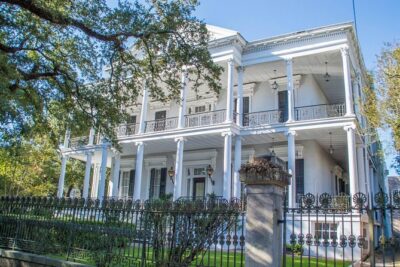 ★ 5.0New Orleans Garden District History Walking TourFrom $352,879 reviews
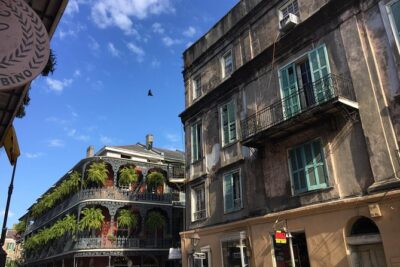 ★ 5.0French Quarter Historical Sights and Stories Walking TourFrom $352,724 reviews
 ★ 4.5New Orleans Small-Group Haunted History Carriage TourFrom $652,289 reviews
 ★ 4.5New Orleans Haunted History Ghost TourFrom $302,084 reviews
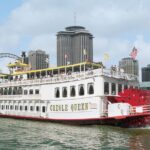
 ★ 4.5Paddlewheeler Creole Queen Historic Mississippi River CruiseFrom $471,948 reviews
 ★ 5.0New Orleans Food and History Walking TourFrom $851,544 reviews
 ★ 4.3Creole Queen History Cruise with Optional LunchFrom $471,112 reviews
 ★ 5.0New Orleans Cocktail and Food History TourFrom $160819 reviews
Browse the lists this tour appears in