

REVIEW · TOURS
Creole Kids Tour in New Orleans
New Orleans can feel like sensory overload. This Creole Kids tour turns it into bite-size stories your elementary-age child can follow. I like how it stays teacher-led and interactive, with dad jokes, thought-provoking prompts, and activities that keep kids engaged without turning the whole thing into a lecture.
Two highlights for me are the stop at Jackson Square for real-life connections to Creole life, and the quick, kid-friendly history moments tied to the Mississippi River and the St. Louis Cathedral area. One thing to keep in mind: it is still a walking tour in an outdoor neighborhood, so you’ll want to plan for sun, shade, and a moderate pace for kids (and you) for about 90 minutes.
Key Points You Should Know Before You Go

- Built for kids: interactive, teacher-led moments designed for elementary ages, not passive listening
- Small group feel: capped at 25 travelers, which usually helps keep attention and pacing manageable
- French Quarter classics: Mississippi River, Jackson Square, and the St. Louis Cathedral area in one smooth loop
- Creole heritage with context: you learn how different groups shaped New Orleans, including who had freedom versus who was enslaved
- Catholic history without the stuffiness: the tour connects the Catholic Church’s role to local rules like the Code Noir
- All-weather operation: it runs in all weather, so dressing for the day matters
Entering The French Quarter With a Kid-Friendly Mission

If your child likes games, riddles, or anything that feels like a challenge, you’ll probably relax fast. The whole concept here is simple: use the French Quarter streets as a classroom, then keep the energy up with teacher-style prompts and mini activities.
This is not a “drop your kids in and go do your own thing” situation. You’re meant to walk with them and support the experience, and kids must be accompanied by an adult. That part matters, because the tour is designed to be shared, not handed off.
I also appreciate the balance of big themes and short stops. You get history that’s age-appropriate, plus a structure that prevents that classic kids-versus-walking-tour meltdown. Instead of one long monologue, you bounce from landmark to landmark, with new questions and new stories each time.
And yes, the tour name includes “Creole” for a reason. You’re not just learning trivia. You’re building a framework for how New Orleans changed over time, and how Creole culture fits into that story.
Keep the day moving with these tours around New Orleans.



Price, Timing, and Group Size That Usually Works for Families
At $30 per person and about 90 minutes, this tour is priced like a real add-on activity, not a major splurge. In family-travel math, that matters. You’re buying time on your trip that feels purposeful, without draining the budget.
You’ll also be glad it’s short. A kid’s attention span is not a policy question, it’s a physical reality. The timing here helps the tour feel “finishable,” which is exactly what you want when you have young explorers in tow.
The tour runs around 10:30 am, which is a smart window for many families. You’ll start earlier enough to beat some peak crowds, and you’re less likely to be slogging through the hottest part of the day. That said, New Orleans weather can surprise you, so plan for sun, humidity, and whatever the sky decides.
One more practical detail: the experience caps at 25 travelers. For a walking tour, that cap is a big deal. It keeps the group from stretching out too far, and it makes it easier for the guide to keep the conversation flowing at kids’ speed. On the kind of day where the group is small, you can get that more personal feel, with more back-and-forth instead of everyone waiting their turn.
Stop 1: The Mississippi River Facts That Make the City Make Sense

The tour starts by the Mississippi River, and it’s a smart first move. Before you talk architecture or statues, you get the key idea: this river shaped how New Orleans functioned for centuries. You’ll hear about how the river was used, and why it mattered.
What I like is the way this stop supports later landmarks. Once kids understand that the river is not just a view, it becomes easier to see the French Quarter as a lived-in place tied to trade, travel, and survival.
You’ll also get humor and questions here, including dad jokes and thought-provoking prompts. For families, this is a great trick. Even if your kid is not a “history kid,” the humor keeps them with you long enough for the real learning to land.
The time at this first stop is about 10 minutes, which keeps it from feeling like a detour. It’s a quick orientation, like opening the first page of a story.
Stop 2: Meeting Andrew Jackson, With the Tone Kids Actually Like

From there you head to the Andrew Jackson Statue. This is one of those moments that can go either way on a normal tour. Here, it works because the guide keeps it kid-centered.
Kids learn who Andrew Jackson was and what he’s best known for, then they talk about why there’s a statue of him in New Orleans. The fun part is the interaction. The kids also greet him as a 19th century citizen would, which turns a stiff monument into a role-play moment.
This stop is only about 5 minutes, so it’s quick enough to fit the attention rhythm. It also helps that it doesn’t ask kids to memorize dates. It focuses on identity, place, and meaning.
One small consideration: if your child is very tired or not into role-play, you might need to help them stay in the game. A quick “Okay, you say it like you’re meeting someone from back then” can be all it takes.
Stop 3: Jackson Square Shade, Big Themes, and Creole Life
Next up is Jackson Square, and this is where the tour’s heart shows. You’ll sit in the shade, which matters in New Orleans. Even when it’s sunny, getting a break while learning makes a huge difference for kids.
This stop focuses on who controlled, worked, and lived in New Orleans since the 1600s. That timeline framing is important because it stops the city from feeling like a single era. New Orleans becomes layered, not stuck in one photo.
You’ll learn about how this land was used, including the painful truth that people came both willingly and enslaved. The tour discusses differences like free kids versus enslaved children, and it also touches on categories such as Americans versus Creoles, plus boys versus girls in the 1800s.
I appreciate that the guide ties these ideas to daily life, not just big labels. Kids can understand daily differences. They struggle with vague moral statements. When the tour talks roles and routines, it becomes easier to digest.
There’s also a thought-provoking element woven into the discussions, with an idea of reenactment as part of how the guide brings the past to life. The goal is not to sensationalize. It’s to help kids imagine what daily life felt like in different situations, including freedom and confinement.
Time-wise, you’re here about 15 minutes, which is long enough for meaning, short enough to avoid the “are we still here?” spiral.



Stop 4: St. Louis Cathedral, Religion, and the Code Noir Context
The last stop is the St. Louis Cathedral area. Here, the tour connects the Catholic Church’s role in setting up the colony to a specific rule set called the Code Noir. That part matters because it explains how religion and law overlapped in the lives of enslaved people, including how roles were governed.
You’ll also hear about Mardi Gras, described as one of the most popular Catholic holidays. For many families, Mardi Gras is just a colorful idea from TV or street photos. This stop gives it a cultural and religious foundation, so the celebration makes more sense.
Time at this stop is about 5 minutes, so it’s not a long museum-style explanation. It’s more like a final thread that ties the earlier Creole heritage themes back to institutions and local traditions.
And since the tour ends next to St. Louis Cathedral in Jackson Square (near Pirates Alley), it’s convenient for you to keep exploring on your own afterward, without needing to reorient or find a second meeting spot.
What You’ll Actually Do During the Tour (Beyond the Landmarks)

This tour works because it’s not only about where you stand. It’s about what the guide gets kids to do with that standing.
Expect a mix of:
- Questions that get kids thinking, not just repeating
- Interactive moments tied to each stop, like greeting the Andrew Jackson statue in a historical way
- Playful teaching, including humor and short games that keep energy steady
From one of the families I heard from, the experience even included a kind of sword-fight-style game at some point. I’m not going to promise every group gets the same play moment, but the point is that the guide knows how to turn learning into participation.
If your kid gets restless, this kind of built-in activity is a life saver. If your kid loves speaking up, it gives them permission to be part of the conversation instead of only listening.
Also, the tour is taught in English, which is helpful for most visitors. If your family uses another language at home, consider doing a quick review of a few key words like river, statue, and cathedral so your child has more confidence during prompts.
Weather, Walking Pace, and What to Wear in New Orleans
This experience operates in all weather conditions. That means the tour schedule is built to keep going, not to vanish when clouds appear.
So you’ll want to dress like you’re going to walk in a real city, not like you’re attending a classroom.
Practical tips:
- Wear comfortable shoes with decent grip, since cobblestones and sidewalks can be uneven
- Bring water and plan for shade breaks, even if you don’t expect it to be hot
- Use sunscreen and a hat, because Jackson Square is outdoors and sun is part of the experience
- If it’s raining, expect that you’ll still move between stops, so bring a light rain layer
Your physical requirement is listed as moderate fitness. For most families, that just means you should be okay walking for about 90 minutes at a child-friendly pace and handling a couple short stops with waiting.
Is This Tour Worth $30 for One-Point-Time Learning?
Let’s talk value, because $30 can either feel like a bargain or like an upsell depending on what you get.
Here, the value comes from a few things you don’t usually get on typical walking tours:
- A kid-focused structure: short stops, built-in engagement, and age-appropriate themes
- Meaningful content: Creole heritage and local history at a level that fits elementary-age attention
- A real guide relationship: a local guide and a professional guide listed, plus a group size cap that helps keep the experience interactive
The tour also has no paid admissions listed for the stops you’ll be visiting. That means you’re mostly paying for teaching and time, not for ticket juggling.
If you’re the kind of parent who wants your child to remember something besides “we walked around and took photos,” this tour is a strong bet. It gives your child a way to talk about the city in their own words: river, square, cathedral, and the bigger story of who lived where and how.
Who This French Quarter Kids Tour Fits Best
This is a good match if:
- You’re traveling with elementary-age kids who do better with games and conversation
- You want a walking tour that doesn’t feel like a slow museum visit
- You care about learning Creole heritage and understanding New Orleans history in a guided, age-aware way
- You like the idea of combining iconic landmarks with kid-sized explanations
It may not fit as well if your child hates role-play or interactive prompts, or if your group needs a completely hands-off experience where you do all the talking. This tour is active. Even with a teacher-led structure, kids are expected to participate in some way.
Should You Book Creole Kids in New Orleans?
Book it if you want a kid-centered French Quarter outing that feels purposeful and keeps attention without rushing. The combination of the Mississippi River start, the shaded break at Jackson Square, and the Catholic history context near St. Louis Cathedral makes it a well-paced route for families.
I would pass on it only if you’re trying to minimize walking, your kids are very sensitive to outdoor heat, or you want a purely adult-style historical tour. Otherwise, this is one of the more practical ways to turn a famous neighborhood into a learning experience your child can actually carry with them.
FAQ
How long is the Creole Kids Tour in New Orleans?
It’s approximately 1 hour 30 minutes.
How much does the tour cost?
The price is $30.00 per person.
Where do I meet and where does the tour end?
The tour starts at Decatur at Dumaine, New Orleans, LA 70116, and it ends next to St. Louis Cathedral in Jackson Square, near Pirates Alley.
What is included in the ticket price?
The tour includes a local guide and a professional guide.
Is hotel pickup or drop-off included?
No. Hotel pickup and drop-off are not included.
What should I know about kids and adults during the tour?
Children must be accompanied by an adult, and the tour is recommended for families with elementary-age children.
Does the tour run in bad weather, and how does cancellation work?
The tour operates in all weather conditions and you should dress appropriately. There is also free cancellation up to 24 hours in advance for a full refund. If it’s canceled due to poor weather, you’ll be offered a different date or a full refund.
More Tours in New Orleans


More Tour Reviews in New Orleans
More ways into New Orleans


Tours, compared.
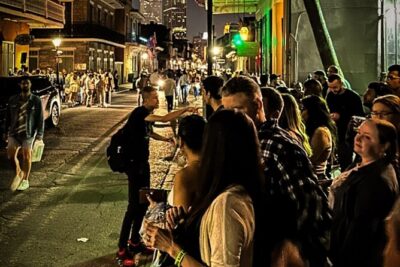 ★ 4.5New Orleans Premier Ghost, Voodoo and Vampire Walking TourFrom $2712,856 reviews
 ★ 5.0Adults-Only New Orleans Ghost, Crime, Voodoo, and Vampire TourFrom $376,545 reviews
 ★ 5.0New Orleans Food Walking Tour of the French Quarter with Small-Group OptionFrom $756,118 reviews
 ★ 5.0New Orleans Swamp and Bayou Boat Tour with TransportationFrom $705,399 reviews
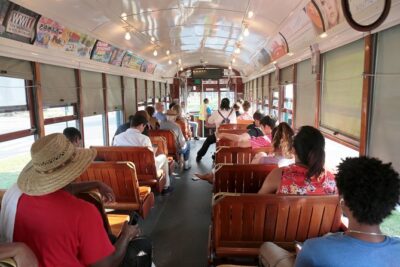 ★ 4.5New Orleans City Sightseeing Hop-On Hop-Off Bus TourFrom $514,943 reviews
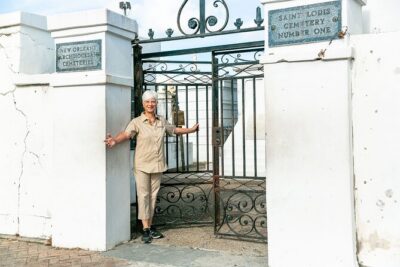 ★ 4.5St. Louis Cemetery No. 1 Official Walking TourFrom $253,941 reviews
 ★ 5.0Swamp Boat Ride and Oak Alley Plantation Tour from New OrleansFrom $1313,303 reviews
 ★ 5.0New Orleans Adults-Only Ghost, Voodoo and Vampire TourFrom $293,291 reviews