

REVIEW · NEW ORLEANS PLANTATION TOURS
New Orleans: St. Joseph Plantation Guided Tour
A plantation walk that feels personal. This 1 hour St. Joseph Plantation tour pairs a hands-on mansion tour with time to roam the grounds on your own, on a working sugar cane plantation built in the 1830s. You get a guided history of the property’s 2,500 acres, then a self-paced look at the buildings that shaped plantation life.
What I like most is how practical it feels: full access to the home during the guided portion, and then a chance to slow down for the outbuildings and garden after. One thing to consider is that the experience involves walking and uneven ground, so it is not suitable for wheelchair users or people with mobility impairments.
Key things to know before you go

- Full-room mansion access during the guided hour at St. Joseph’s home
- Working sugar cane plantation setting tied to one of Louisiana’s last intact operations
- Self-guided outbuildings including original slave cabins, a detached kitchen, blacksmith shop, carpenter’s shed, and schoolhouse
- Film and TV location connections tied to titles like 12 Years a Slave, All The King’s Men, The Skeleton Key, and Queen Sugar
- Creole Mourning Tour season from Oct 1 through Nov 3, when the house is dressed for mourning with live re-enactments
A one-hour mansion and sugar plantation tour near New Orleans

St. Joseph Plantation is a real working sugar cane plantation site, not just a set dressed for visitors. That matters, because the guided walk is built around how the property functioned, from the mansion and the farm routines to the spaces where skilled trades and learning happened.
The most satisfying part is the balance. You get a guided visit designed to help you make sense of what you are seeing, then you get time after the tour to explore at your own pace. I also appreciate that the tour includes full access to the rooms in the home, so you are not just peeking through doors. You can take your time noticing how the house and the property relate to each other.
For a lot of plantation tours, you end up feeling rushed or like you only see a few rooms. Here, the structure is tighter and clearer. One guided hour sets the context, then the rest is you and the buildings, including the outbuildings that feel essential to understanding plantation life.
More plantation visits from New Orleans, with the history kept in view


Price and what $24 buys you
At $24 per person for a 1 hour guided tour, plus self-guided time on the grounds, this is strong value if you want more than a quick stop. You are paying for two things: a guided overview of the plantation and practical time on site to walk, look closely, and revisit what grabbed your attention.
The tour also includes local taxes, which keeps the final bill simpler than some add-on-heavy attractions. What is not included is just as important to know upfront: transportation to the plantation, food and drinks, and any gift shop purchases. If you are planning to stay longer or want lunch, plan on bringing it, because the tour encourages a picnic after.
I’d call it a good fit for travelers who want an organized start, then freedom to move at their own pace. If you want a multi-hour guided deep immersion with constant interpretation at every step, this one may feel short, since the guided portion is specifically one hour.
Getting there: starting at 3535 LA-18

The tour’s starting location is 3535 LA-18. That is the key detail for your day. Put it into your GPS before you leave, and give yourself extra buffer time, especially if you are combining it with other New Orleans area stops.
Because transportation is not included, you will need your own ride or a planned transfer. That is also why this works best as a dedicated half-day anchor, even though the guided tour itself is only one hour. You want time around it to think and breathe, not just fit it between trains and dinner plans.
The tour is in English, and the guiding is live. So if you prefer to follow on-the-ground explanations while you walk, this style tends to work well.
Inside the 1830s home: what the guided hour is really for

The guided portion focuses on understanding what you are looking at. Your guide takes you through the house and grounds as a walking tour, and you learn the history tied to the family-owned property, including how many people lived and worked on the plantation.
A standout detail is full access to each room during the mansion tour. That changes the experience. When you can actually stand inside rooms, you can connect architecture, space use, and daily routines. You also get a more direct sense of scale and design choices made in the 1830s, when the mansion and plantation operations were already shaping the area.
This is also where the guide’s personality can make a real difference. One person described a guide who happened to be the general manager, and praised the tone as personable and friendly. Another visitor mentioned a guide who previously worked at Oak Alley, which can help if you like comparing how different plantations explain their stories. If you are booking for a small group and need language support, there is also a real example of a guide providing a copy of the tour in Italian for visitors from Italy, so it is worth asking what language help is available when you reserve.
In short, the guided hour is your orientation tool. If you pay attention here, the self-guided section becomes easier to understand, and your photos come out better because you know what you are photographing.
The walking tour of the grounds: 2,500 acres and plantation life

After the home portion, the tour continues with a walking tour around the grounds and an explanation of how the plantation operated. You are on a site tied to one of the few fully intact working sugar cane plantations in Louisiana, which gives the story a concrete anchor.
You’ll also hear the property’s scale and history. The plantation is described as 2,500 acres, built in the 1830s, and tied to the long-running family ownership of St. Joseph. That acreage detail can be mind-bending when you are standing on it, so it helps to have a guide connect the dots between buildings, work spaces, and the daily rhythm of the farm.
There is a quiet but important emotional component here too. The tour is not only about pretty house details. It is designed to share the history of many people who lived here, and that includes the reality of forced labor and slavery on plantations. If you go in expecting only grand architecture, you may find the interpretation harder to take. But if you are looking for honest context, this is exactly the kind of place where the guide’s narration helps you see the whole system, not just the mansion.


Self-guided outbuildings: slave cabins, kitchen, trades, and school

After the guided hour, the tour shifts gears. You get time for a self-guided tour of the garden and numerous outbuildings. This is where the visit becomes personal, because you can linger.
The outbuildings listed for self-guided exploration include original slave cabins, a detached kitchen, a blacksmith’s shop, a carpenter’s shed, and a schoolhouse. Those buildings are where you start to understand the day-to-day mechanics of the plantation, not just the owner’s view from the house.
This part of the visit is also where practical travel advice helps. Wear comfortable shoes, because you will likely be moving between structures and walking across plantation grounds. Take your time with the outbuildings that relate to work and skill. Even if you only spend a few minutes at each spot, the cumulative effect is strong because you see the plantation as a working system.
If you like photography, the self-guided time is your chance to get better angles. You can step back, reposition, and take notes while you are thinking. If you are more reflective, this is the better time to process what you just learned in the guided portion.
And if you are the type who likes to read signs slowly, this is a comfortable pace. The self-guided section gives you control, so you are not trying to keep up with a fast-moving group.
Film locations: when Hollywood comes to the plantation

St. Joseph Plantation has also served as a film location for several major titles. The listed examples include 12 Years a Slave, All The King’s Men, The Skeleton Key, and Queen Sugar.
That matters for two reasons. First, it can motivate you to look at familiar scenes differently, now that you are on the actual property. Second, it reinforces that this site carries real physical features that filmmakers want to use, meaning the architecture and setting feel consistent and durable.
If you watched any of these, it can be fun to match the vibe of a scene to what is around you. Just remember that a plantation setting in a movie is not the same as lived reality. When you stand in the buildings and hear the guided context, the on-screen story becomes one layer, not the whole story.
Creole Mourning Tour season (Oct 1 to Nov 3)

From Oct 1 through Nov 3, the experience changes. During that period, the house is dressed for deep mourning, and you can witness live re-enactments portraying people from the plantation and their mourning customs.
If you can travel during these dates, I think that is a special time to go, because you are seeing how the plantation story extends beyond economics and into tradition, community memory, and rituals. It also makes the home feel more alive, since it is not only presented as an artifact. The emphasis becomes atmosphere and cultural practice, along with the historical narrative.
The live re-enactments are part of the reason to plan ahead for timing and expectations. This is not the same as a standard visit. If you prefer an exclusively historical and architectural tour style, you might still enjoy it, but it will be a more performance-driven layer during those dates.
Pace, rules, and what to pack for a smooth visit

The tour runs about 1 hour for the guided portion, with additional time for self-guided walking and then visiting, free time, and shopping. That means you can fit it into a day, but it also means you should keep your energy steady, since the site involves movement between multiple areas.
Bring comfortable shoes. That is the practical item. Also note that bare feet are not allowed, and alcohol and drugs are not allowed. If you think you can sneak in a drink for “the vibe,” skip it and plan to bring water and any permitted picnic items you want after.
One more practical note: the experience is not suitable for wheelchair users or people with mobility impairments. If mobility is a concern, it is better to choose a different attraction where access is designed for more limited movement.
Finally, consider pairing the tour with a picnic. The tour encourages visitors to take a picnic lunch to enjoy under the oak trees after the guided portion.
Should you book the St. Joseph Plantation guided tour?
Book it if you want an organized start and real on-site time to understand how a working sugar cane plantation functioned. The combination of full access to the rooms in the mansion, a guided walking history, and then self-guided outbuildings like the slave cabins, kitchen, trades spaces, and schoolhouse is what makes this feel worth it.
Skip it or choose a different option if walking is a challenge for you. Also skip if you want long, purely guided narration all the way through. This one is structured so you get one guided hour, then you’re on your own.
My bottom line: if you come with comfy shoes, a curious mindset, and respect for the heavy parts of the story, this is a $24 tour that earns its keep. You leave with more than photos, you leave with a clearer picture of the plantation as a place where architecture, labor, and life connected.
FAQ
How long is the St. Joseph Plantation guided tour?
The guided tour lasts 1 hour.
Is the tour guided only, or is there time to explore on my own?
After the 1-hour guided tour, you also have self-guided time to tour the garden and numerous outbuildings.
What does the guided tour include?
The included portion covers a guided tour of the St. Joseph Plantation home and grounds, with full access to each room.
What outbuildings can I visit during the self-guided time?
The information provided lists original slave cabins, a detached kitchen, a blacksmith’s shop, a carpenter’s shed, and a schoolhouse.
Is food included, and can I bring alcohol?
Food and drinks are not included. Alcohol is not allowed.
What should I wear or bring?
Bring comfortable shoes. Bare feet are not allowed.
What language is the live guide?
The live tour guide operates in English.
Is this tour suitable for wheelchair users or mobility impairments?
No, it is not suitable for wheelchair users or people with mobility impairments.
What happens during Oct 1 to Nov 3?
From Oct 1 through Nov 3, the house is dressed for deep mourning and you can witness live re-enactments of portrayals and mourning customs.
More Tours in Vacherie

More Tour Reviews in Vacherie
More Plantation Tours from New Orleans
More ways into Vacherie
New Orleans Plantation Tours, compared.
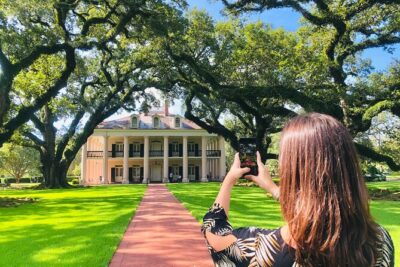 ★ 5.0Swamp Boat Ride and Oak Alley Plantation Tour from New OrleansFrom $1313,303 reviews
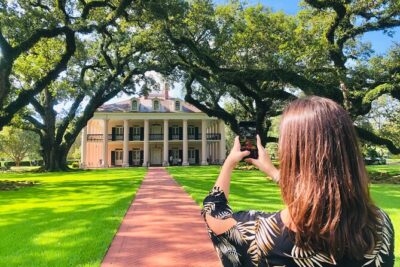 ★ 4.5Oak Alley Plantation Tour with Transportation from New OrleansFrom $891,747 reviews
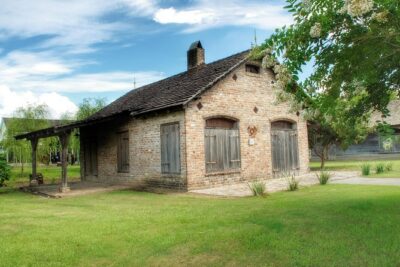 ★ 4.5Whitney Plantation Tour with Transportation from New OrleansFrom $891,351 reviews
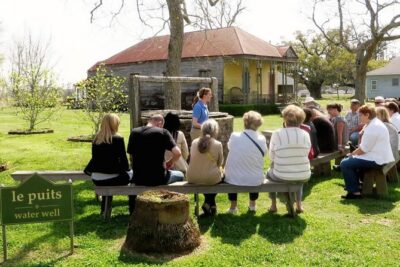 ★ 5.0Laura Creole Plantation Guided TourFrom $321,279 reviews
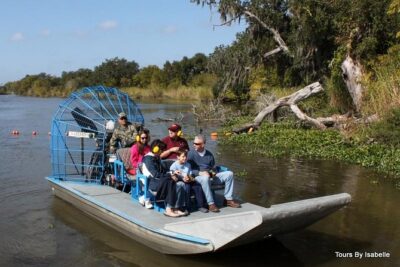 ★ 4.5Airboat and Plantations Tour with Gourmet Lunch from New OrleansFrom $2791,246 reviews
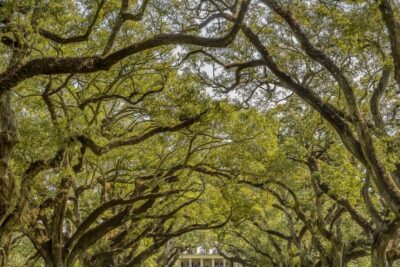 ★ 4.7Bayou Swamp Tour and Oak Alley Plantation TourFrom $1251,147 reviews
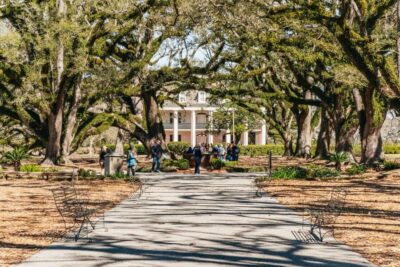 ★ 4.7Oak Alley Plantation & Airboat Swamp Combo TourFrom $160906 reviews
 ★ 4.5Oak Alley Plantation and Large Airboat Swamp Tour from New OrleansFrom $160712 reviews
Browse the lists this tour appears in